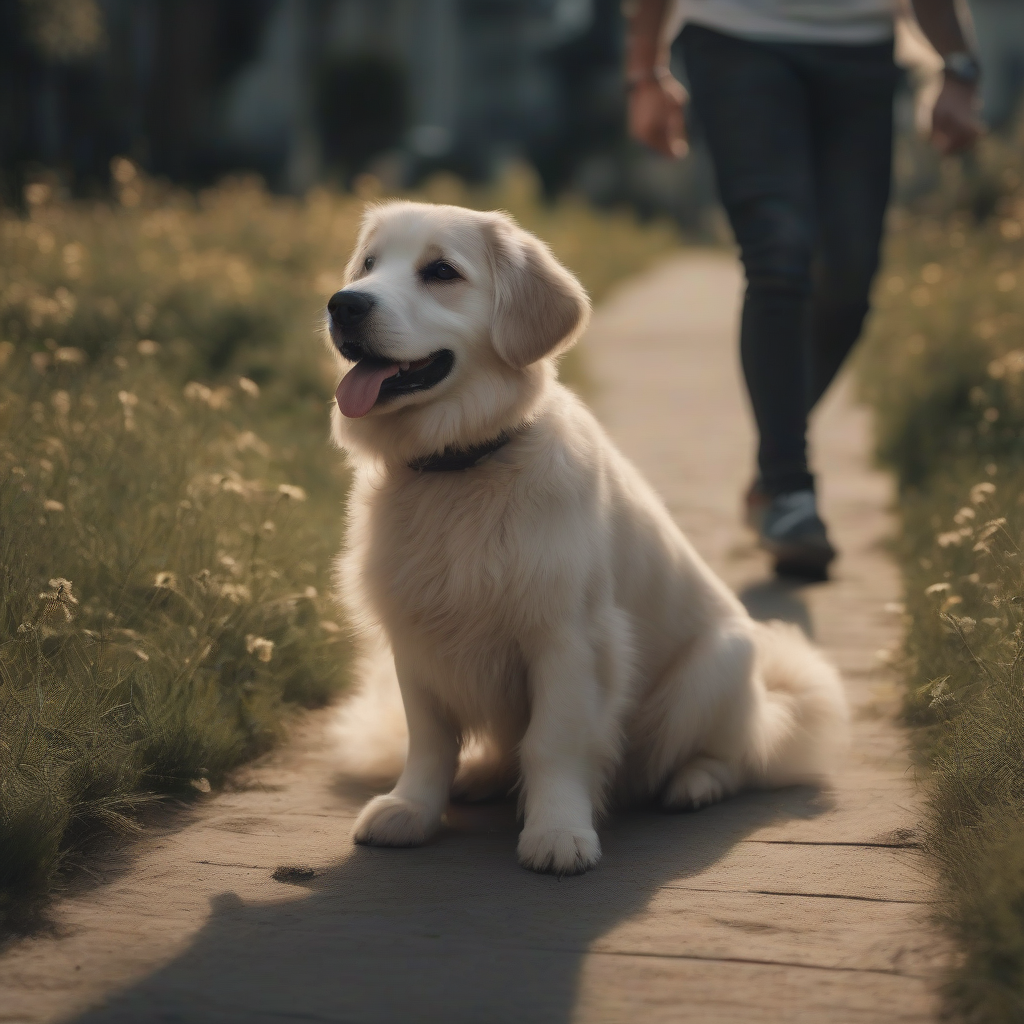
In this article, you will discover the hidden neurobiological signals adopted dogs use when establishing social hierarchy in a new home environment, and the scientific secrets to fostering harmonious living during this process.


In this article, we will deeply explore the insidious neurobiological effects of gut microbiome imbalance (dysbiosis) on your rabbit's brain health and provide scientific-based solutions to maintain mental vitality.

In this article, you can find comprehensive information on how pancreatitis in dogs not only affects the digestive system but also insidiously impacts the brain, its neuroinflammatory mechanisms, and lifesaving emergency intervention strategies.

Discover the 5 insidious effects of overfeeding, one of the most stealthy threats to your fish's health, causing neurometabolic destruction in their brains, and learn scientific feeding strategies to prevent this demise. Uncover the silent danger in your aquarium!
Adopting a dog is an exciting journey for both you and your new companion. However, this journey can be complicated, especially by the 'social baggage' your dog brings from its previous life experiences. A dog joining a new family quickly begins to analyze the social dynamics around it—other pets and humans. In this process, it forms its own 'hidden social map' and tries to determine its rank on this map. This article scientifically explains how an adopted dog neurobiologically perceives its place in its new pack (family) and how you can smoothly manage this complex process with scientific secrets.
When a dog enters a new environment, its brain activity significantly increases. Brain regions associated with social behavior, particularly the amygdala, hippocampus, and prefrontal cortex, work overtime. Your dog processes all sensory information from the environment (smell, sound, visual cues) to evaluate its safety level, potential threats, and social cues. This evaluation plays a critical role in determining its place—its 'social rank'—within the new family.
For dogs, scent provides much more information than what humans gather visually. Every living creature carries a unique pheromone profile, and these pheromones are deeply processed in your dog's brain. An adopted dog entering a new home first meticulously examines the scent signatures of every individual and other pets in the house. These 'scent ID cards' are interpreted by the dog's olfactory bulbs, providing preliminary information about the hormonal status, mood, and even potential social status of other individuals. This neurobiological scanning helps your dog create a safety and risk map during the adaptation process to the new environment. For instance, when scent signals containing high stress hormones (cortisol) are detected, your dog's amygdala may activate, prompting a self-preservation mode.
Dogs, like humans, possess a mirror neuron system. These neurons play a vital role in learning and empathy by observing and imitating the behaviors of other living beings. The body language, facial expressions, and gestures of other dogs or humans in a new environment are interpreted by your adopted dog's mirror neurons. Visual cues such as eye contact, tail wagging, and ear positions provide important clues about social hierarchy. The activation of mirror neurons allows your dog to understand the intentions of other individuals and adjust its own behavior accordingly. This helps them begin to understand who the 'leader' or 'authority figure' is among the new family members. As stated in Your Dog's 'Invisible Listening Shield': Why Do They Ignore You? 5 Neurocognitive Reasons and Training Solution Secrets!, correct interpretation of these visual and auditory signals can resolve communication misunderstandings.
An adopted dog, while integrating into a new family, subconsciously runs a complex 'social rank determination algorithm.' This algorithm is shaped by the combination of different neurobiological processes in its brain.
The amygdala is known as the brain's center for fear and threat perception. In a new environment, your dog evaluates whether each new situation or individual is a potential threat. A decrease in amygdala activity is a sign of increased trust, which makes the dog feel more comfortable. A secure bond helps the dog perceive its place in the social environment more stably. Your Dog's 'Fear-Infused Stress Tunnels': 5 Neurobiological Thresholds in a New Environment and Secrets to Building Lasting Trust! details the stress factors in this process.
Oxytocin, known as the 'love hormone,' plays a central role in social bonding and trust formation. Positive interactions (petting, play, feeding) your dog has with you and other family members increase oxytocin secretion. High oxytocin levels reduce social barriers and strengthen mutual trust, which allows the dog to perceive its place in the new pack more positively.
Cortisol is known as the stress hormone. In new and uncertain environments, a dog's cortisol levels can increase. Consistently high cortisol levels lead to chronic stress and negatively affect the dog's social adaptation. Providing a low-stress environment helps reduce amygdala activity, enabling the dog to adopt a more relaxed and harmonious social position. Your Dog's 'Cycle of Despair': 5 Insidious Neurobiological Effects of Learned Helplessness in the Brain and Lifesaving Scientific Solutions! explains the effects of past traumas on cortisol.
The frontal cortex is responsible for complex cognitive functions such as decision-making, problem-solving, and the regulation of social behaviors. Your dog uses its frontal cortex to learn which behaviors are acceptable in new social interactions. For example, during play, it adjusts its behavior by observing the reactions of other dogs. This is a feedback loop that helps it understand its place in the social hierarchy. Moreover, understanding your dog's Your Dog's 'Secret Impulse Control': The 5 Neurocognitive Dances of Impatience in the Brain and Scientific Solution Keys! can further enhance your ability to guide its social learning.
The hippocampus is a critical structure for learning and memory, especially spatial and social memory. Your dog records every experience (positive or negative) with new family members through its hippocampus. These memories serve as a guide in future social interactions and help the dog constantly update its social rank. Positive social memories reinforce feelings of trust and belonging, while negative memories can lead to shyness or aggression. Your Dog's 'Hidden Social Tunnels': 5 Unsolved Neurocognitive Secrets of Group Dynamics and Scientific Strategies for a Harmonious Pack explores the effects of different social experiences.
You can take proactive steps to help your dog establish a healthy social rank within its new family:
One of the most important things for a newly adopted dog is to have its own safe space. This area should be a sanctuary where it can retreat and be alone during stressful moments. Additionally, establishing a consistent routine for feeding, exercise, and potty breaks reduces uncertainty in your dog's brain and lowers cortisol levels. This helps it adapt to the environment more quickly and grasp social dynamics more easily.
During the social adaptation process, positive reinforcement is the most effective method for your dog to learn and repeat desired behaviors. Rewarding desired behaviors (e.g., staying calm, interacting harmoniously with other pets) increases dopamine secretion, reinforcing these behaviors. This contributes to your dog feeling like a part of the family and perceiving its social status positively. Your Dog's 'Understanding Cycle'? The Secret Neurobiological Keys of Positive Reinforcement and Secrets to Sustainable Training Success! delves into the profound neurobiological effects of positive reinforcement.
Understanding your dog's body language allows you to correctly read its social cues. The position of its ears, the movement of its tail, eye contact, and posture tell you a lot about its inner world. By correctly interpreting these signals and responding appropriately, you can build strong, trust-based communication with your dog. This way, you can shape its perception of social hierarchy within a clearer and more positive framework.
An adopted dog's perception of social hierarchy in a new home is a combination of complex neurobiological processes. By understanding these processes and implementing science-based strategies, you can ensure your dog feels safe, happy, and a sense of belonging in its new family, building a harmonious and long-lasting friendship.
