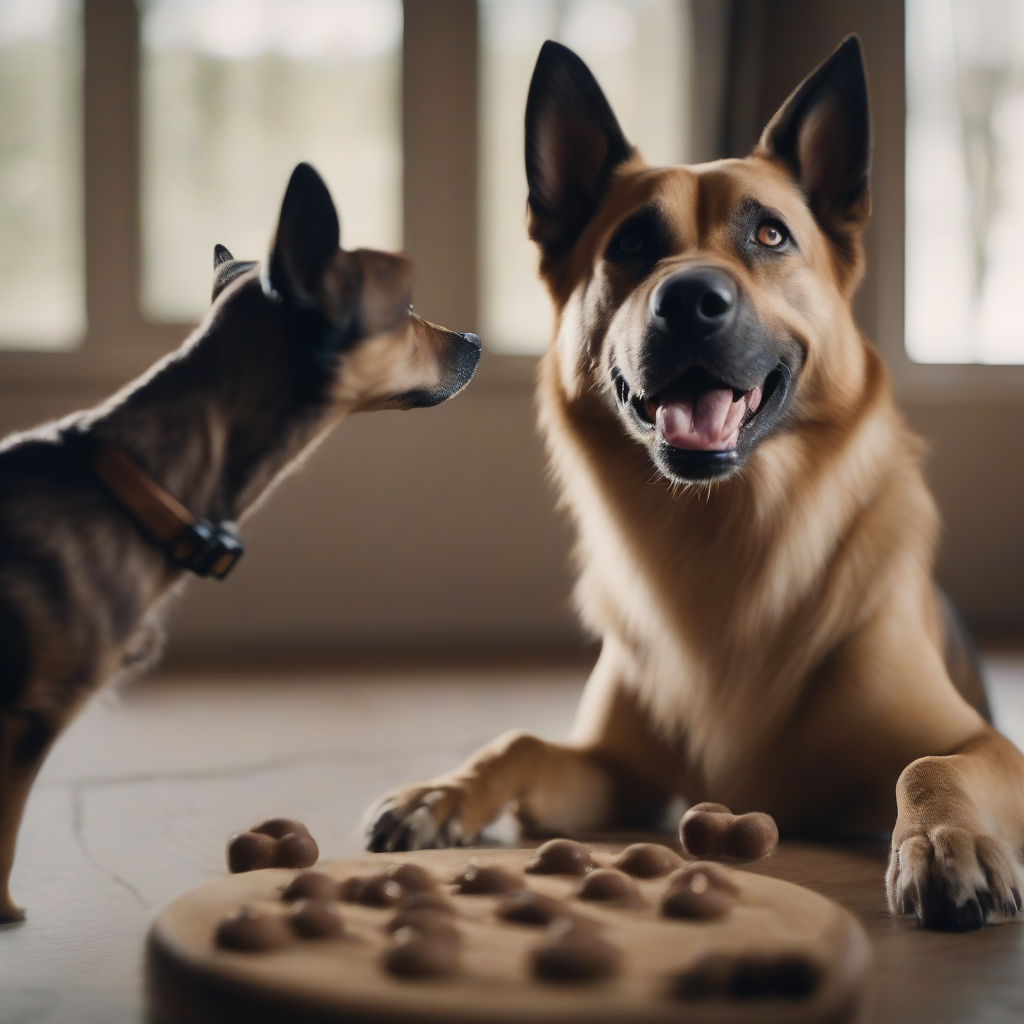
Your dog's training successes are no accident! In this article, you will explore the neurobiological mechanisms behind positive reinforcement and learn scientific methods that accelerate your dog's understanding cycle.


While cats possess a surprising ability to adapt to high-rise fall traumas, the insidious neurophysiological effects on their brain carry vital risks. In this article, we reveal 5 critical neurobiological effects your cat may experience after a fall and the lifesaving emergency intervention codes with scientific secrets.

In this article, you will discover how your rabbit copes with unexpected situations and its neurocognitive responses to non-routine events. Learn scientific secrets to enhance mental flexibility and manage stress.

In this article, you will find comprehensive information on the insidious neurophysiological effects of seizures in cats' brains and lifesaving emergency intervention codes during a seizure.
Dog training is far more than just memorizing commands. Your dog's ability to understand a behavior, make it permanent, and even generalize it to different situations is the result of a complex neurocognitive process. We refer to this process as the 'Understanding Cycle'. So, how can we accelerate this cycle and maximize your dog's learning potential? The answer lies in the deep neurobiological effects of positive reinforcement.
One of the most astonishing features of a dog's brain is its neuroplasticity. This is the brain cells' (neurons) ability to form new connections, strengthen existing ones, or weaken them. Training directly triggers this neuroplasticity. The reward your dog receives for correctly performing a command strengthens the neural pathways that trigger that behavior, making them more robust and permanent.
This constant remodeling process allows your dog to learn new commands faster and cope better with challenging situations. In fact, a well-designed training program can lead to physical changes in your dog's brain!
One of the primary neurotransmitters underlying positive reinforcement is dopamine. Dopamine is closely associated with pleasure, motivation, and reward-based learning. When your dog correctly performs a command and receives a reward, dopamine levels in its brain increase. This increases the likelihood of repeating that behavior because the brain associates it with a positive experience.
This 'dopamine surge' is not just a momentary pleasure; it plays a critical role in reinforcing learning. The key to keeping your dog eager and motivated in training is to understand this reward system correctly.
One of the most crucial elements of positive reinforcement is the timing of the reward. Your dog needs to be rewarded the moment it exhibits the correct behavior or immediately thereafter. A delayed reward can make it difficult for your dog to understand which behavior it's being rewarded for, disrupting the learning cycle and leading to confusion.
From a neurobiological perspective, an immediate reward pairs the dopamine release with the correct behavior. The faster this pairing occurs, the stronger the neural connection becomes. Therefore, tools like clickers are extremely effective for marking the precise moment and strengthening the neurological signal that follows the reward.
Immediate and Accurate Rewarding: Catch the moment your dog exhibits the correct behavior. Mark the behavior with a verbal marker (e.g., a clicker or 'Yes!') and then provide a high-value reward (a favorite treat or toy). This directly links the dopamine release in its brain with the correct action. For more details, you can refer to Your Dog's 'Hidden Memory Keys': 5 Neurobiological Barriers Behind Recurring Training Mistakes and Secrets to Resolution!.
Consistency and Repetition: The brain loves patterns. Being consistent in your training sessions and using commands the same way helps strengthen neural pathways. Short, frequent training sessions daily are more effective than long, infrequent ones because they keep the brain engaged in processing information. This supports the subconscious learning processes mentioned in Your Dog's 'Hidden Mind Tunnels': 5 Neurobiological Blind Spots in Daily Life and Solution Keys for a Happy Dog!.
Gradual Shaping (Shaping): Breaking down complex behaviors into small steps and rewarding each step individually increases your dog's sense of accomplishment and maintains its motivation. This strengthens the success cycle in the brain, making your dog more willing to approach new challenges. This also aligns with the principles of mental stimulation in Your Dog's 'Hidden Playground' Algorithm: Bonding and Stimulation Secrets Through Strategic Mind Games.
Creating a Positive Environment: It's harder for your dog to learn in a stressful or frightening environment. A safe and comfortable training space positively impacts the learning process. Articles like Your Dog's 'Silent Pressure Zones': Discover Hidden Neurobiological Stress Points at Home and Create a Peaceful Living Environment! emphasize the importance of a peaceful environment.
Social Reinforcement and Bonding: The secure bond you share with your dog facilitates training. Interacting with you can become a reward in itself for your dog. Quality time spent together further strengthens reward-based training and fosters greater trust. This relates to the attachment dynamics detailed in Your Dog's 'Hidden Attachment Algorithm': Neurobiological Traces of Past Traumas and 5 Scientific Secrets to Building Secure Bonds!.
Understanding how your dog's brain works is the key to optimizing your training approaches. Positive reinforcement is not just a training method; it is a scientific approach that supports your dog's brain's natural learning mechanisms, offering it a happier and more fulfilling life. By strengthening your dog's 'understanding cycle,' you can deepen the bond you share and achieve unforgettable successes together.
