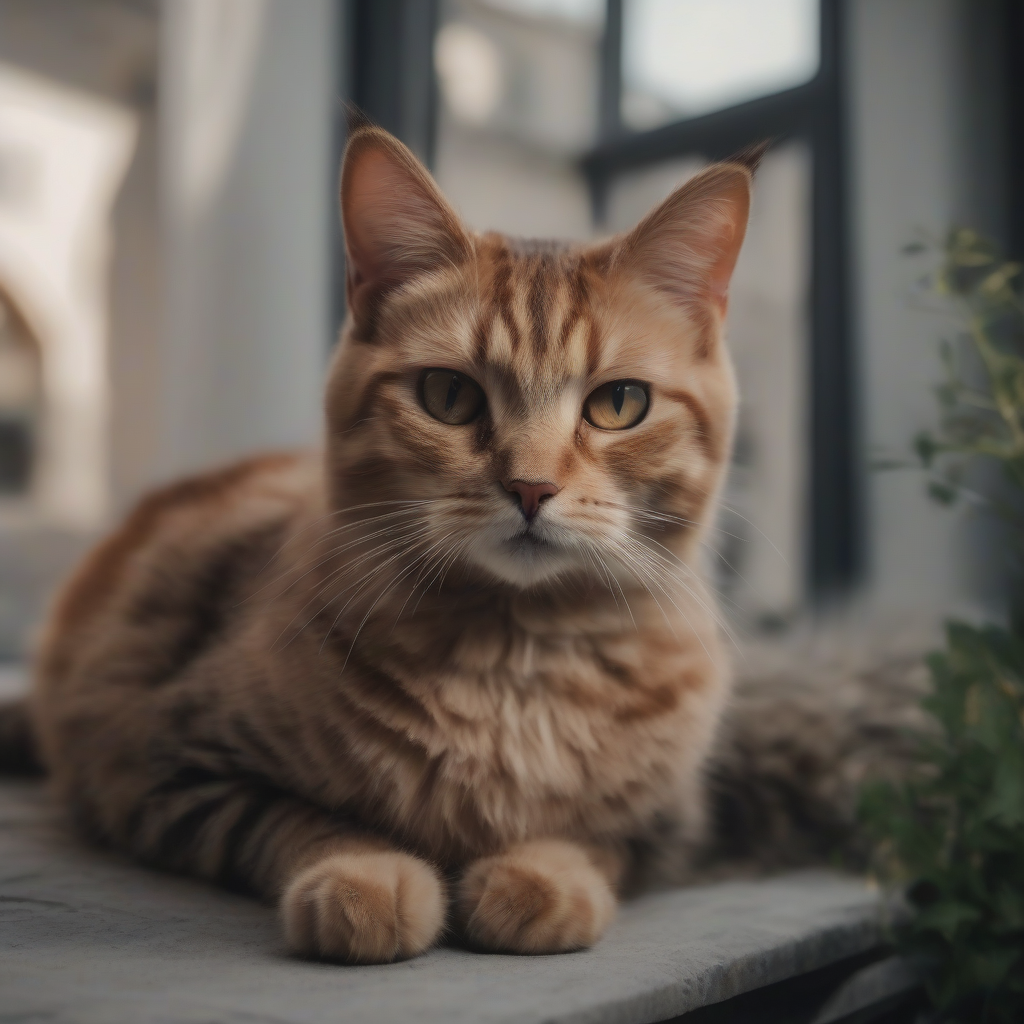
In this article, you will find comprehensive information on why your cat sometimes says "no" to known commands during training, how the decision-making mechanisms in their brain work, and scientific secrets to overcome this voluntary disobedience.


In this article, you will find comprehensive information about the importance of proper litter box choice and hygiene in rabbits, delving into the stress and neurobiological impacts of improper practices on their brain, and discovering scientific secrets for a peaceful life.
Discover scientifically-backed neurocognitive secrets to reduce stress and build trust-based cooperation in fish during veterinary interventions. This guide details how to train your fish for routine check-ups and treatments.
In this article, you will find the importance of choosing the right exercise wheel for your hamster, the insidious neurobiological effects of incorrect wheel usage on the brain beyond physical health, and scientific solutions for optimal mental vitality.
As a cat owner, you've likely often encountered your cat ignoring a command they know, such as 'sit,' 'come,' or 'give paw,' as if they didn't hear you at all. It's as if a complex "why not now?" algorithm runs in their brain, leading to a different decision at that moment. While this can be frustrating for owners, it's actually a neurocognitive reflection of cats' independent nature and how their brains function. Cats are not robots; every reaction is the result of a complex decision-making process within their brains, influenced by environmental factors, internal motivations, and past experiences. In this article, we will delve into 5 insidious neurocognitive secrets behind your cat's 'voluntary disobedience' in training and offer scientific strategies to overcome these hurdles.
Moments when your cat 'knows' a command but 'doesn't do it' are actually related to their brain's assessment of the current reward-risk balance. Unlike humans, cats are not inclined to perform a task simply 'to please you.' Their behavior is typically guided by immediate benefits and intrinsic drives. When a command is given, areas similar to the prefrontal cortex in the cat's brain rapidly analyze information from past experiences (what was the outcome of this behavior?), current environmental stimuli (is there something more appealing around?), and its internal state (am I hungry, sleepy, in play mode?).
Before responding to a given command, cats implicitly operate an 'expectation and evaluation model.' This model is governed by dopaminergic systems and considers factors such as the magnitude of the potential reward, the probability of obtaining the reward, and the cost of immediate effort. If their expectations are not met, or if an alternative behavior appears more attractive, the brain makes what seems like a 'disobedient' decision at that moment. This process is crucial for their goal-oriented learning processes.
When a cat hears a command like 'sit,' its brain doesn't just process that command. It simultaneously processes countless other stimuli, such as a fly nearby, a bird outside the window, or the desire to jump onto your lap. The cat's brain prioritizes these stimuli and acts on the one it assigns the highest value to, according to its current internal state and environmental context. This is, in essence, an expression of instinctive 'free will.'
Let's delve into the depths of your cat's brain to understand why they sometimes ignore you during training:
When cats are consistently exposed to a particular reward, its neurocognitive value can diminish over time. Dopamine release in the brain's reward centers is stronger for novel or high-value rewards. If the reward you offer is no longer exciting enough for your cat, its brain reduces the motivation to respond to the command. 'Surprise expectation' comes into play here; the neurocognitive foundations of motivation can function similarly across species.
Cats often strongly associate a behavior with the environment in which they learned it. For instance, if they learned to sit only in your living room, they might not respond to the same command in the kitchen. Their brain has matched the command and behavior to that specific 'context map.' A new environment can make it difficult for neural networks to recognize this command.
The cat's brain learns and responds best at a specific level of arousal. Too much stimulation (noise, movement, other pets) can cause overstimulation, distracting them and preventing them from processing commands. On the other hand, too little stimulation (a boring environment) can lead to understimulation, causing the cat to lose interest and become unresponsive.
Cats are strongly driven by intrinsic motivations such as hunting, exploring, and climbing. If a training command conflicts with a strong current intrinsic drive (e.g., looking out the window at a toy bird), the brain prioritizes the intrinsically more rewarding activity. This can cause them to ignore an extrinsic instruction.
Cats' brains respond more readily to immediate rewards. If the reward for a behavior is consistently delayed or inconsistent, the cat's brain perceives the link between behavior and reward as weak. This increases the tendency for future 'voluntary disobedience.' Delayed gratification runs counter to their natural learning processes.
To overcome your cat's voluntary disobedience and enhance training success, you can implement the following neurocognitively-focused strategies:
Identify your cat's favorite rewards (different tasty treats, special games, petting) and use them rotationally. Reserve the highest-value rewards for the most challenging or newly learned commands. By making the reward sometimes unpredictable (intermittent reinforcement), you can increase your cat's motivation. This encourages your cat to engage more with play-based learning approaches.
Practicing a command in different rooms, with varying noise levels, and amidst different stimuli helps your cat's brain generalize the behavior across contexts. Start with low-distraction environments and gradually increase the complexity as they succeed.
Optimize your cat's training environment. Avoid overly noisy or crowded settings. However, also ensure the environment isn't too boring. Maintain an optimal arousal level by providing mental engagement through environmental enrichment such as scratching posts, window perches, and interactive toys.
Integrate training with your cat's natural instincts. For example, use the 'come' command during hunting games and reward them. This activates the cat's intrinsic reward system and makes extrinsic commands more appealing. The principle of voluntary participation is of great importance in such training approaches.
When a command is responded to correctly, deliver the reward immediately (within 1-2 seconds). This strengthens the behavior-reward connection in your cat's brain and speeds up the learning process. Consistency is key; rewarding every correct response ensures your cat learns that responding to the command is always beneficial.
Cracking your cat's 'voluntary disobedience' codes may seem like a challenge, but it's actually an opportunity to understand your cat's mind better. By applying these neurocognitive-based strategies, you can strengthen the bond with your cat and experience a more effective and enjoyable training journey. Remember, patience, consistency, and respect for your cat's individual character will be your greatest allies in this journey.
