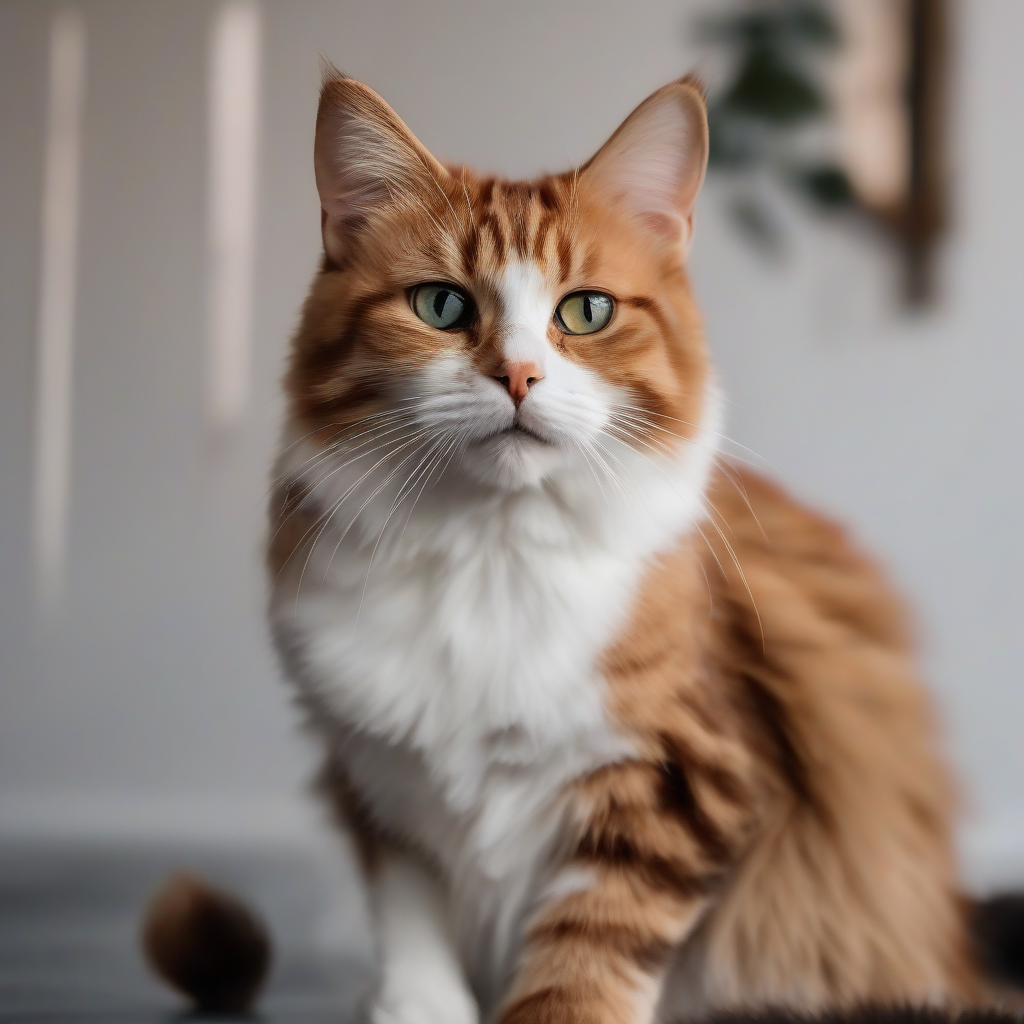
In this article, you will discover how your cat learns goal-oriented behaviors, how they use their brains to get what they want, and how you can leverage these neurocognitive secrets in training.

In this article, you will discover how your fish perceive visual cues and daily routines in the aquarium, the role of memory mechanisms in this process, and scientific training secrets you can apply to enhance their mental vitality.

In this article, you will discover the profound neurosensory effects of aquarium substrate on fish brain health and behavior, and scientific secrets for an optimal habitat.
Acute respiratory obstruction, or choking, in your hamster is one of the most urgent, life-threatening emergencies. In this article, we will delve into the 5 insidious neurophysiological effects of choking on your hamster's brain and the lifesaving emergency intervention codes you can apply in this critical situation. Swift and correct action can save your tiny friend's life.
Cats are known as mysterious and independent creatures that have lived with humans for centuries. However, their independence does not compromise their learning abilities and the surprising cognitive strategies they employ to achieve specific goals. Whether waiting for a food bowl to open, trying to catch a particular toy, or demanding attention from you, a cat is actually exhibiting complex "goal-oriented" behavior. So, how do cats use their brains to get what they want? In this article, we will delve into this hidden process in your cat's mind from a neurocognitive perspective and reveal the scientific secrets of how you can leverage this knowledge to your advantage in their training.
Goal-oriented behavior is when an organism consciously directs its actions to achieve a specific outcome. In cats, this goes beyond mere instinctive hunting drives; it encompasses their ability to understand their environment, solve problems, and even interact with humans to get what they want. This process is governed by the brain's complex reward, expectation, and learning circuits.
When your cat has a goal (e.g., a door opening), their brain creates an "expectation code." This anticipation activates reward pathways, particularly those regulated by the neurotransmitter dopamine. When your cat performs an action and that action is reinforced with a positive outcome (reward), their brain strengthens this connection. This increases the likelihood of repeating the same behavior to achieve similar results in the future. Research shows that cats have a strong neurobiological response to predictable rewards. To deeply understand this mechanism, you can read our article Your Cat's Brain's 'Expectation Code': 5 Insidious Neurobiological Collapses Triggered by Routine Changes and Scientific Secrets to Harmonious Living!, which addresses expectation processes in your cat's mind.
Cats may not be as overtly social learners as dogs, but they still observe their surroundings carefully. A cat watching how you open a particular door or hide a specific toy is part of their goal-oriented learning process. Through observation, they try to decipher potential action-outcome relationships. This demonstrates their cognitive flexibility and problem-solving abilities.
The strategies your cat uses to reach a goal emerge from the coordinated work of different brain regions. Here are the 5 neurocognitive secrets behind this process:
Cats are incredibly adept at perceiving even the smallest cues in their environment to achieve their goals. Their senses of sight, hearing, smell, and touch continuously create a "perception map" in their brains. For example, a small gap on a box, a mouse's hiding spot, or the glint of a toy can be important visual cues that attract a cat's attention and prompt action. Your cat can develop their ability to perceive and respond to such cues through play; for more information on this, you can refer to our article Your Cat's 'Hidden Perception Map': 5 Neurocognitive Secrets to Boosting Their Brain with Play-Based Learning!. Their brains rapidly process these cues and associate them with potential rewards.
A cat can remember paths it has tried and failed, and also not forget those that were successful. This is where working memory comes into play. Through the ability to hold and manipulate short-term information, cats develop strategies through trial and error. For instance, if scratching the door doesn't work, they might try meowing or pushing the doorknob with their paws. Brain regions similar to the prefrontal cortex play a role in these complex decision-making processes.
A cat's emotional state profoundly influences its goal-oriented behaviors. A stressed, frightened, or anxious cat may struggle to be motivated to learn something new or achieve a goal. Conversely, a cat that feels safe, comfortable, and happy will be much more curious and open to learning. Motivational drive is shaped by the brain's limbic system and reward centers. Ensuring your cat is in a positive mood increases their voluntary participation in training. To increase your cat's participation in challenging situations like vet visits, the article Your Cat's 'Voluntary Participation' Secret: 5 Keys to Neurocognitively Optimizing Vet Visits and Care Routines! can guide you.
Achieving a goal involves not only knowing what to do but also knowing how to do it physically. Cats possess the ability to precisely plan and execute motor actions such as jumping, climbing, pushing, or pulling. The brain's motor cortex and basal ganglia play a critical role in this process. Furthermore, when one method fails, they can quickly adapt to a different physical approach, demonstrating their motor flexibility.
Every action yields a consequence, and cats continuously learn from these outcomes. Positive feedback (rewards) reinforces behavior, while negative feedback (absence of reward or an unpleasant experience) weakens it. This feedback loop is managed by the brain's learning and memory regions (hipokampus, amigdala). Over time, cats fine-tune their actions to become more efficient, thereby reaching their goals faster and more effectively.
Understanding your cat's goal-oriented learning abilities allows you to enhance your training strategies:
Utilize games and puzzle feeders that mimic your cat's natural hunting instincts. This develops their problem-solving skills and encourages them to exert mental and physical effort to achieve a goal. Goals like "catching" a toy or "extracting" food from a puzzle activate your cat's reward circuits in the brain and ensure continuous learning.
Cats are creatures of routine. A consistent training routine and a predictable environment help them feel secure and focus on their goals. An environment where expectations are clear reduces a cat's stress levels and increases its learning capacity.
Always use positive reinforcement. Immediately reward your cat when it exhibits the desired behavior (a tasty treat, toy, or affection). This strengthens the brain's reward circuits and encourages the cat to repeat the behavior. Never use punitive methods, as these can lead to fear and anxiety in cats, stifle their learning ability, and even erode their trust in you. Even in situations where your cat shows resistance to touch or specific actions, approaching with positive methods is crucial; the article Your Cat's 'Silent Touch Rejection': 5 Neurocognitive Barriers Turning Vet Visits into a Nightmare and Scientific Training Secrets for Smooth Appointments! can offer valuable insights on this.
Understanding your cat's 'secret goal-oriented' ability allows you to build a deeper bond with them and make your training processes much more efficient. Knowing how their brains work will help you maximize your cat's potential with patience, a consistent approach, and positive reinforcement. Remember, every cat is an individual, and their learning speeds can vary. Respecting their mental processes is key to raising a happy and balanced pet.
