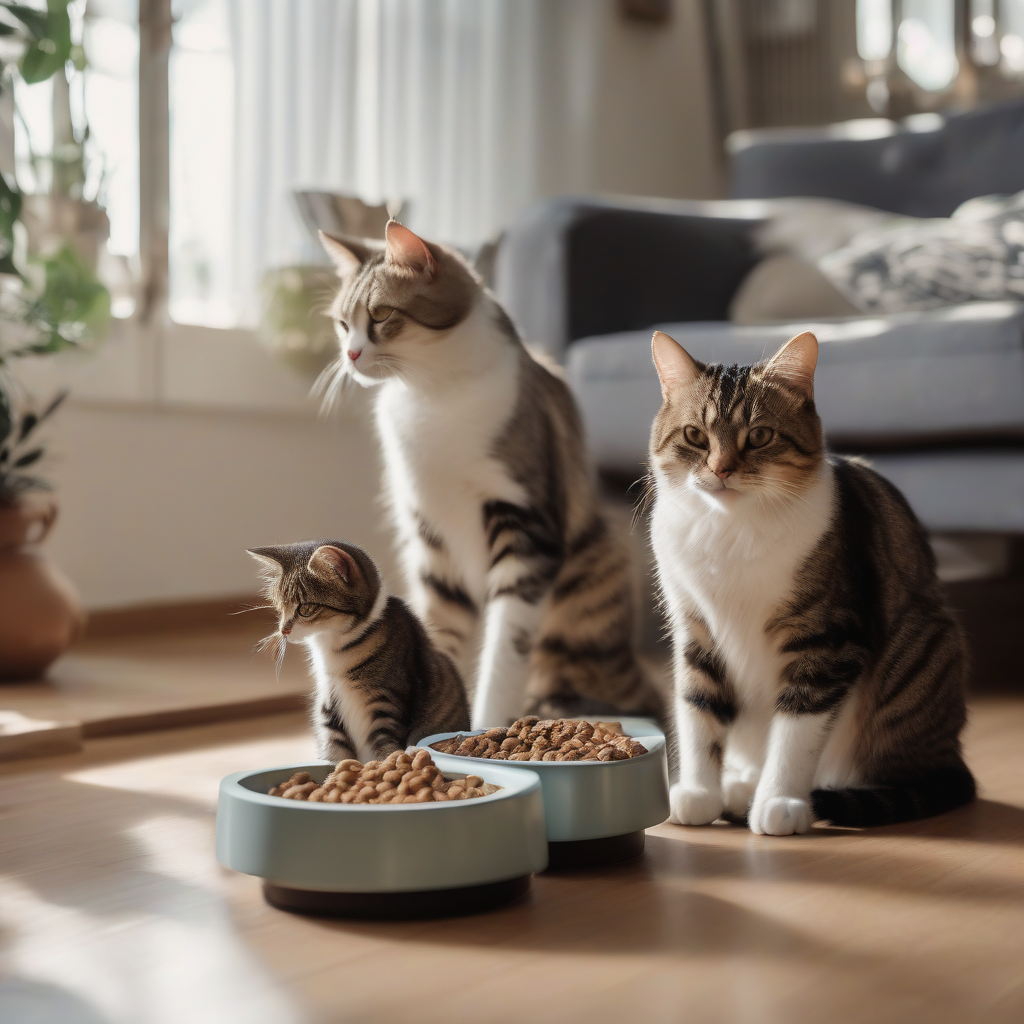
We delve into the neurobiological origins of 'virtual territory wars' and boundary conflicts between cats in multi-cat households. Discover scientific solutions to overcome these post-adoption challenges.


In this article, you will find comprehensive information about the insidious neurobiological effects of artificial colorings, preservatives, and flavors found in commercial bird feeds on your bird's brain health and mental vitality. We explore scientific nutritional secrets to combat these hidden dangers, shedding light on a wide spectrum of effects from behavioral changes to cognitive decline.
In this article, you can discover the scientific secrets to understanding your cat's undesirable habits, deciphering the neurocognitive mechanisms in their brain, and establishing lasting new routines.

Discover the types of burns your dog can suffer, the 5 insidious neurophysiological effects these burns create in the brain and body, and lifesaving emergency intervention strategies in this comprehensive guide. We shed light on the dangers behind forgotten household accidents from a scientific perspective.
Housing multiple cats under one roof offers both immense joy and complex challenges for cat owners. Each cat inherently possesses an individual 'territorial map,' and when these maps overlap, neurobiological boundary conflicts, which we call 'virtual territory wars,' can arise. This situation is not limited to physical fights but can lead to stress, behavioral problems, and a decline in overall well-being. As of May 2026, in light of the latest neurobiological research in veterinary science, we will delve into why your cats establish these boundaries and how you can scientifically resolve these conflicts.
Cats perceive their world quite differently from us. Each cat creates a complex system of 'spatial memory' and 'territorial hierarchy' that includes resources, hideouts, climbing areas, and even interactions with you. These are not just visible physical boundaries but also a set of 'virtual boundaries' defined by scents, sounds, and visual cues. These virtual maps are shaped by areas in the cat's brain like the hippocampus and amygdala.
The cat's hippocampus is responsible for mapping the environment and storing spatial information. When a cat enters a new environment or meets a new cat, its brain rapidly creates a 'threat' or 'safe zone' map. These maps are constantly updated with the cat's past experiences and genetic predispositions. If there's an overlap between the mental territorial maps of two cats, it can lead to a neurobiological stress response.
For cats, scent is a means of communication and boundary demarcation. Pheromones secreted from glands on their faces and paws form a silent language between cats. When a cat leaves its scent in an area, it's essentially sending a neural signal that the area is 'theirs.' When another cat detects this scent, the information is processed via its olfactory receptors in the brain, triggering behavioral responses such as stress, avoidance, or challenge. This is why our article Your Cat's Secret 'Scent Architecture': The Neurobiological Impact of Pheromone Signals at Home and Scientific Design Secrets to Zero Out Stress! offers deeper insights into this topic.
Understanding the neurobiological mechanisms behind tensions in multi-cat households is the first step toward finding solutions. Here are the 5 most common boundary conflicts and their scientific explanations:
Resources like food bowls, water sources, litter boxes, sleeping areas, and favorite scratching posts are vital for cats. When these resources are insufficient or improperly distributed, the amygdala region of the cat's brain (associated with fear and aggression) can become overactive. Each cat tends to claim these resources as 'their territory.' If a cat perceives another cat approaching one of these resources as a threat, it leads to a conflict based on resource guarding. Providing separate and ample resources for each cat is key to minimizing this neurobiological response.
An often unseen social hierarchy exists among cats. This hierarchy emerges from a cat's attempt to establish dominance over another and is closely linked to serotonin balance in the brain. Low serotonin levels can increase aggression and anxiety. When a new cat is adopted or the existing hierarchy is disrupted, cats may engage in 'virtual territory wars' to establish who holds which status. By observing their interactions and avoiding unnecessary interference, you can make this process more manageable. Especially the first few days post-adoption are critical, as explained in our article Your Cat's 'Secret Social Chemistry': 5 Neurocognitive Secrets for Stress-Free Adaptation in the First Days of a New Home!.
Sometimes, 'play' between cats can escalate into a conflict due to one cat misinterpreting the other's hunting instinct. What might be an innocent game for one cat can be perceived as a real threat by the other, as the brain's hunting and defense mechanisms can be triggered simultaneously. Behaviors like stalking, ambushing, or pawing can trigger fear and defensive responses in the recipient cat's brain. Supervised playtime and providing sufficient individual hunting simulations for each cat can reduce these misinterpretations.
Sudden changes in the home, a perceived threat from outside (another cat, a strange animal), or even the appearance of a new object can neurobiologically stress cats. Cats' cortical visual and auditory centers can be hypersensitive to environmental changes. This can manifest as 'redirected aggression,' such as a cat attacking an indoor companion after seeing another cat through the window. Using curtains or providing calming sounds can reduce the impact of such triggers.
Cats are creatures of routine. Abrupt changes in feeding times, play sessions, or your arrival and departure times can trigger the cat's hypothalamic-pituitary-adrenal (HPA) axis, increasing cortisol levels. High cortisol levels can increase chronic stress and, consequently, inter-cat tension. A regular and predictable routine helps cats feel neurobiologically secure, reducing the likelihood of conflict. This situation can also overlap with symptoms of chronic stress discussed in our article Your Cat's 'Silent Fatigue': 5 Hidden Neurometabolic Signals of Chronic Pain and Lifesaving Scientific Solutions!.
Neurobiologically-based approaches are highly effective for managing and resolving inter-cat boundary conflicts:
Providing each cat with a separate 'personal space' and resources is crucial. This means not only separate food and water bowls but also multiple litter boxes, scratching posts, and sleeping areas. Vertical spaces help cats feel secure and expand their 'virtual maps.' Our article Your Cat's Secret Sanctuary Map: 5 Hidden Neurobiological Dangers of Vertical Spaces and Safe Height Secrets! will guide you in this regard. Ensuring sufficient space and resources for each cat reduces competition and associated neurobiological stress responses.
Synthetic pheromone sprays or diffusers (e.g., Feliway) can send calming signals to cats' brains by mimicking naturally produced calming pheromones. This is a scientifically proven method that helps lower cats' stress levels and reduce tension in the home. Such applications can support neurobiological balance, especially during new cat adoptions or tense situations.
Predictability is fundamental to security for cats. Regular feeding times, play sessions, and interactions with you help keep cats' stress hormone cortisol levels stable. This enables cats to manage their brain's stress response and remain calmer.
Rewarding non-aggressive interactions and calm behavior with positive reinforcement encourages cats to form positive bonds with each other. Through treats or favorite games, the reward centers in cats' brains are activated, reinforcing desired behaviors. This method becomes even more effective when combined with communication-focused strategies like those found in Decode Your Cat's 'Silent Language': 5 Critical Secrets to Overcoming Communication Barriers with Behavioral Neurology.
If conflicts persist or aggression escalates significantly, seeking help from a veterinary behavior specialist is essential. Experts can assess your cats' neurobiological status and recommend more specific solutions, such as pheromone therapies, environmental adjustments, or, if appropriate, low-dose anxiolytic medications. This professional support is the safest way to ensure the well-being and peace of mind of your cats at home.
Creating a peaceful environment in multi-cat households begins with understanding the complex 'virtual territory wars' in your cats' brains. With scientific approaches and patience, you can provide a stress-free and happy living space for all your feline companions.
