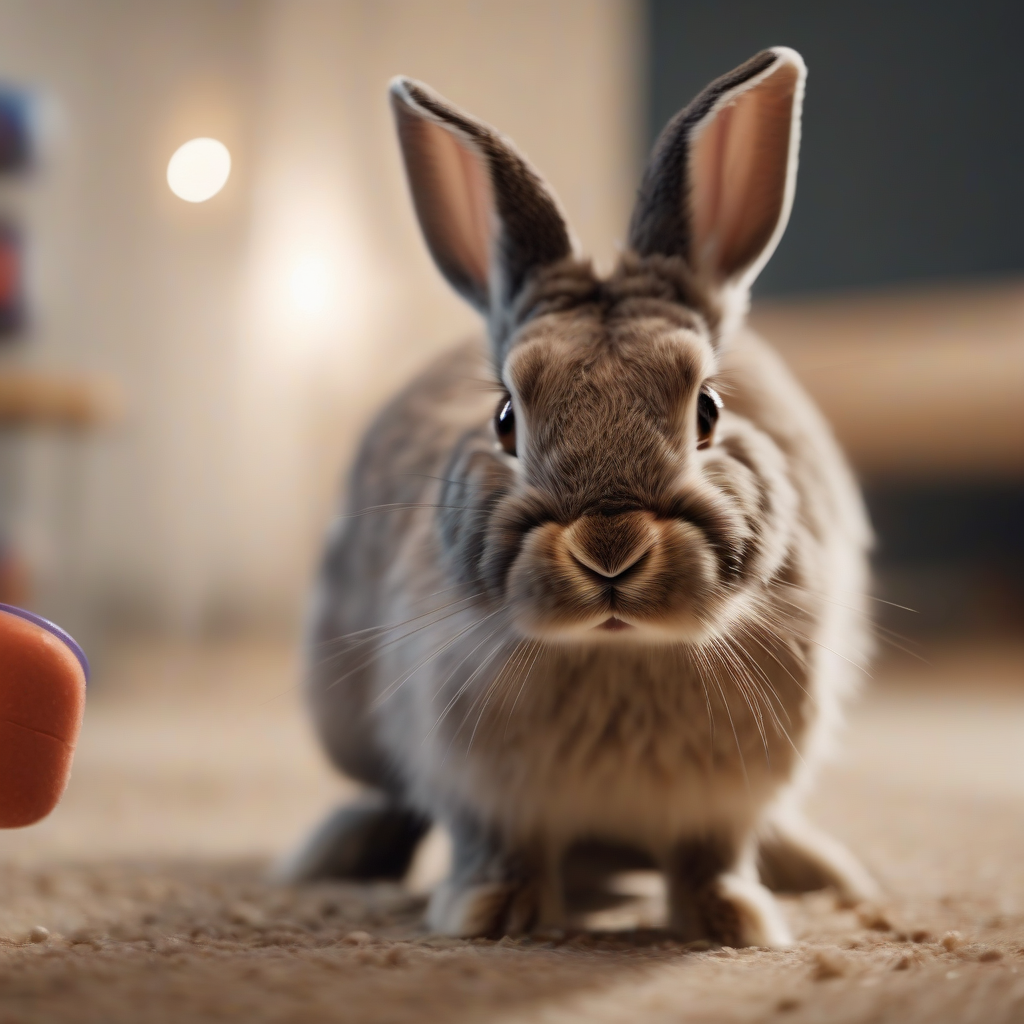
In this article, you will discover target-oriented training techniques to unlock your rabbit's cognitive abilities, scientific secrets to enhance problem-solving skills, and mind-opening games to keep their intellect sharp.


Discover the types of burns your dog can suffer, the 5 insidious neurophysiological effects these burns create in the brain and body, and lifesaving emergency intervention strategies in this comprehensive guide. We shed light on the dangers behind forgotten household accidents from a scientific perspective.

Discover the neurobiological signals of hidden stress your newly adopted cat experiences during adaptation to a new social environment. This article reveals 5 insidious signs of your cat's silent struggle and scientific strategies for peaceful, long-term harmony.

Your dog's anal sacs, located beneath the tail, can be hidden alarm bells often overlooked but profoundly affecting their quality of life. In this article, you will discover the 5 insidious neurobiological effects of anal sac problems on the brain and the lifesaving care secrets you need to know for your furry friend to live a peaceful life.
Rabbits are more than just cute companions; they are surprisingly intelligent and eager-to-learn creatures. This often misunderstood perception leads to their cognitive abilities being overlooked. However, with the right approaches, you can unlock your rabbit's mental potential, enhance their problem-solving skills, and strengthen your bond with them using scientific methods. As of March 2026, the latest research in veterinary science points to the depths of rabbits' learning capacity. In this article, we will explore how to build an 'Invisible Intelligence Course' for your rabbit, target-oriented training techniques, and the scientific secrets of mind-stimulating games.
Rabbits are naturally curious and inclined to explore. However, when these instinctive drives are not adequately met in a domestic environment, boredom, destructive behaviors, and even stress-related health issues can arise. Intelligence training plays a vital role in your rabbit's mental and emotional well-being. Cognitive stimulation sharpens their natural problem-solving abilities, helps them perceive their environment more meaningfully, and potentially redirects undesirable behaviors into positive channels.
Rabbit learning processes are generally based on principles of classical and operant conditioning. Positive reinforcement is the most effective method for increasing the frequency of desired behaviors. Rabbits are more likely to repeat an action when they learn it will lead to a reward. This not only teaches simple commands but also builds a foundation for them to learn more complex tasks and sequential behaviors. For example, when a rabbit is rewarded for touching a target, it can learn to use this target as a starting point for a larger task, such as opening a door or overcoming an obstacle. This process shapes how rabbits perceive and react to their environment.
Mental exercises help reduce anxiety levels in rabbits and improve their overall well-being. Engaging in fun and challenging tasks allows them to utilize their energy positively and prevents issues like Your Rabbit's Overlooked Stress Triggers: Scientific Codes of Silent Anxieties and the Art of Creating a Peaceful Living Space caused by boredom. Furthermore, the training process builds a strong Your Rabbit's 'Secret Bonding Language': Scientific Secrets to Deepening Existing Relationships and Overcoming Social Crises! between you and your rabbit; it allows you to develop a relationship based on trust and understanding. Especially for rabbits with a traumatic past, such as Your Rabbit's 'Whispers of the Past': Scientific Secrets of Social Reintegration in Rescue Rabbits and a Peaceful Future!, training facilitates their adaptation to new environments.
Target training involves teaching rabbits to touch a specific object (usually a stick or a finger). This simple start serves as a bridge for more complex behaviors.
The most critical element in target-oriented training is using positive reinforcement at the right time and in the right way. The moment your rabbit touches the target, a "click" sound (if using a clicker) or a verbal marker (e.g., "good") should be given, immediately followed by a small, favorite treat (e.g., a piece of carrot or hay). The timing is so precise that the reward must be given within fractions of a second for the rabbit to understand which behavior is being rewarded. This prevents your rabbit from associating the reward with an unintended behavior.
When teaching a complex behavior, it's crucial to break it down into small, manageable steps (shaping). For example, if you want a rabbit to go through a tunnel, you can first reward them for approaching the tunnel's entrance, then for putting their nose inside, then for taking a step, and finally for passing through the tunnel entirely. Each successful step prepares the rabbit for the next stage. This process teaches your rabbit how to learn and encourages them to tackle new challenges. Additionally, considering factors of the training environment, such as Your Rabbit's 'Secret Floor Science': From Linoleum to Carpet, Scientific Secrets to Reduce Environmental Stress!, will ensure your rabbit feels secure and comfortable, facilitating the learning process.
Once target-oriented training is mastered, you can design various games and exercises to further advance your rabbit's cognitive skills.
Puzzle toys designed for rabbits or homemade games encourage them to use mental effort to access food rewards. For instance, you can place a favorite treat inside a box and lightly close the lid, challenging your rabbit to figure out how to open the box or retrieve the treat. Such games develop the rabbit's trial-and-error learning ability and satisfy their natural foraging instincts.
Using target-oriented training, you can create a simple obstacle course. You can teach your rabbit to go through a tunnel, climb a ramp, or jump through a small hoop. This not only enhances their physical agility but also develops their ability to follow a sequence of commands. In a multi-rabbit household, such training can help establish a Your Rabbit's 'Secret Hierarchy Map': Scientific Secrets of Group Dynamics and Strategies for Harmonious Coexistence! and allow each rabbit to showcase its own abilities.
Avoiding some common mistakes in the rabbit training process is key to success.
Rabbits learn at their own pace. Each session should be short (5-10 minutes) and positive. Never force your rabbit or use punishment; this eradicates trust and diminishes their willingness to learn. Consistency is vital for reinforcing learned behaviors. Organizing short training sessions at the same time each day helps your rabbit establish a routine.
Instead of forcing your rabbit into training, provide motivating rewards and an enjoyable environment. The training area should be quiet, safe, and free from distractions. When you notice signs that your rabbit is stressed (ears flattened back, tense posture), take a break from the session. Remember, the goal of training is to enhance your rabbit's well-being, not to cause stress.
Conclusion: Building an 'Invisible Intelligence Course' with your rabbit not only teaches them new skills but also fosters a deep bond between you. Through target-oriented training and intelligence games, you can unlock your rabbit's cognitive abilities, sharpen their problem-solving skills, and offer them a richer, more meaningful life. This training process, supported by scientific approaches, will be a unique experience for your rabbit's happiness and for you.
