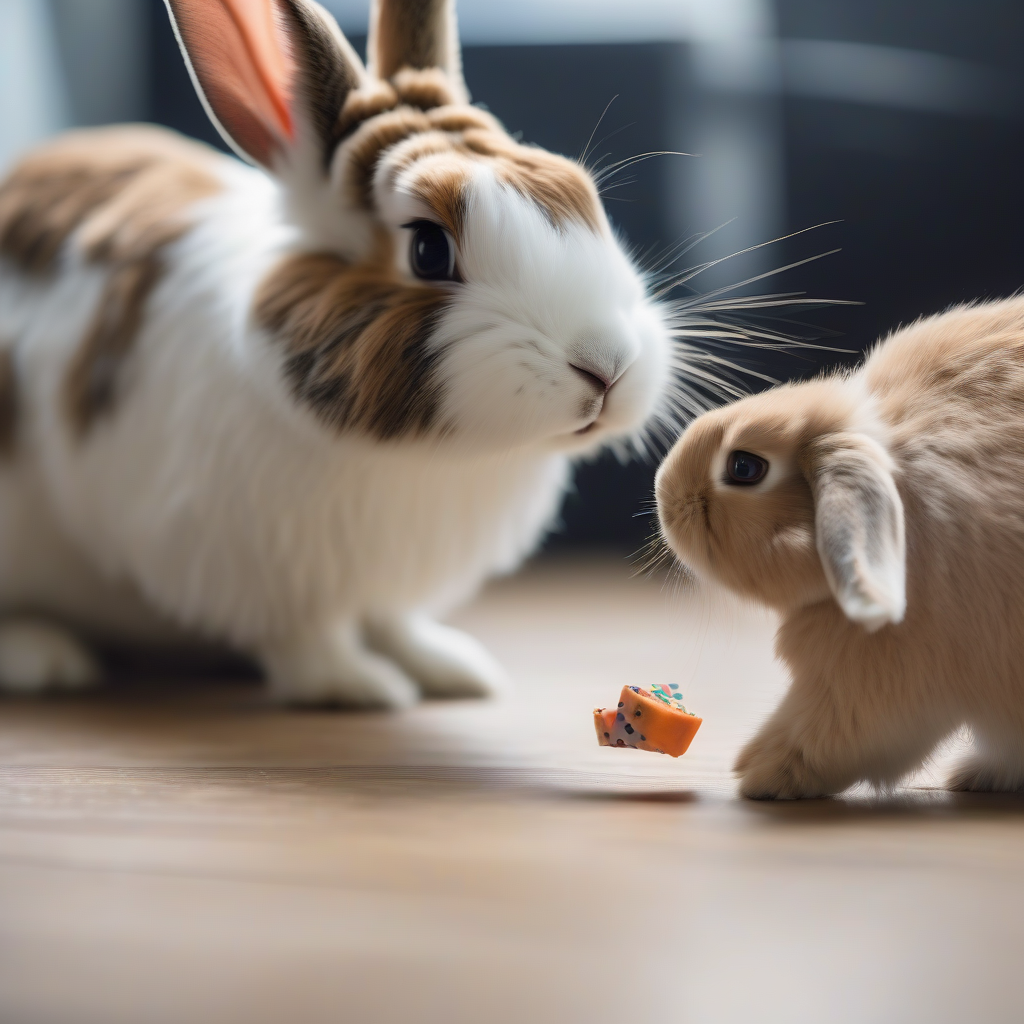
Rabbits are often underestimated in their intelligence and learning abilities, but with the right training methods, they can exhibit surprising behaviors. In this article, you will discover how to maximize your rabbit's neurocognitive potential through clicker training, by exploring their 'secret reward map', fast adaptation tactics, and scientific secrets.


Discover the neurobiological signals of hidden stress your newly adopted cat experiences during adaptation to a new social environment. This article reveals 5 insidious signs of your cat's silent struggle and scientific strategies for peaceful, long-term harmony.

Your dog's anal sacs, located beneath the tail, can be hidden alarm bells often overlooked but profoundly affecting their quality of life. In this article, you will discover the 5 insidious neurobiological effects of anal sac problems on the brain and the lifesaving care secrets you need to know for your furry friend to live a peaceful life.
In this article, you will find comprehensive information on the insidious neurotoxic effects of heavy metal poisoning in aquarium fish, its symptoms, and lifesaving emergency intervention codes. This condition, which can arise from household water sources, improper equipment, or neglect, can severely threaten your fish's quality of life and lifespan.
Rabbits, beneath their cute appearance, are highly intelligent and eager-to-learn creatures. However, their training potential is often not explored as much as that of cats or dogs. Yet, with the right techniques and a neurocognitive approach, rabbits can learn complex commands, develop problem-solving skills, and form deeper bonds with their owners. At this point, clicker training stands out as a powerful tool that activates your rabbit's 'secret reward map' in the brain, accelerating the learning process and basing behavioral adaptation on scientific principles.
As of May 2026, advancements in animal behavioral science have enabled us to understand animal learning mechanisms in depth. Specifically for rabbits, clicker training is not just a method for teaching commands, but also an enrichment strategy that supports their cognitive development and reduces stress levels. In this article, we will examine the neurocognitive foundations of clicker training and share 5 scientific secrets and rapid adaptation tactics to unleash your rabbit's hidden intelligence.
Clicker training is based on operant conditioning principles and directly targets the reward system in rabbits' brains. Its core involves establishing a strong neuronal connection between a clear and consistent signal (the click sound) immediately following a specific behavior, and a primary reward (usually food).
Behavioral science has clearly demonstrated dopamine's central role in the reward and motivation loop. When a rabbit performs a behavior and is then clicked and rewarded, the mesolimbic dopamine pathway in its brain is activated. This activation creates a 'pleasurable' learning experience that increases the likelihood of the rabbit repeating that behavior. The clicker creates a strong 'anticipation' signal for the upcoming reward, multiplying motivation and learning speed. This situation forms the basis of positive reinforcement, as detailed in the article Your Rabbit's 'Hidden Learning Brain': 5 Neurocognitive Secrets of Rapid Adaptation with Positive Reinforcement!.
Initially, the clicker sound is a neutral stimulus. However, when paired with a primary reinforcer like food, it quickly becomes a conditioned reinforcer. This means that even just hearing the click sound triggers an expectation of reward in the rabbit's brain. This makes the clicker incredibly effective for shaping complex behaviors, as we can provide immediate feedback precisely at the desired moment (at the peak of the behavior). This speed and precision enable faster and stronger neuronal connections to form.
Clicker training requires specific strategies to maximize your rabbit's learning capacity:
The most critical element of clicker training is timing. It is vital that the click sound occurs immediately when the desired behavior happens (ideally within 0.5-1 second). Delay prevents the rabbit from understanding which behavior it is being rewarded for, slowing down learning. Additionally, consistently applying training with the same clicker sound and similar rewards helps the rabbit's brain form robust neuronal connections. This consistency is fundamental for the development of your rabbit's Spatial Intelligence and training success.
To teach a complex behavior, breaking it down into small, manageable steps (shaping) is neurocognitively more effective. Clicking and rewarding for success at each small step keeps the rabbit motivated and reinforces its progress. For example, when teaching to enter a box, progress in stages such as looking at the box, then putting one paw in, then two paws. This method reduces the rabbit's cognitive load and maintains a continuous sense of 'success'.
Not all rabbits respond to the same reward in the same way. Identifying your rabbit's favorite rewards (such as lettuce, parsley, carrot pieces) will increase its motivation in training. The high value of the reward directly affects dopamine release and thus learning speed. Occasionally offering different high-value rewards makes the training more engaging for the rabbit.
During training sessions, environmental distractions (loud noises, other pets) make it difficult for the rabbit to focus. Neurocognitively, the brain struggles to process multiple stimuli simultaneously. Starting in a calm and familiar environment allows the rabbit to process new information more effectively. As stated in the article Your Rabbit's Invisible 'Escape Architecture': The Neurocognitive Importance of Safe Havens and Stress-Zeroing Design Secrets!, a safe and stress-free environment is critically important for learning.
Stress causes the release of stress hormones like cortisol, which negatively impact learning and memory functions in the rabbit's brain. Keeping training sessions short (5-10 minutes), enjoyable, and positive keeps these hormone levels low. As explained in the article Navigating Your Rabbit's 'Patience Test' 5 Insidious Neurocognitive Barriers: Zero Out Exhaustion with Scientific Training!, it's crucial to take breaks and always create a positive atmosphere to prevent exhaustion.
Clicker training not only teaches basic commands but also enhances your rabbit's mental agility:
Start with basic commands like 'come', 'turn', 'touch the target stick'. Once your rabbit grasps the meaning of the clicker, you can combine these basic behaviors to create more complex sequences. For example, jumping over an obstacle or retrieving a specific toy. This process develops the rabbit's problem-solving ability and attention span.
Turn training into a game. Using different reward mechanisms, interactive toys, and short, frequent sessions keeps the rabbit engaged. Remember, rabbits may resist learning when bored. Mental stimulation not only enhances training but also your rabbit's overall well-being and strengthens the bond established through Neurobiology of First Impressions.
In conclusion, clicker training is a scientific way to discover your rabbit's neurocognitive potential and build a richer, more meaningful relationship with them. With patience, consistency, and the right techniques, you can unleash your rabbit's hidden intelligence and witness surprising abilities. Remember, every rabbit is an individual learner, and a personalized approach is the fastest way to success. Seeking support from your veterinarian or animal behavior specialists will guide you through your training journey.
