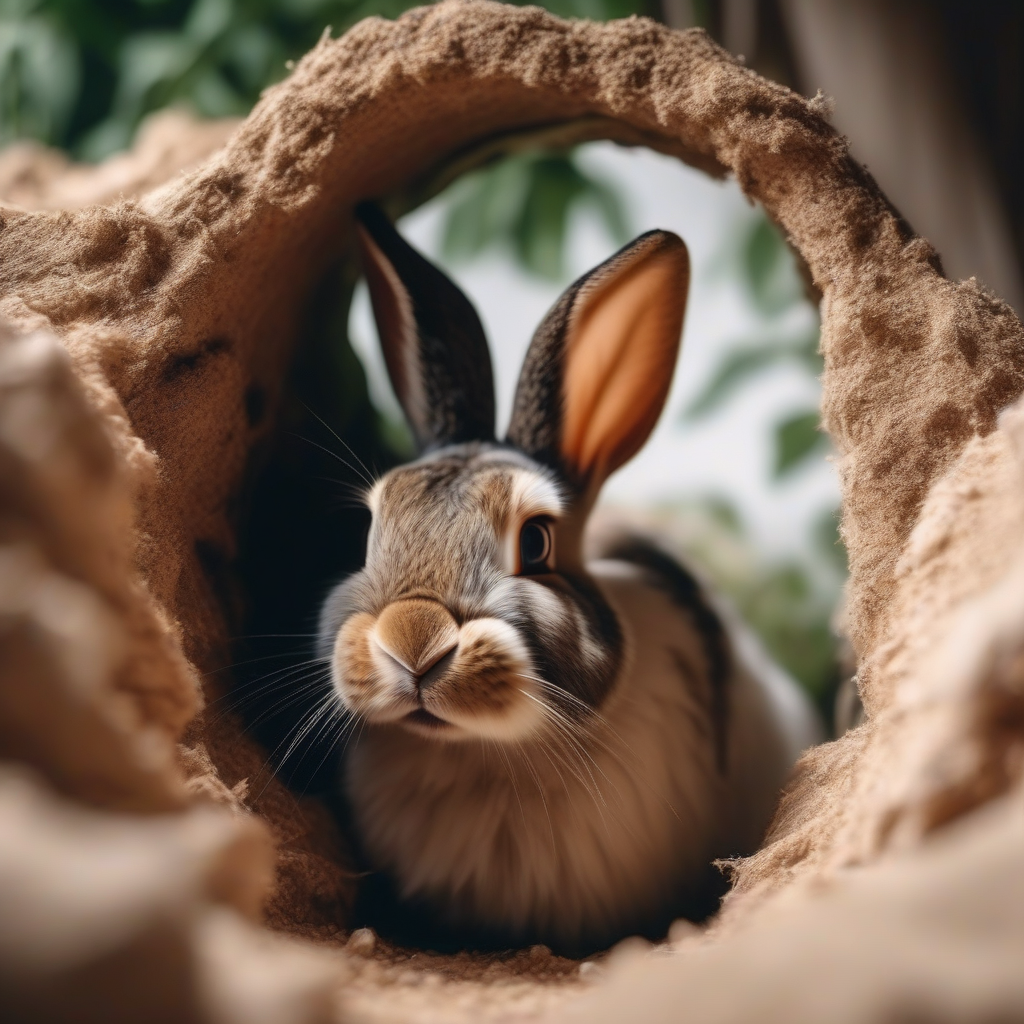
In this article, you will discover the neurocognitive foundations of rabbits' natural escape behaviors, the importance of safe havens, and scientific design secrets that minimize stress in their living environment.


In this article, you will discover the little-known but profound effects of the acoustic environment in rabbit living spaces on their brain health and general well-being, exploring the neurobiological consequences of both sound deprivation and overstimulation, and scientific secrets to creating a peaceful environment. Understand and optimize your rabbit's world with expert tips.
In this article, you will find comprehensive information about the insidious neurobiological effects of artificial colorings, preservatives, and flavors found in commercial bird feeds on your bird's brain health and mental vitality. We explore scientific nutritional secrets to combat these hidden dangers, shedding light on a wide spectrum of effects from behavioral changes to cognitive decline.

In this article, you can discover the scientific secrets to understanding your cat's undesirable habits, deciphering the neurocognitive mechanisms in their brain, and establishing lasting new routines.
Domestic rabbits have adapted to live in complex underground tunnel systems in their natural habitats. This subterranean world is more than just a shelter; it's central to their survival strategies, social structures, and most importantly, their neurocognitive well-being. However, in a home environment, this fundamental need is often overlooked. A simple hutch or tunnel you provide in your rabbit's living space acts as an "escape architecture," creating a profound sense of security and peace. In this article, we will delve into the neurocognitive foundations of rabbits' hidden need for this "escape architecture," the problems that arise from its absence, and scientific design secrets to provide a stress-free, peaceful living environment.
As prey animals, rabbits live with a constant perception of threat. This causes activation in brain regions related to fear and memory, such as the amygdala and hippocampus. A well-designed escape architecture offers your rabbit multiple ways to quickly hide in moments of sudden perceived danger (like an abrupt movement from you or another pet), thereby calming these fear centers. Tunnels with multiple entrances and exits, or interconnected boxes, prevent the rabbit from feeling trapped, and the presence of "escape route" options increases its resilience to stress. Neuroscientific research indicates that access to such safe spaces reduces cortisol levels and triggers endorphin release, leading to significant improvements in your rabbit's overall mood and physical health.
Instead of a simple hutch, incorporating tunnels and boxes of various shapes and sizes that can be interconnected, allowing for climbing and exploration, stimulates your rabbit mentally. These complex structures enhance your rabbit's problem-solving abilities, improve its spatial awareness, and eliminate monotony. In their natural lives, rabbits navigate complex tunnel networks to forage for food and escape predators. Providing such a mental challenge in a home environment supports their brain development and prevents boredom. This, much like what we discussed in "Is Your Rabbit's 'Spatial Intelligence' Collapsing? 5 Hidden Neurocognitive Barriers to Training Success!", allows rabbits to effectively utilize their cognitive capacities.
Rabbits enjoy having a degree of control over their environment. The ability to enter and exit a chosen sanctuary and decide how long to stay gives them a sense of autonomy. This feeling of control is a neurobiological factor that significantly impacts rabbits' stress levels. Being under the constant scrutiny of predators can lead to chronic stress in rabbits. Offering various hiding spaces allows the rabbit to choose its own area and retreat from sight whenever it desires. This is vitally important for managing anxiety and fear, as discussed in "Your Rabbit's Hidden Fear Map in the Brain: 5 Scientific Ways to Erase Past Anxieties and Build Deep Bonds of Love!". Your rabbit's ability to utilize its environment as it pleases enhances its self-confidence and supports its overall well-being.
When housing multiple rabbits together, ensuring each rabbit has its own safe sanctuary helps establish a healthy social hierarchy. These sanctuaries can serve as "escape points" or temporary "safe zones" in potential conflicts. This plays a critical role in reducing adaptation difficulties mentioned in "Your Rabbit's 'Social Adaptation Traps' in a New Environment: 5 Insidious Neurobiological Hurdles and Scientific Solutions for a Peaceful Home!". Having a space where each rabbit can retreat and feel secure lowers their stress levels and reduces the likelihood of aggression. The correct placement and number of sanctuaries positively affect the dynamics among your rabbits.
The choice of materials used in creating escape architecture also has a direct impact on your rabbit's neurocognitive well-being. Chew-safe and appropriate materials like cardboard boxes, hay tunnels, or natural wood structures satisfy your rabbit's natural gnawing instinct. This chewing behavior is not only critical for dental health (as touched upon in "Your Rabbit's Hidden 'Calcium Traps': 5 Unknown Neurophysiological Secrets of Dental and Bone Health!") but also functions as a stress-reducing mechanism. Furthermore, the texture and smell of the materials are important. Natural scents and soft textures make the rabbit feel secure and reduce cortisol release. As mentioned in "Your Rabbit's 'Hidden Paw Pain': 5 Neurocognitive Effects of Incorrect Flooring and Scientific Solutions for Pain-Free Steps!", the right choice of flooring and materials has a broad impact, from paw health to overall comfort.
Transforming your rabbit's living space from just a cage into a neurocognitively supportive "escape architecture" that appeals to its natural instincts is one of the most important steps you can take for its happiness and health. Safe havens, complex tunnel systems, and appropriate material selection reduce your rabbit's stress levels, increase its mental stimulation, and give it a sense of control over its environment. Through these scientific approaches, you can ensure your beloved pet lives a peaceful and enriched life. Remember, a happy rabbit is a healthy rabbit.
