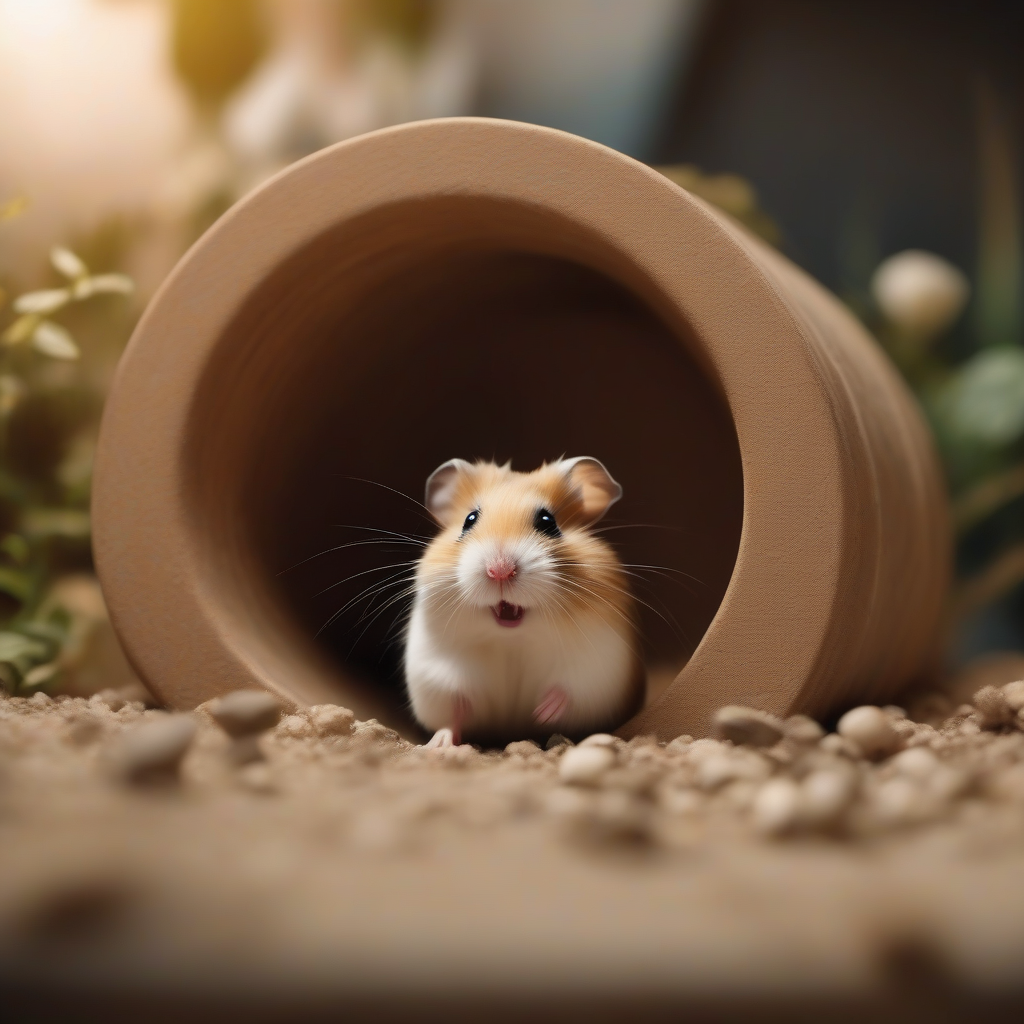
In this article, you will discover that your hamster's cage is more than just a shelter; it's a psychological space that profoundly impacts its mental health and well-being. With expert veterinary strategies, you can learn the overlooked scientific secrets of habitat arrangement to reduce your tiny friend's stress and increase its happiness.


Discover the neurobiological signals of hidden stress your newly adopted cat experiences during adaptation to a new social environment. This article reveals 5 insidious signs of your cat's silent struggle and scientific strategies for peaceful, long-term harmony.

Your dog's anal sacs, located beneath the tail, can be hidden alarm bells often overlooked but profoundly affecting their quality of life. In this article, you will discover the 5 insidious neurobiological effects of anal sac problems on the brain and the lifesaving care secrets you need to know for your furry friend to live a peaceful life.
In this article, you will find comprehensive information on the insidious neurotoxic effects of heavy metal poisoning in aquarium fish, its symptoms, and lifesaving emergency intervention codes. This condition, which can arise from household water sources, improper equipment, or neglect, can severely threaten your fish's quality of life and lifespan.
Despite their small size, hamsters are complex creatures with intricate mental and behavioral needs. An often-overlooked truth is that your hamster's habitat is not just a shelter, but a micro-world that profoundly affects its psychological well-being. The position, shape, and accessibility of every object within a cage directly influence your hamster's stress levels, activity patterns, and overall happiness. As of March 2026, the latest advancements in veterinary science continue to shed light on this "secret architectural" aspect of habitat arrangement.
Hamsters, being prey animals in the wild, live a life centered around security. These instincts persist in a cage environment. For them, a living space must be safe from threats, explorable, and allow easy access to resources. Even a misplaced water bottle or hiding spot can elevate their stress levels and lead to behavioral problems.
For hamsters, tunnels and hiding spaces are vital for security and rest. The strategic placement of these areas ensures they feel safe. Tunnel systems with multiple exits distributed across different areas satisfy the hamster's instinct to escape predators and fuel its exploratory drive. Sufficient and correctly positioned hiding spots help hamsters feel secure, significantly reducing stress. Errors in bedding material selection can also jeopardize this security; for more information, you can read our article The Overlooked Danger: Insidious Traps in Hamster Bedding Selection and 5 Lifesaving Scientific Rules.
Food and water are basic hamster needs, and their accessibility directly impacts stress levels. Placing food and water in safe, easily accessible spots helps hamsters feel secure. Offering multiple water sources (e.g., both a bottle and a heavy bowl) provides a backup in case of blockages or contamination. Distributing food in hidden locations encourages natural foraging behaviors and provides mental stimulation.
An incorrectly arranged living space can lead to chronic stress in hamsters and pave the way for various behavioral disorders. This situation not only diminishes the animal's quality of life but can also cause health issues. Proper management of the hamster's microclimate map can also affect stress factors; it would be beneficial to review our article Your Hamster's Microclimate Map: Invisible Threats, Hidden Comfort Zones, and Scientific Secrets to Optimize Habitat.
A stressed hamster may exhibit behaviors such as excessive chewing, feather plucking (in birds, but analogous in hamsters with bar chewing), cage bar chewing, constantly trying to escape, or lethargy. These behaviors are often the result of unmet instinctive needs or insufficient mental stimulation. Lack of space or monotony can cause the hamster to misdirect its energy, leading to the emergence of stereotypical (repetitive) behaviors. To understand your hamster's emotional world, you can gain more in-depth knowledge by reading Your Hamster's Secret Emotional World: Understanding Their Silent Screams and the Art of Cracking Behavioral Codes to Reduce Stress.
Especially when multiple hamsters are housed in the same cage, inadequate spatial arrangement can lead to territorial aggression. A lack of individual hiding and food storage areas can cause competition and fights. Sufficient and well-distributed resources and hiding places play a critical role in minimizing such conflicts. This situation holds a psychological power similar to the importance of vertical space for cats; for more information, you can consult Your Cat's Invisible Tower: The Psychological Power of Vertical Space and Stress-Reducing Home Design Secrets (March 2026).
Applying scientific principles when arranging your hamster's habitat is the best way to optimize its physical and mental health. Our goal is to create a safe and enriching environment that mimics its natural experiences.
The variety of objects within the cage and their regular rotation ensure mental stimulation for the hamster. Offering tunnels, ramps, bridges, and chew toys with different textures satisfies its exploratory and chewing instincts. However, these enrichments should not lead to clutter or restrict the hamster's movement. It is essential that every element serves a purpose and is safe. This approach is similar to understanding habitat codes for the behavioral welfare of rabbits; see Your Rabbit's Secret Habitat Codes: Scientific Secrets and Behavioral Welfare Beyond Surfaces.
Hamsters use scents to mark their territories, which is important for their perception of security. Regular, but not excessive, cage cleaning is crucial. Over-cleaning can cause hamsters stress by losing their own scent, while insufficient cleaning leads to hygiene problems. Leaving a small section with its scent for territorial marking can help the hamster feel at home. Dirty areas within the cage should be cleaned promptly, but disinfecting the entire cage simultaneously and too frequently is not recommended.
A running wheel is one of the most critical elements of a hamster's living space. Choosing a correctly sized (large enough for its spine to remain straight while running), sturdy, and safe (enclosed surface to prevent pinched paws) wheel is essential for physical and mental health. The wheel's position should not obstruct other items and should be easily accessible to the hamster. Other toys (chew blocks, climbing objects) should also be strategically placed to ensure safety and provide mental stimulation.
Arranging your hamster's habitat with the meticulousness of a scientist is an art that directly influences its mental well-being and happiness, beyond just its physical health. The correct placement of each item satisfies its natural instincts, reduces stress, and helps it lead a long, healthy life. Remember, by consciously designing every corner of your tiny friend's cage like a 'secret architect,' you can offer it a peaceful and enriching world.
