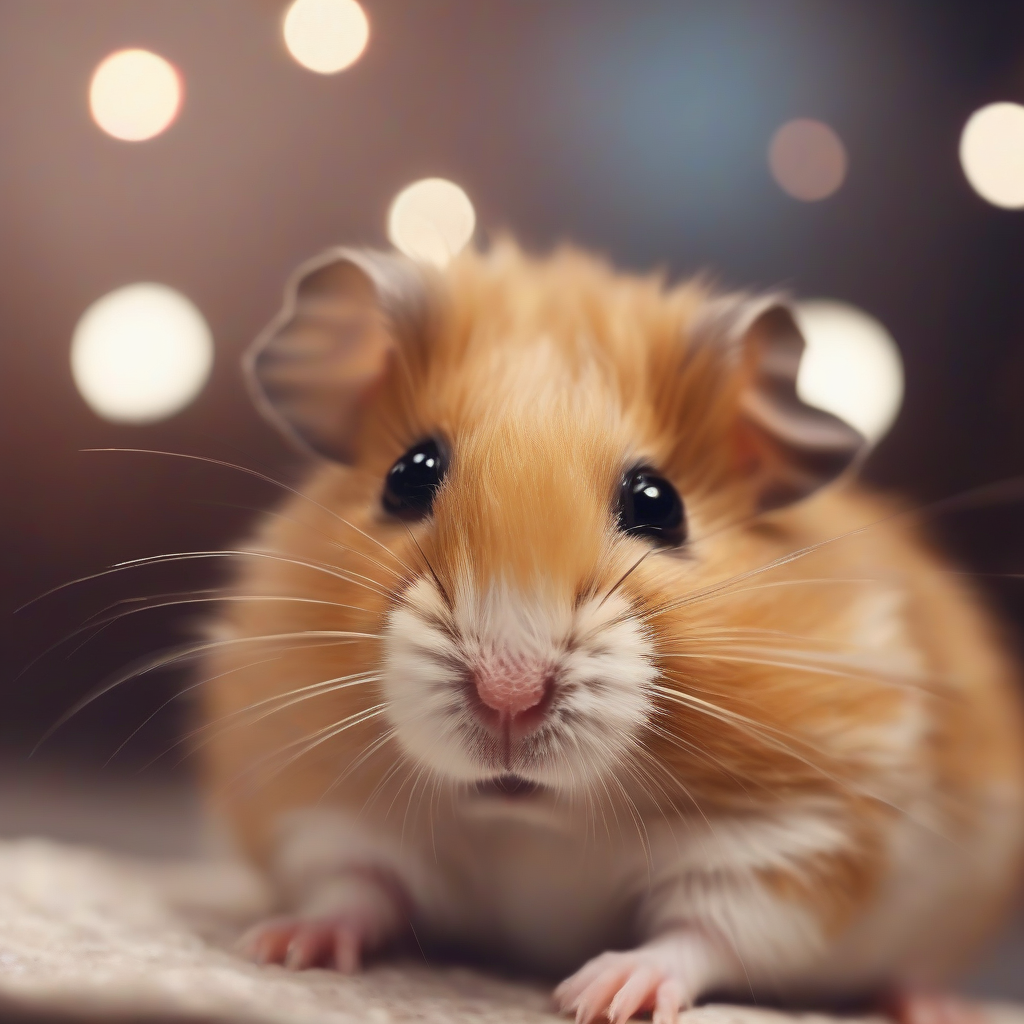
Discover the patience mechanism in your hamster's brain and how to enhance their patience during training. This article reveals the neurobiological secrets to managing waiting times and provides scientific training strategies.


While cats possess a surprising ability to adapt to high-rise fall traumas, the insidious neurophysiological effects on their brain carry vital risks. In this article, we reveal 5 critical neurobiological effects your cat may experience after a fall and the lifesaving emergency intervention codes with scientific secrets.

In this article, you will discover how your rabbit copes with unexpected situations and its neurocognitive responses to non-routine events. Learn scientific secrets to enhance mental flexibility and manage stress.

In this article, you will find comprehensive information on the insidious neurophysiological effects of seizures in cats' brains and lifesaving emergency intervention codes during a seizure.
The bond you share with your pet hamster shouldn't be limited to playtime alone. Training not only supports their cognitive development but also deepens your communication with them. However, when it comes to hamsters, training can sometimes be a patience-testing process. Have you ever wondered why your hamster struggles with waiting during training, and how you can make the process more efficient? In this article, we will uncover the neurobiological secrets of your hamster's 'patience room' and explore scientific ways to enhance their patience during training.
Hamsters are often known for their short attention spans, but this doesn't mean they lack the capacity for 'patience.' Specific neurochemical processes in their brains determine how long they can tolerate or wait for something. Particularly, neurotransmitters like dopamine and serotonin are closely linked to reward anticipation and stress management.
Hamsters operate a complex neurobiological system regarding how long they can wait for the outcome of an action (e.g., a treat). As the waiting period increases, the dopamine release in their brain may decrease, leading to impatience. During training, not giving the reward immediately is crucial for teaching the hamster to manage this situation.
Uncertainty or anticipation during training sessions can cause stress in hamsters. High cortisol levels can make it difficult to focus and lower their threshold for patience. Therefore, a calm and secure training environment helps reduce the hamster's stress levels, allowing them to be more patient. As we mentioned in our article Is Your Hamster's 'Secret Chemical Shield' Collapsing? 5 Neurobiological Nutrition Secrets to Zero Out Stress!, stress management is essential for overall well-being.
The hamster's living environment directly affects their patience capacity. Insufficient mental stimulation or a monotonous environment can lead to general restlessness. Conversely, a varied and enriched habitat can help them be less impatient. Your Hamster's Secret 'Ground Language': Neurobiological Secrets of Bedding Materials and Scientific Habitat Design to Zero Out Stress! delves into this topic in detail.
Each hamster has a different learning threshold. Some hamsters learn new behaviors faster, while others require more repetition. Impatience in training can sometimes be a sign that the hamster's learning threshold is being challenged. At this point, breaking down the training into smaller steps and repeating each step frequently helps the hamster process the information.
Patience in training is directly related to positive reinforcement. Rewarding a hamster immediately after it exhibits a correct behavior increases the likelihood of it repeating that behavior. However, allowing it to anticipate when the reward will come helps develop its waiting skills. This can be achieved by the reward coming after a specific period, rather than instantly.
Improving your hamster's patience skills will allow you to live more harmoniously with them. Here are some scientific strategies you can implement:
Considering hamsters' attention spans, keeping training sessions short (5-10 minutes) is most effective. Plan sessions during times when your hamster is most energetic, and ensure each session ends on a positive note.
Break down complex behaviors into smaller, manageable steps. Reward your hamster for successfully completing each step. This helps them understand the bigger picture while preventing them from finding the process overwhelming. Stimuli like those in Unlocking Your Hamster's Hidden 'Problem-Solving Intelligence': 5 Neurocognitive Strategies to Trigger Mental Development with In-Cage Puzzles! support patience.
Towards the end of training sessions, have your hamster wait for a short period for a small reward. This can start with a few seconds and gradually increase over time. Using the 'wait' command can reinforce this skill.
Ensure the training area is calm, free from noise, and not disturbed by other pets. Sudden sounds or movements can distract your hamster and disrupt their patience. Is Your Hamster's 'Secret Thermostat' Crashing? 5 Insidious Neurobiological Threats Triggered by Poor Ventilation & Lifesaving Nesting Secrets! similarly emphasizes the importance of environmental factors.
The most crucial strategy is for you to be consistent and patient. Respect your hamster's learning pace and never force them. Celebrate every small success and do not take setbacks personally. Understanding their decision-making processes, as in Your Hamster's 'Hidden Risk Algorithm': 5 Neurocognitive Secrets of Threat Assessment and Safe Decision-Making Mechanisms!, also enhances patience.
In conclusion, understanding the neurobiological secrets of your hamster's 'patience room' and combining this knowledge with scientific training strategies will allow you to form a deeper bond with them. With a patient approach and the right techniques, you can ensure your little friend becomes more successful and happier on their training journey.
