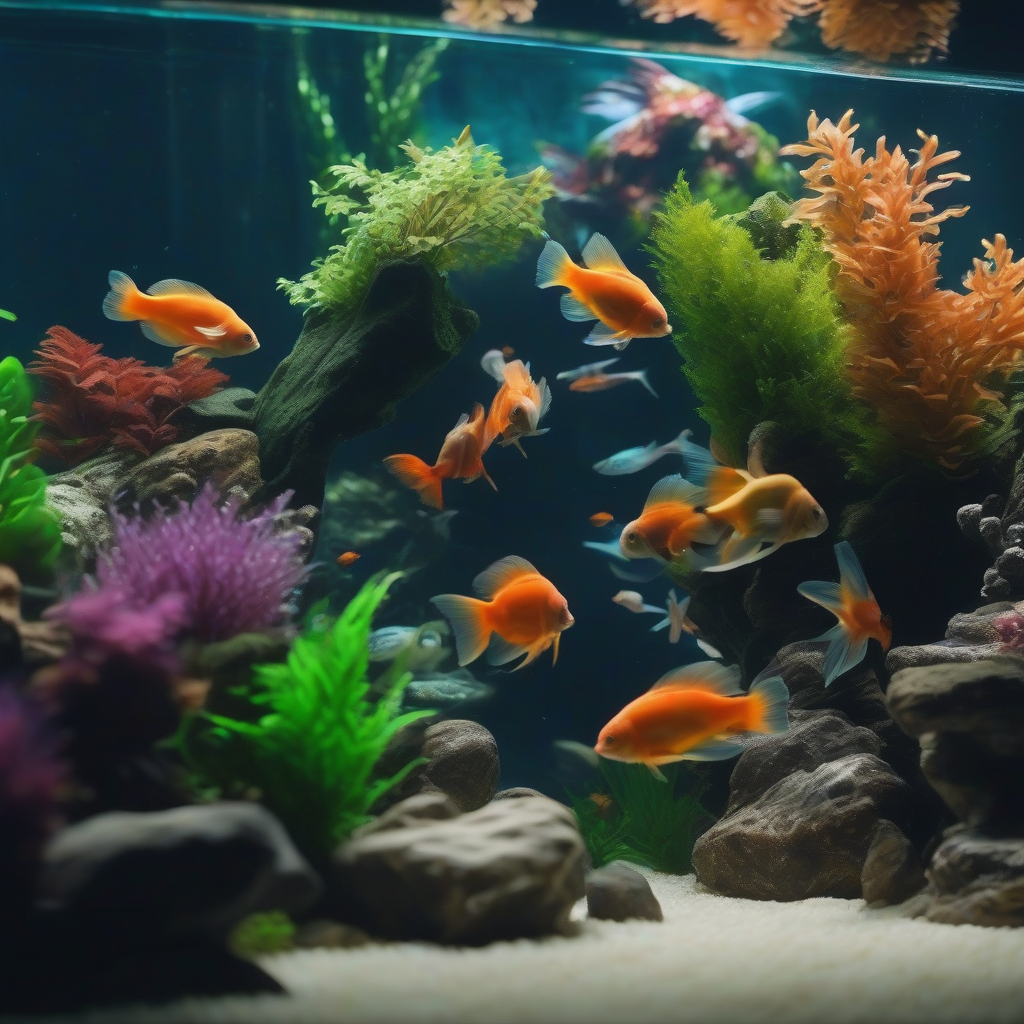
In this article, you will discover 5 distinct neurobiological personality types that deeply influence your fish's social interactions in the aquarium, and their critical role in creating a harmonious living space. Learn scientific grouping strategies to eliminate conflicts and ensure peace in your aquarium.


In this article, you will discover the little-known but profound effects of the acoustic environment in rabbit living spaces on their brain health and general well-being, exploring the neurobiological consequences of both sound deprivation and overstimulation, and scientific secrets to creating a peaceful environment. Understand and optimize your rabbit's world with expert tips.

In this article, you will find comprehensive information about the insidious neurobiological effects of artificial colorings, preservatives, and flavors found in commercial bird feeds on your bird's brain health and mental vitality. We explore scientific nutritional secrets to combat these hidden dangers, shedding light on a wide spectrum of effects from behavioral changes to cognitive decline.

In this article, you can discover the scientific secrets to understanding your cat's undesirable habits, deciphering the neurocognitive mechanisms in their brain, and establishing lasting new routines.
For many aquarists, fish might seem like mere decorative elements of an underwater landscape, but scientific research reveals a truth far beyond that: just like humans, fish possess unique, neurobiologically based 'personalities.' These personalities directly influence social dynamics, harmony, or conflict within the aquarium. As of June 2026, understanding the individual behavioral patterns of fish has become not just a hobby, but a vital scientific necessity for their well-being. In this article, we will explore 5 fundamental neurobiological personality types that profoundly affect the social balance in your aquarium, and how you can use this knowledge to create a more peaceful aquarium community.
'Personality' in fish can be defined as a set of relatively stable behavioral responses over time, shaped by genetic predispositions, early developmental experiences, and environmental factors. These behavioral differences manifest in a fish's response to fear, exploratory tendencies, aggression levels, and social interaction patterns.
Studies have shown that even fish of the same species react differently to stress, new environments, or predators. For instance, some fish might be bolder and more exploratory, while others are shyer and more cautious. This individual consistency proves that fish possess complex cognitive processes beyond simple reflexes. These differences directly impact the relationships between fish in the aquarium, influencing the formation of Your Fish's Brain's 'Hidden Social Map'.
Underlying fish personalities are hormonal and neurotransmitter systems. The stress hormone cortisol modulates a fish's responses to fear or threats, while neurotransmitters like dopamine and serotonin play crucial roles in reward-seeking, aggression, and social bonding behaviors. For example, higher dopamine levels are often associated with bolder and more active fish, while serotonin levels can be critical in regulating aggression.
To understand the social interactions of fish in the aquarium, we can identify the following 5 basic personality types by observing their behavioral patterns and relating them to neurobiological explanations:
These fish are typically larger, more brightly colored, and tend to claim a specific territory in the aquarium. They may be characterized by high testosterone and cortisol reactivity, making them more aggressive and dominant. They might chase other fish and demand priority during feeding. An excessive number of Alpha Leaders can lead to constant stress in the aquarium and exacerbate situations such as Is Your Fish Aquarium's 'Stranger Fear' Crashing?.
Often from smaller or less assertive species, these fish approach new environments and aquarium inhabitants with caution. High basal cortisol levels and a more sensitive stress response system make them easily frightened and prone to hiding. Insufficient hiding spaces can lead to chronic stress for these fish, which is closely related to Your Fish's 'Secret Security Algorithm' in the Aquarium.
These fish constantly explore the aquarium, examining new plants, decorations, and water currents. They may have a balanced neurochemical profile; their dopaminergic systems support novelty-seeking and rewarding exploratory behaviors. These fish add vitality to the aquarium, but their energy can disturb cautious types.
Rarely involved in conflicts, these species prefer to live in harmony with other fish and may have higher serotonin levels, which reduces aggression and impulsivity. They play a balancing role in the aquarium community and are vital for The Silent World of Fish in Aquariums: The Hidden Dance of Social Intelligence and Neurobiological Secrets of Harmony.
These fish may exhibit competitive behaviors, especially during feeding times or when resources are limited. These high-energy behaviors are often supported by a strong reward system. They may tend to steal other fish's food or claim the best hiding spots.
Understanding your fish's personality types is the first step towards creating a harmonious living space in your aquarium. Here are scientific approaches to ensure peace:
When combining fish with different personality types, be careful to minimize potential conflict points. For example, too many Alpha Leaders can quickly lead to problems in small aquariums. Generally, the number of aggressive species should be limited, and the aquarium size should be sufficient for all fish to comfortably establish their territories. It is important for the well-being of timid fish that they are not in the same tank as very active or aggressive species.
Enriching the aquarium with plants, rocks, driftwood, and other decorative elements meets the needs of every personality type. Providing ample hiding spaces for Cautious Observers significantly reduces their stress levels, while keeping Alpha Leaders' territorial instincts within more manageable bounds. This creates a natural barrier between fish and reduces conflicts.
When adding new fish or changing the aquarium layout, closely monitor the fish's adaptation processes. Take additional measures for fish showing signs of stress (color fading, hiding, clamped fins). If necessary, use a quarantine tank to allow new individuals to integrate slowly into the community. This reduces stress for existing fish and helps newcomers adapt more easily.
Your fish are not just decorations for your aquarium; each is a living being with different neurobiological profiles and, therefore, different personalities. Recognizing these personalities and arranging the aquarium environment accordingly is one of the most important steps you can take for their physical and mental health. By using this 'social personality inventory,' you can create a peaceful, healthy, and harmonious ecosystem in your aquarium, strengthening the bond between you and your fish on a scientific basis. Remember, knowledge and careful observation are the keys to successful aquarism.
