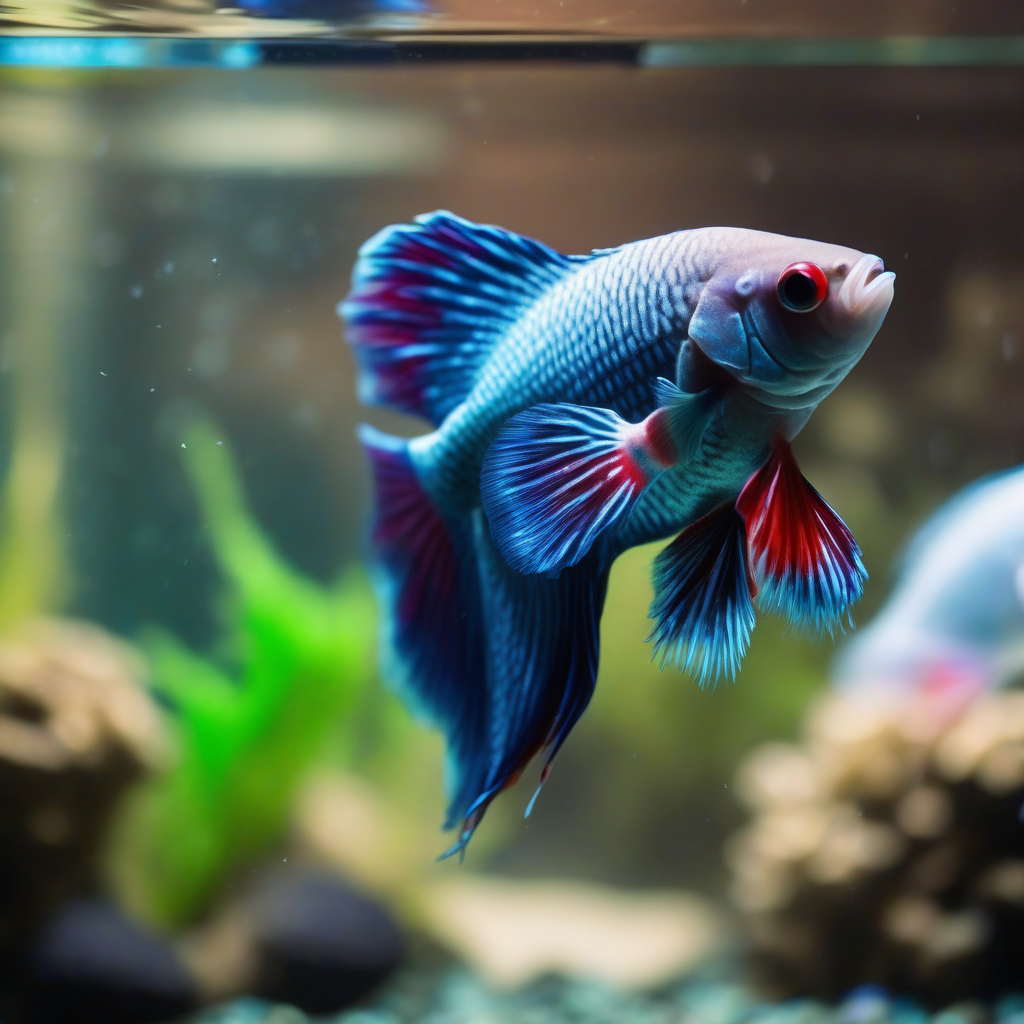
In this article, you will discover 5 neurocognitive secrets to enhance your fish's resistance to visual noise in the aquarium and achieve training success by scientifically resetting distractions.


In this article, we will deeply explore the insidious neurobiological effects of gut microbiome imbalance (dysbiosis) on your rabbit's brain health and provide scientific-based solutions to maintain mental vitality.

In this article, you can find comprehensive information on how pancreatitis in dogs not only affects the digestive system but also insidiously impacts the brain, its neuroinflammatory mechanisms, and lifesaving emergency intervention strategies.

Discover the 5 insidious effects of overfeeding, one of the most stealthy threats to your fish's health, causing neurometabolic destruction in their brains, and learn scientific feeding strategies to prevent this demise. Uncover the silent danger in your aquarium!
While fish are often perceived as creatures with simple intelligence, they actually possess a surprising capacity for learning and complex responses to environmental stimuli. An aquarium environment, though appearing calm from the outside, can be a constant source of information overload and visual noise for a fish's brain. This visual bombardment can make it challenging for fish to focus, especially during training, and negatively impact their learning performance. So, how can you manage this "visual noise" in your aquarium and help your fish become more focused and resilient? In this article, we will uncover 5 neurocognitive secrets to help your fish scientifically reset distractions.
Visual noise refers to all visual stimuli present in an animal's environment that are irrelevant to its current task or focus. In an aquarium, this could include the complexity of decorations, density of plants, movements of other fish, light or movement from outside the aquarium, and even reflections on the water's surface. When fish brains are constantly forced to process these stimuli, they can experience a form of "overload."
Fish, like humans, respond to environmental stressors by releasing stress hormones like cortisol. Constant visual noise leads to a neurological load on the fish's brain. This reduces the brain's ability to filter out unnecessary information and keeps it in a state of continuous arousal. Chronic stress can negatively impact learning ability, memory, and even the immune system.
Every living creature has a selective attention mechanism to survive and be effective; that is, the ability to focus on important stimuli and ignore others. Excessive visual noise in the aquarium can weaken this mechanism in fish. When a training command is given (e.g., a hand signal), fish might react to a random movement in the aquarium or a shadow outside, instead of focusing on the signal. This makes the training process highly inefficient and can undermine your fish's learning capacity.
To increase your fish's resistance to visual noise and boost training performance, you can apply the following neurocognitive secrets:
The brain tends to habituate to continuously encountered stimuli over time. In training, start by training your fish in an environment with very little visual noise. Then, gradually and in a controlled manner, increase the environmental stimuli to allow your fish to adapt to the new situation. For example, begin movements outside the aquarium from a distance, then gradually bring them closer. This gives the fish's brain time to encode the stimuli as harmless and irrelevant.
To ensure your fish focuses on a specific command or cue, make the reinforcement (reward) process extremely specific. Provide rewards only when the correct response is given. This allows the neural networks in the fish's brain to distinguish the specific cue associated with the reward from others. For instance, food given only with a specific finger movement helps the fish develop visual focus on that finger movement. This strengthens your fish's understanding cycle.
During training sessions, reduce visual complexity in the aquarium as much as possible. A plain background, minimal decoration, and controlled lighting clarify visual perception. As training progresses, you can gradually add more visual elements. The key is to gradually increase the stimulus level without overwhelming the fish's current learning capacity. An overly complex environment can create a continuous sense of "security threat" for your fish, which increases the need for hiding and hinders focus.
The brain consolidates learned information better and converts it into long-term memory through routine and repeatability. Create a predictable environment for your fish by conducting training sessions at the same time and place each day. This helps the brain enter "training mode" faster and become more resistant to external stimuli. Consistent signals and repetitions enhance the fish's ability to automate learned behavior, making it less susceptible to external factors.
Some fish species possess the ability for social learning. If you have multiple fish and one learns to respond to a particular command, other fish may learn by observing it. This can be particularly effective in species with high social intelligence. However, rank hierarchy or competition can make it difficult for some fish to focus. Therefore, it's important to consider individual differences and group dynamics when training in a group.
Increasing your fish's resistance to visual noise is not limited to training techniques. The overall quality of the aquarium environment also has a significant impact on neurocognitive functions.
Fish learn better when they feel secure. Adequate hiding places and areas to explore reduce the fish's stress levels, thereby increasing its ability to focus. Insufficient hiding spaces can cause fish to be constantly alert and overreact to environmental stimuli.
Clean, balanced, and appropriately temperate water is crucial for the overall health and neurological functions of fish. A stressed or unhealthy fish will struggle to focus on training. Sudden changes or imbalances in water chemistry can directly affect brain functions and create neurophysiological stress.
Fish training is a rewarding process that requires patience, consistency, and scientific approaches. Managing "visual noise" in the aquarium can significantly improve your fish's training performance by enhancing their ability to focus. By applying these neurocognitive secrets, you can help your fish move beyond mere survival to establish a more conscious and interactive relationship with their environment. Remember, every fish is an individual, and with a patient approach, you can unlock surprising learning potentials in your aquarium.
