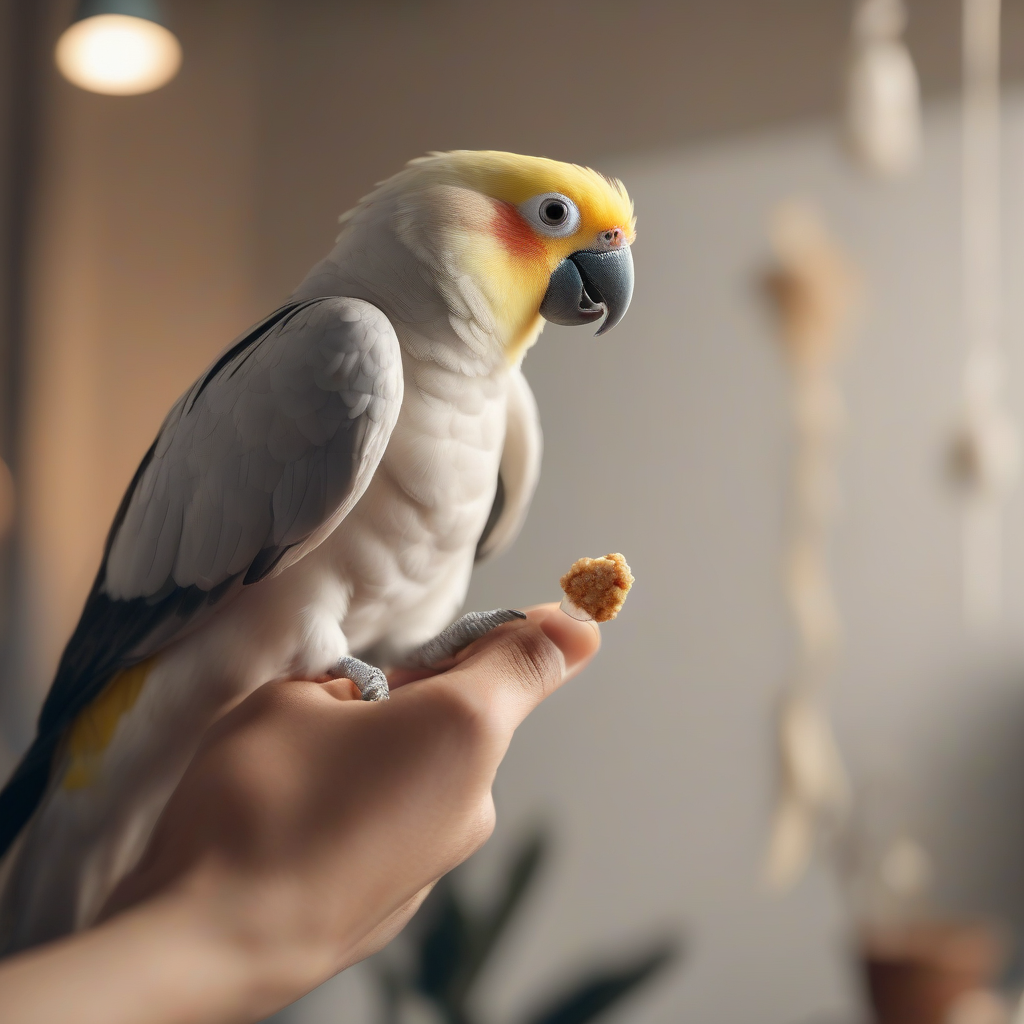
In this article, you will discover the neurobiological effects of consistency in your bird's training process, 5 scientific steps that accelerate brain development, and the secrets to creating lasting habits. As of May 2026, with the most up-to-date scientific data, you will build a deeper bond with your bird and increase your training success rate.


Discover the types of burns your dog can suffer, the 5 insidious neurophysiological effects these burns create in the brain and body, and lifesaving emergency intervention strategies in this comprehensive guide. We shed light on the dangers behind forgotten household accidents from a scientific perspective.

Discover the neurobiological signals of hidden stress your newly adopted cat experiences during adaptation to a new social environment. This article reveals 5 insidious signs of your cat's silent struggle and scientific strategies for peaceful, long-term harmony.

Your dog's anal sacs, located beneath the tail, can be hidden alarm bells often overlooked but profoundly affecting their quality of life. In this article, you will discover the 5 insidious neurobiological effects of anal sac problems on the brain and the lifesaving care secrets you need to know for your furry friend to live a peaceful life.
Pet birds continually amaze us with their intelligence and learning capacity. However, a critical factor often overlooked when training a bird is consistency. Where many pet owners might think simple repetition is enough, science reveals how consistency deepens neurocognitive pathways in birds' brains, forging lasting habits. As of May 2026, the latest research indicates that consistency is not just a training method, but a 'Secret Consistency Algorithm' that directly impacts your bird's mental health and well-being.
Just like human brains, birds' brains are constantly reshaped through learning and experience, a process known as neuroplasticity. When a behavior is consistently associated with a specific command or cue, the synaptic connections in the brain strengthen. This allows for faster information processing, memory consolidation, and the behavior becoming more automatic. Inconsistency, on the other hand, can lead to confusion, stress, and reluctance to learn in the brain. Birds are sensitive to uncertainty and learn much better in a predictable environment.
Consistency in training provides a form of 'programming' for your bird's brain. Each repetitive action and response, when associated with a reward, triggers the release of neurotransmitters like dopamine in your bird's brain. This makes learning enjoyable and motivating. Research shows that these reinforcement cycles have a direct impact on Your Bird's Brain's 'Secret Map': 5 Scientific Secrets of Training Shaping Learning Through Neuroplasticity!.
Consistency is much more than just 'doing the same thing over and over'. Here are 5 scientific steps to maximize your bird's training success:
One of the keys to training success is delivering the right reinforcement at the right time. When a bird performs the desired behavior and is rewarded immediately (ideally within 1-3 seconds), the brain directly associates this behavior with the reward. This precise timing activates dopamine pathways in the brain, accelerating learning. Delayed or ambiguous rewards make it difficult for the bird to understand which behavior is being rewarded, hindering the formation of neural connections.
Consistent and regular repetition is essential for new behaviors to become permanent. Short, frequent sessions (5-10 minutes, several times a day) are more effective than long, exhausting ones. Each repetition strengthens the relevant neural connections and establishes a new 'behavioral ritual'. This is much like exercising a muscle; regular workouts strengthen the muscle, while regular repetition deepens brain pathways. This ritual plays a vital role in developing specific abilities, such as Your Bird's Secret 'Vocal Genius' Code: 5 Neurocognitive Keys to Imitating Human Speech and Scientific Training Strategies!.
Conducting training sessions in as consistent an environment as possible strengthens your bird's contextual memory. A familiar environment helps the bird feel secure and reduces distractions. New or changing environments can cause stress in birds, which diminishes their learning capacity. Understanding your bird's sensitivity to environmental factors, such as those described in Your Bird's 'Secret Environmental Stress Map': 5 Unknown Neurobiological Effects of Location Choice and the Secret to a Peaceful Home and Your Bird's 'Hidden Stress Reservoirs': 5 Unknown Neurobiological Effects of Cage Placement and the Secret to a Peaceful Home!, is crucial for optimizing the training environment.
Always using the same command word or cue for your bird reduces its cognitive load. Different commands or variable cues make it harder for the bird to understand what is being asked, leading to unnecessary cognitive effort in the brain. Simple, clear, and unchanging commands allow the bird to respond quickly and accurately. This makes the learning process smoother and less taxing.
Positive reinforcement forms the bedrock of consistency in training. Encouraging desired behaviors through rewards ensures your bird enjoys training and boosts its motivation. Punishment-based training approaches lead to stress and fear, undermining the learning process and eroding trust between you and your bird. Positive experiences that trigger the release of neurotransmitters like dopamine and serotonin accelerate learning and strengthen the brain's 'reward pathways'.
Along with consistency, the following strategies will also help your bird solidify new habits:
The 'Secret Consistency Algorithm' in bird training is much more than just a method; it's a scientific approach aligned with your bird's natural learning processes. Through consistent timing, repetition, environment, and expectations, you can maximize your bird's neuroplasticity, reduce stress, and create lasting, positive behaviors. By adopting these strategies, you will build a stronger bond with your pet bird and enable it to reach its full potential. Remember, patience and consistency are the keys to every successful training.
