WikiPet
Encyclopedia
WikiPet

Mırmır-powered, expert-approved, open-source the most comprehensive information platform for your pet friends.

Encyclopedia

  • Dog
  • Bird
  • Rabbit
  • Hamster

Resources

  • Mırmır
  • For Veterinarians
  • About Us
  • FAQ

Legal

  • Terms of Service
  • Privacy Policy
  • Cookie Policy

© 2026 WikiPet. All rights reserved.

Developed with love

Your Bird's 'Invisible Gut Crisis': Insidious Onset of Crop Stasis and Impaction, Lifesaving Scientific First Aid in 3 Minutes!
  1. Home
  2. Wiki
  3. Your Bird's 'Invisible Gut Crisis': Insidious Onset of Crop Stasis and Impaction, Lifesaving Scientific First Aid in 3 Minutes!

Your Bird's 'Invisible Gut Crisis': Insidious Onset of Crop Stasis and Impaction, Lifesaving Scientific First Aid in 3 Minutes!

Crop stasis and impaction in birds are lethal digestive problems with insidious symptoms, requiring immediate intervention. This article explores scientific ways to detect this 'invisible gut crisis' early, provides lifesaving first aid strategies you can apply in 3 minutes, and highlights the critical importance of veterinary intervention. Find all the necessary information to protect your bird's health here.


WikiPet
WikiPet
Author
7 min read
March 22, 2026

Table of Contents

Related Articles

Your Rabbit's 'Hidden Paw Wounds': Insidious Signals of Pododermatitis and Scientific Solutions for Painless Steps!

Your Rabbit's 'Hidden Paw Wounds': Insidious Signals of Pododermatitis and Scientific Solutions for Painless Steps!

In this article, you will find comprehensive information about pododermatitis (paw wounds) in rabbits. Discover insidious, overlooked symptoms, the importance of early diagnosis, and scientific care strategies to ensure your rabbit takes painless steps.

March 22, 2026
Your Bird's Invisible Feather Plucking Cycle: Insidious Stress Triggers and the Art of Saving Feather Health with Scientific Care Strategies!

Your Bird's Invisible Feather Plucking Cycle: Insidious Stress Triggers and the Art of Saving Feather Health with Scientific Care Strategies!

In this article, we will delve into the scientific secrets behind your bird's feather plucking behavior, its insidious stress triggers, and effective care strategies to restore feather health.

March 22, 2026
Your Hamster's 'Invisible Potential': Scientific Training Secrets to Building Big Bonds with Small Successes!

Your Hamster's 'Invisible Potential': Scientific Training Secrets to Building Big Bonds with Small Successes!

In this article, discover how your hamster can achieve much more than commonly believed, how to unlock their mental potential, and the scientific secrets to building a deep bond through positive reinforcement.

March 22, 2026

Your Bird's 'Invisible Gut Crisis': Insidious Onset of Crop Stasis and Impaction, Lifesaving Scientific First Aid in 3 Minutes!

The health of our pet birds often relies on delicate balances and complex biological processes that are not always visible to the naked eye. One such vital process is the flawless functioning of their digestive system. Unfortunately, one of the most insidious and life-threatening avian emergencies, crop stasis (slow emptying) or crop impaction (complete blockage), often progresses without obvious symptoms, leading to fatal outcomes. This 'invisible gut crisis' is a true race against time, requiring rapid and accurate intervention.

Many bird owners may not grasp the severity of the situation when they notice their bird suddenly feeling unwell, puffing up its feathers, or refusing to eat. However, conditions like crop stasis and impaction can quickly lead to dehydration, malabsorption of nutrients, and septicaemia (blood poisoning). In this article, we will delve into the scientific foundations of crop stasis and impaction, their overlooked early signs, and lifesaving first aid strategies you can implement within 3 minutes to protect your bird from this deadly danger.

What is Crop Stasis and Impaction? A Scientific Perspective

The crop (ingluvies), the first stop in a bird's digestive system, is an enlargement of the oesophagus where food is temporarily stored, softened, and prepared for digestion. The crop's muscular contractions regularly move food into the stomach (proventriculus and ventriculus). Any disruption in this vital process leads to serious health issues.

Crop stasis is the condition where the crop's ability to push food into the stomach slows down or stops entirely. When food remains in the crop for too long, fermentation begins, and bacterial and fungal growth accelerate. This hinders nutrient absorption and produces toxins. Crop impaction, on the other hand, usually occurs when a physical obstruction (foreign body, featherball, excessive amounts of indigestible food) completely blocks the crop. Both conditions result in the bird's inability to absorb nutrients, leading to dehydration and a rapidly deteriorating general condition.

Insidious Symptoms: Overlooked Signs for Early Diagnosis

Crop stasis and impaction, as their name suggests, have an insidious onset. Early symptoms are often mild and can be mistaken for other illnesses, making diagnosis difficult. However, careful observation can be lifesaving:

  • Behavioral Changes: Your bird may appear more lethargic, listless, or have puffed-up feathers. It might move less in its cage, be reluctant to play or interact. Birds struggling with illness can sometimes experience stress and cognitive difficulties, as mentioned in the article Unlocking Your Bird's Genius: Subconscious Problem-Solving Mechanisms and Overlooked Cognitive Secrets!.
  • Physical Signs: Swelling, distension, or a firmer-than-normal texture in the crop area may be felt. Although the crop might appear full, the bird may constantly feel hungry because it's not emptying. A foul, sour odour might emanate from the mouth or around the beak, indicating fermentation. Vomiting or regurgitation may be observed.
  • Loss of Appetite and Weight Loss: Even if the bird continues to eat, it can rapidly lose weight because nutrients are not being absorbed. Decreased droppings or abnormalities in droppings may also be noted.
  • Other General Health Issues: Crop problems can also be a symptom of underlying health issues (e.g., infections, toxin exposure). Conditions like liver toxin load can indirectly affect the digestive system. For more information, you can refer to Your Bird's 'Invisible Liver Load': Insidious Toxins and Lifesaving Detox Strategies!.

Lifesaving First Aid: What You Need to Do in 3 Minutes

If you suspect crop stasis or impaction in your bird, time is of the essence. Here are first aid steps you can take until you can reach a veterinarian:

Emergency Assessment: Correct Steps Without Panicking

  1. Isolate and Provide Warmth: Illness can cause a bird's body temperature to drop. Move your bird to a calm, quiet, and warm environment (ideally 28-32°C or 82-90°F). You can use a heat lamp or a heating pad with a thermostat. Be careful not to overheat. Any Your Bird's 'Hidden Crisis Signals': Recognize in Seconds, 5 Lifesaving Emergency Interventions! you observe should prompt immediate veterinary contact.
  2. Gently Check the Crop Area: Clean the beak and the area around the crop with a clean cloth. Gently palpate the crop with your fingers. Is it full and firm? Does the bird react when you touch it? If the crop is extremely swollen and the bird shows pain, this could indicate an impaction.

Scientific Massage and Fluid Support (With Vet Approval)

IMPORTANT: Always consult a veterinarian before attempting the following steps. Incorrect application can worsen your bird's condition or lead to aspiration pneumonia (fluid entering the lungs).

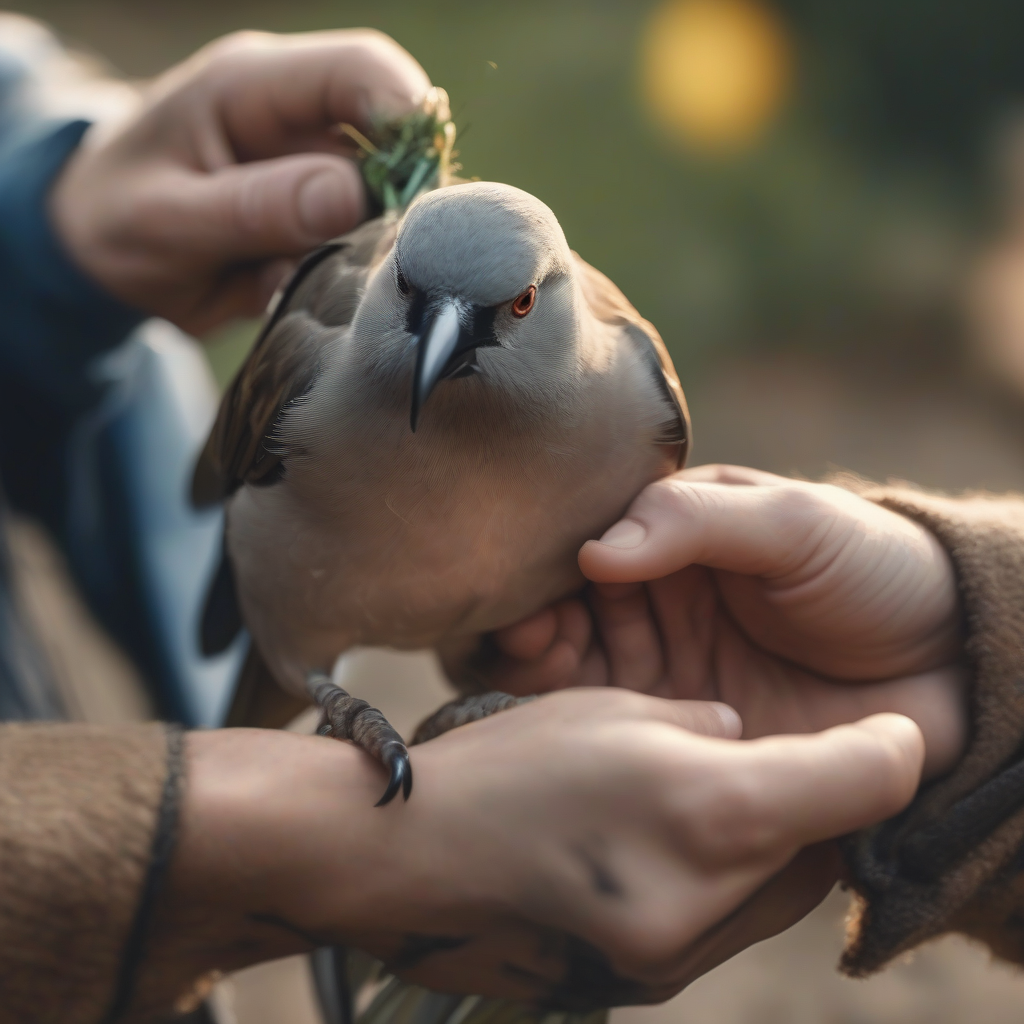
  1. Gentle Crop Massage: If you suspect crop stasis (not impaction) and your vet approves, hold your bird in your palm and very gently massage the crop area (the swollen area just below its beak) with circular movements, lightly pushing downwards towards its chest. This might help move the crop contents towards the stomach. Never force it!
  2. Warm, Clear Fluid Support (Only with Vet Approval): If your veterinarian approves, you can offer a very small amount (a few drops) of warm, clear water or an electrolyte solution (e.g., a pediatric electrolyte drink). This can help soften the contents in the crop. Ensure the bird's swallowing reflex is normal and never force-feed fluids with a syringe. Fluid entering the lungs can be fatal.
  3. Stop Feeding: Do not offer your bird any food until the crop empties or your veterinarian advises otherwise. Adding more food to an already full crop will only exacerbate the situation.

When is Veterinary Intervention Necessary? A Race Against Time!

The first aid steps above are intended to buy time until you can reach a veterinarian. Crop stasis and impaction absolutely require veterinary intervention. The moment you notice symptoms, contacting your nearest avian veterinarian is crucial.

Your veterinarian may use diagnostic methods such as physical examination, radiographs, or endoscopy to assess your bird's condition. Treatment varies depending on the severity and cause of the condition:

  • Fluid Therapy: Injectable or oral fluid supplementation to correct dehydration and soften crop contents.
  • Medications: Antibiotics (if bacterial infection), antifungals (if fungal infection), or prokinetic drugs to stimulate crop motility.
  • Crop Lavage: Flushing the crop contents with a sterile saline solution to empty it.
  • Surgical Intervention: In cases of physical obstruction (foreign body or large feather ball), surgical removal may be necessary.

If your bird develops conditions such as Your Bird's Sudden Respiratory Distress: Lifesaving First Steps and 5 Overlooked Critical Symptoms!, this can be an indication that the crop problem has advanced to very severe levels, making emergency veterinary intervention even more critical.

Preventive Measures: Scientific Ways to Keep Crop Problems Away

Crop stasis and impaction can largely be prevented with proper management and careful precautions:

  • Balanced Nutrition: Feed your bird fresh, high-quality foods appropriate for its species. Pellet diets are generally more balanced. Seed-heavy diets can lead to vitamin and mineral deficiencies, triggering digestive problems.
  • Clean Water: Always ensure access to fresh, clean water. Clean water bowls regularly.
  • Environmental Enrichment: Keep your bird's cage and living area free of foreign objects. Birds are curious and may ingest non-food items. Provide safe toys and activities to prevent boredom and potential ingestion.
  • Hygiene: Regularly clean the cage and wash food and water bowls daily. A dirty environment fosters bacterial and fungal growth.
  • Stress Management: Excessive stress can negatively impact a bird's digestive system. Provide a calm and secure environment for your bird.
  • Regular Veterinary Check-ups: Regular vet visits are crucial for early detection. An expert eye can spot problems before they become apparent.

Your bird's crop health is a reflection of its overall quality of life. Early awareness, correct first aid, and swift veterinary intervention are key to saving your bird from this 'invisible gut crisis.' Remember, even the slightest suspicion warrants professional help, which could save your bird's life.


