In this article, discover how your hamster can achieve much more than commonly believed, how to unlock their mental potential, and the scientific secrets to building a deep bond through positive reinforcement.


In this article, you will discover the 5 insidious neurobiological effects of the Encephalitozoon Cuniculi parasite, which is often overlooked in rabbits but severely affects the brain, along with lifesaving early diagnosis methods.

In this article, we will deeply explore the insidious neurobiological effects of gut microbiome imbalance (dysbiosis) on your rabbit's brain health and provide scientific-based solutions to maintain mental vitality.

In this article, you can find comprehensive information on how pancreatitis in dogs not only affects the digestive system but also insidiously impacts the brain, its neuroinflammatory mechanisms, and lifesaving emergency intervention strategies.
While your tiny hamster friends are often seen as cute creatures that just run in their cage and hoard food, they actually possess a surprising potential for learning and adaptation. Most owners underestimate hamsters' training capacity or assume it's a concept reserved for "larger" pets like cats and dogs. However, science shows that with the right approaches, hamsters can achieve many things, from learning simple commands to developing problem-solving skills. In March 2026, we will explore the scientific secrets to unlocking this 'invisible potential' and building a deep, trust-based bond with your hamster. Remember, training isn't just about teaching commands; it's also about improving your tiny friend's quality of life, reducing stress, and providing them with a mentally enriching environment.
The key principles in hamster training, like in many other animal training contexts, are positive reinforcement and patience. However, considering hamsters' physiology and behavioral patterns, some nuances come into play when applying these principles.
Positive reinforcement is a scientific method that increases the likelihood of a desired behavior recurring in the future by adding a pleasant stimulus after that behavior. For hamsters, this usually means a tasty reward treat (a tiny seed, a small piece of vegetable) or a short play session. However, the size and frequency of the reward are critical. Excessive rewards can lead to obesity or decrease motivation. The reward should be given immediately after the behavior, preferably within 1-2 seconds, so the hamster clearly understands which behavior to associate it with. This accelerates learning and maximizes the effectiveness of the reinforcement.
Hamsters have relatively short attention spans. Therefore, training sessions should not exceed 5-10 minutes. Several short sessions per day are much more effective than a single long, tiring session. Short sessions keep the hamster engaged, preventing boredom or stress. Ending each session on a positive note encourages them to be more eager next time. The learning curve can vary for each hamster; some may learn faster, while others might require more repetition and patience. Some behavioral resistance you might encounter could actually be your tiny friend's Invisible Resistance to Touch or interaction. In such cases, focusing on building trust first will facilitate the training process.
Hamster training is based on "micro-tasks" that activate their natural curiosity and exploratory instincts, rather than teaching complex commands. These tasks provide mental stimulation and add fun to their daily routines.
Training based on achieving simple targets is very beneficial for hamsters.
Hamsters naturally love exploring their environment and finding food. You can design intelligence games using these instincts.
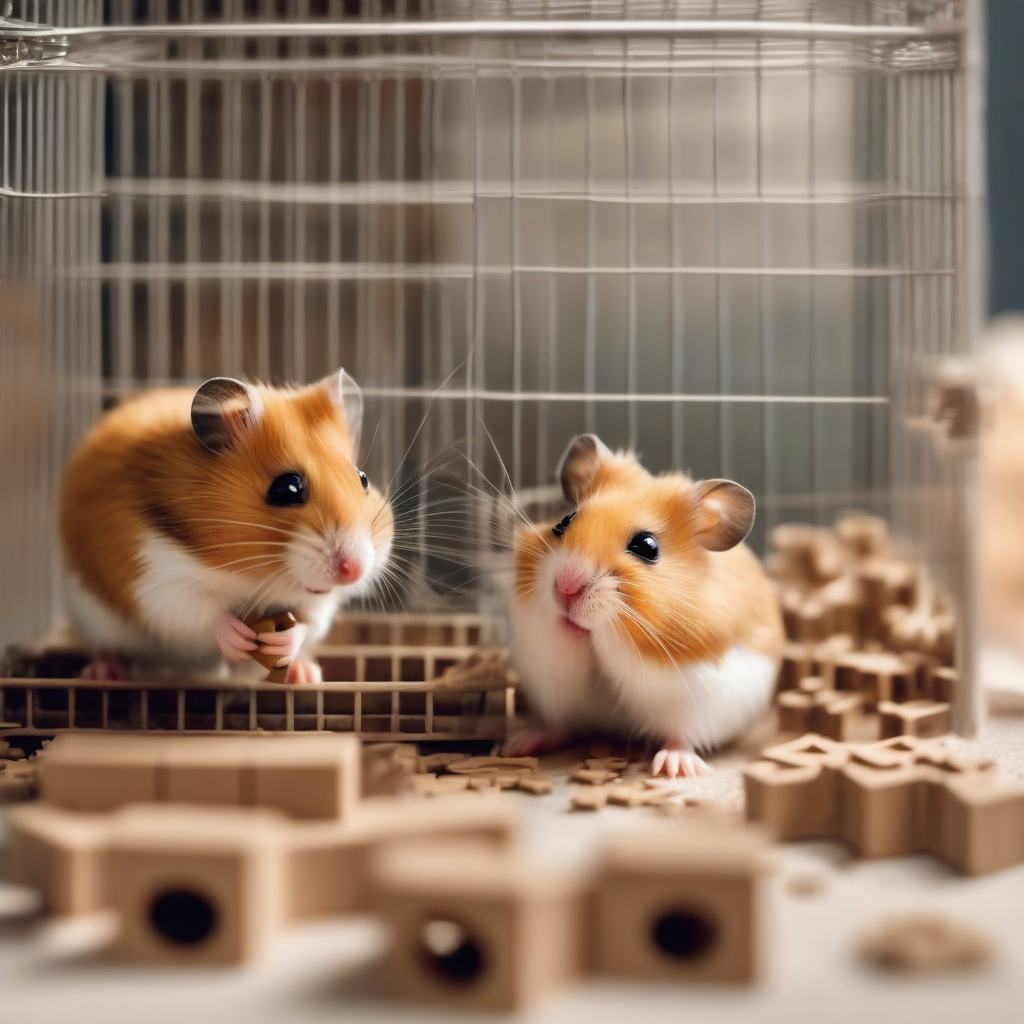
Small obstacle courses or "tunnel" games keep your hamster physically and mentally active. You can create creative courses using plastic tubes, small boxes, and safe toys. This will also satisfy your hamster's natural instinct for underground masterpiece tunnel systems.
The cornerstone of training is establishing a strong trust relationship with your hamster. A stressed or frightened hamster will not be open to learning.
Patience is key in the training process. Every hamster's learning pace is different, and some days may be better than others. Never resort to force or punishment. Consistency is also important; using the same commands and rewards regularly helps your hamster understand what to expect.
Enriching your hamster's living space has a direct impact on its overall well-being and openness to learning. Providing a spacious cage, ample bedding (for digging and tunneling), an exercise wheel, chew toys, and hiding spots reduces stress and encourages natural behaviors. Cage cleaning and scent management can also affect stress levels; you can find more information on this in the article Your Hamster's 'Hidden Scent Map'. A hamster living in a comfortable and secure environment will be much more receptive to training.
Misconception 1: Hamsters cannot be trained because they are too small.
Misconception 2: Training is only done with food rewards.
Embarking on a training journey with your hamster not only teaches them new skills but also strengthens the bond between you. This process is a rewarding experience based on mutual respect and understanding. By discovering your hamster's 'invisible potential,' you can ensure they live a mentally active, happier, and healthier life. Remember, even our smallest friends, with the right approach, can unleash their great talents within.
