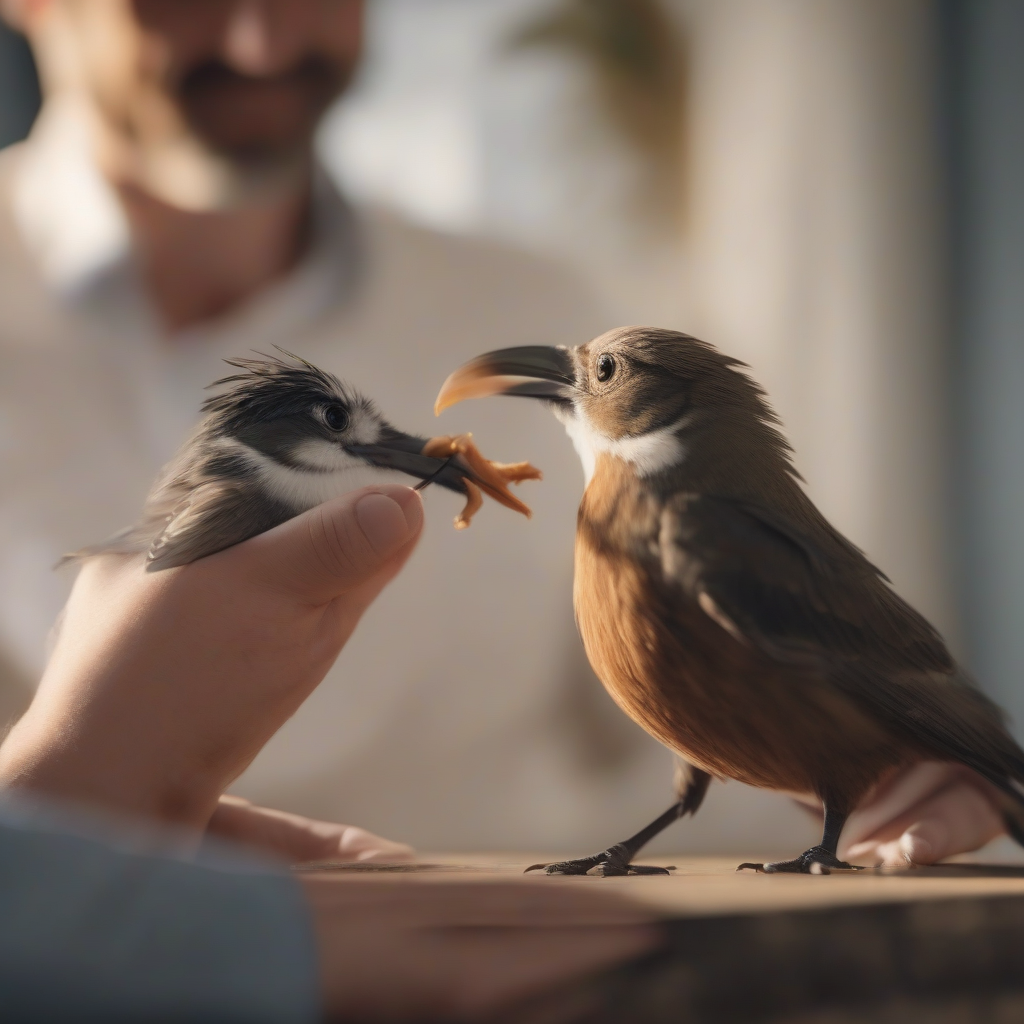
Just welcomed a new feathered friend into your home and want to build a strong bond? This article reveals 5 secret behavioral codes that come into play during your first interactions with your bird, forming the foundation of trust you unconsciously establish. Decode your companion's silent language and open the door to a lifelong friendship.


Discover the neurobiological signals of hidden stress your newly adopted cat experiences during adaptation to a new social environment. This article reveals 5 insidious signs of your cat's silent struggle and scientific strategies for peaceful, long-term harmony.

Your dog's anal sacs, located beneath the tail, can be hidden alarm bells often overlooked but profoundly affecting their quality of life. In this article, you will discover the 5 insidious neurobiological effects of anal sac problems on the brain and the lifesaving care secrets you need to know for your furry friend to live a peaceful life.

In this article, you will find comprehensive information on the insidious neurotoxic effects of heavy metal poisoning in aquarium fish, its symptoms, and lifesaving emergency intervention codes. This condition, which can arise from household water sources, improper equipment, or neglect, can severely threaten your fish's quality of life and lifespan.
When you bring a new winged companion home, the initial interactions play a critical role in laying the groundwork for your future relationship. These often overlooked silent 'greeting rituals' shape your bird's trust in you. Instead of simply placing them in a cage, by acting in accordance with their sensitive nature, you can minimize stress for both you and your little friend.
Let's explore the 5 secret behavioral codes behind your bird's first 'greeting ritual' and how you can use them to build a strong bond of trust.
One of the greatest favors you can do for your bird upon arrival is to give it space. Waiting for long periods in front of the cage and staring intently can create a sense of threat for them. Instead, sit in a corner of the room and observe them silently. This allows them time to familiarize themselves with their surroundings, get used to your presence, and create their own comfort zone.
This is part of the repetitive behaviors exhibited by many pets, as discussed in Your Bird's Hidden Rituals: Scientific Secrets of Repetitive Behaviors and a Guide to Mental Well-being. For them, this is a routine and a sign of security.
Once your bird has settled into its cage, you can begin to approach the cage slowly. It's important to extend your hand gently and keep your voice soft while speaking. Suddenly shoving your hand into the cage or trying to grab them can trigger stress factors, as mentioned in Is Your Bird Feather Plucking? Invisible Triggers and Scientific Solutions for Lifelong Comfort Secrets. Remember, birds are vulnerable creatures, and sudden movements can startle them.
Associating your initial interactions with positive experiences is one of the most effective ways to build trust. Start with a small reward that your bird loves (e.g., a seed or a small piece of fruit). Gently extend your hand into the cage, offer the treat, and immediately withdraw. Over time, you can hold your hand there longer and encourage them to come to you to take the reward.
This approach supports the learning mechanism through mirror neurons in the brain, as discussed in Illuminate Your Bird's Brain with 'Mirror Neurons': Scientific Secrets of Invisible Connection in Advanced Training. Positive reinforcement ensures that the bird perceives interactions with you positively.
Once your bird is fully accustomed to its cage and begins to trust your hand, you can start taking it out in a controlled environment. Initial outings should be short and under your supervision. Close the room doors, ensure windows are secure, and remove any potentially hazardous objects. Your goal is to allow it to explore while ensuring its safety.
This process demonstrates that concepts like 'safe space' and 'exploration' are applicable to birds, similar to what's discussed in Your Dog's Hidden Places: How to Create Shelter Areas That Reduce Stress and Ensure Safety. Exploring on their own increases their self-confidence.
Understanding what your bird is trying to communicate to you is key to deepening the trust relationship. Learning body language cues such as fluffing feathers, bobbing its head, fanning its wings, or making specific sounds will help you understand its mood. For example, slightly fluffed feathers can be a sign of comfort, while sudden loud squawks might indicate fear or discomfort.
This illustrates that each animal species has its unique communication methods, as highlighted in articles like Your Cat's 'Secret Territorial Code': Unnoticed Scent Signature Zones and Stress-Breaking Strategies at Home and Your Bird's Secret Emotional World: The Art of Breaking Behavioral Codes to Understand Their Silent Cries and Reduce Stress. Even the 'clicks,' chirps, or silence from your bird can have meaning.
These 5 secret behavioral codes will form the foundation of the relationship you build with your bird. Remember, patience, understanding, and love are the most powerful keys to a lifelong bond with your winged companion.
