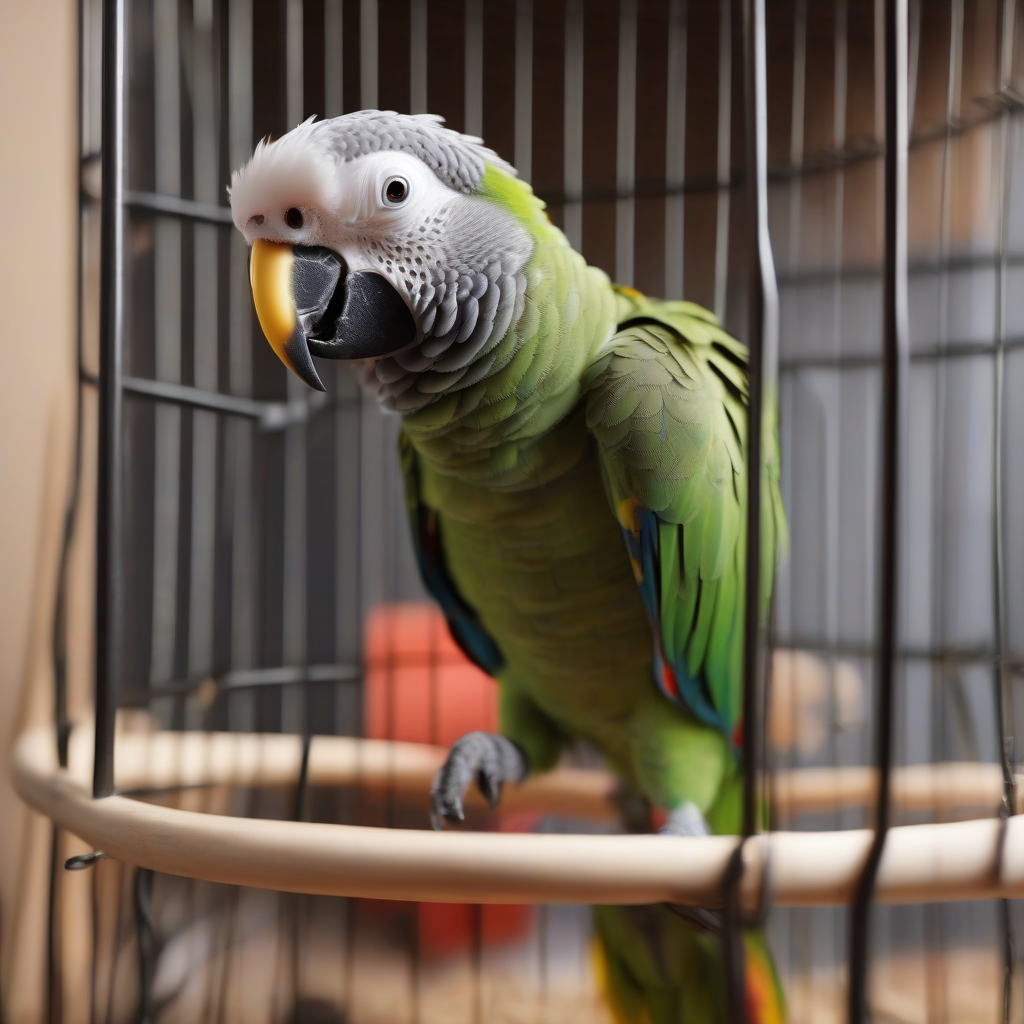
In this article, you will explore the neurobiological foundations of boredom in birds, how it leads to repetitive behaviors, and scientific enrichment strategies to navigate this 'invisible labyrinth'.

While cats possess a surprising ability to adapt to high-rise fall traumas, the insidious neurophysiological effects on their brain carry vital risks. In this article, we reveal 5 critical neurobiological effects your cat may experience after a fall and the lifesaving emergency intervention codes with scientific secrets.
In this article, you will discover how your rabbit copes with unexpected situations and its neurocognitive responses to non-routine events. Learn scientific secrets to enhance mental flexibility and manage stress.
In this article, you will find comprehensive information on the insidious neurophysiological effects of seizures in cats' brains and lifesaving emergency intervention codes during a seizure.
Pet birds are known for their intelligence and complex social structures. However, this high cognitive capacity can turn into an insidious enemy called 'boredom' when insufficient stimulation is provided. Boredom is an often-overlooked condition that deeply affects your bird's physical health and psychological well-being. In this article, we will explore the neurobiological origins of boredom in birds, how it leads to repetitive behaviors, and scientific enrichment strategies to escape this 'invisible labyrinth'.
Boredom is not merely a state of laziness but a condition that affects complex chemical balances in the brain. In their natural habitats, birds constantly face new challenges, forage for food, engage in social interactions, and protect themselves from predators. The lack of such stimulation in a home environment can lead to significant changes in the brain's reward systems and stress responses.
Dopamine is the primary neurotransmitter associated with the brain's reward and motivation centers. In a natural environment, actions like finding new food, successfully completing a flight, or engaging in social interaction lead to dopamine release, encouraging the bird to repeat these behaviors. However, in a confined setting, repetitive routines and a lack of stimulation can reduce dopamine release, dulling the bird's motivation and desire to explore. This can lead to a state similar to anhedonia, where the bird loses interest in activities it once enjoyed.
Persistent insufficient stimulation activates the hypothalamus-pituitary-adrenal (HPA) axis in the bird's brain, leading to chronic stress. Continuously high levels of stress hormones like cortisol negatively affect the brain's prefrontal cortex. The prefrontal cortex is responsible for higher cognitive functions such as decision-making, problem-solving, and impulse control. Dysfunction in this area reduces the bird's adaptability and increases its susceptibility to repetitive, aimless behaviors. For more information on the other negative neurophysiological effects of chronic stress, you can refer to Is Your Bird's 'Secret Stress Filter' Crashing? 5 Unknown Neurobiological Effects of Cage Environment and Scientific Design Secrets to Zero Stress!.
The neurobiological effects of boredom lead to noticeable behavioral problems in birds. These behaviors are often referred to as 'stereotypies,' which are aimless, repetitive movements. Some of the most common include:
Implementing comprehensive and scientifically based enrichment strategies is crucial to alleviating your bird's boredom and ensuring its neurobiological well-being. These strategies aim to reactivate the brain's reward systems and reduce stress by mimicking the bird's natural behaviors.
Birds enjoy solving tasks that require intelligence. Puzzle toys and forage feeders stimulate your bird's natural hunting and foraging instincts. Such activities encourage dopamine release, boosting the bird's motivation. For more ideas, you can refer to the article Your Bird's 'Secret Hunter Brain': 5 Neurocognitive Keys in the Feeding Routine and Secrets to Mental Stimulation!.
Birds are highly social animals. Regular and quality interaction with their owners is one of the most important ways to prevent boredom. Talking to your bird, singing, playing, and gently touching it strengthens your bond and fulfills its need for social stimulation. You can find out how your bird reads your micro-expressions and ways to build deep bonds in the article Your Bird's 'Emotional Radar': 5 Neurocognitive Secrets of Reading Owner's Micro-Expressions and Scientific Ways to Build Deep Bonds!.
Teaching birds new tricks or commands keeps them mentally engaged and boosts their confidence. Positive reinforcement methods like clicker training strengthen communication with your bird while supporting its cognitive development. For neurocognitive tips that trigger rapid learning in training, check out the article Your Bird's 'Secret Attention Filter': 5 Neurocognitive Clues Triggering Rapid Learning in Training and Optimal Focus Strategies!.
Regularly changing the cage layout, offering new perspectives, and encouraging your bird to explore its surroundings is important. Furthermore, to learn more about the neurobiological effects of cage shape and material on your bird's mental well-being, you can read the article Your Bird's 'Silent Architect' of the Cage: Neurobiological Effects of Cage Shape and Material and Secrets to Optimal Mental Well-being!. While routine is important for birds, adding new and unpredictable elements to this routine increases mental flexibility and prevents boredom. Small surprises, such as special treats given at different times or the introduction of a new toy, provide positive stimulation for the brain.
Boredom in your bird is not just a behavioral issue but a complex welfare problem with deep neurobiological roots. The way out of this 'invisible labyrinth' lies in understanding your bird's species-specific needs and providing it with a rich, stimulating environment. By incorporating scientific enrichment strategies into your life, you can ensure your bird lives a healthy, happy, and balanced life, both physically and mentally. Remember, a happy bird is a lively and interactive bird!
