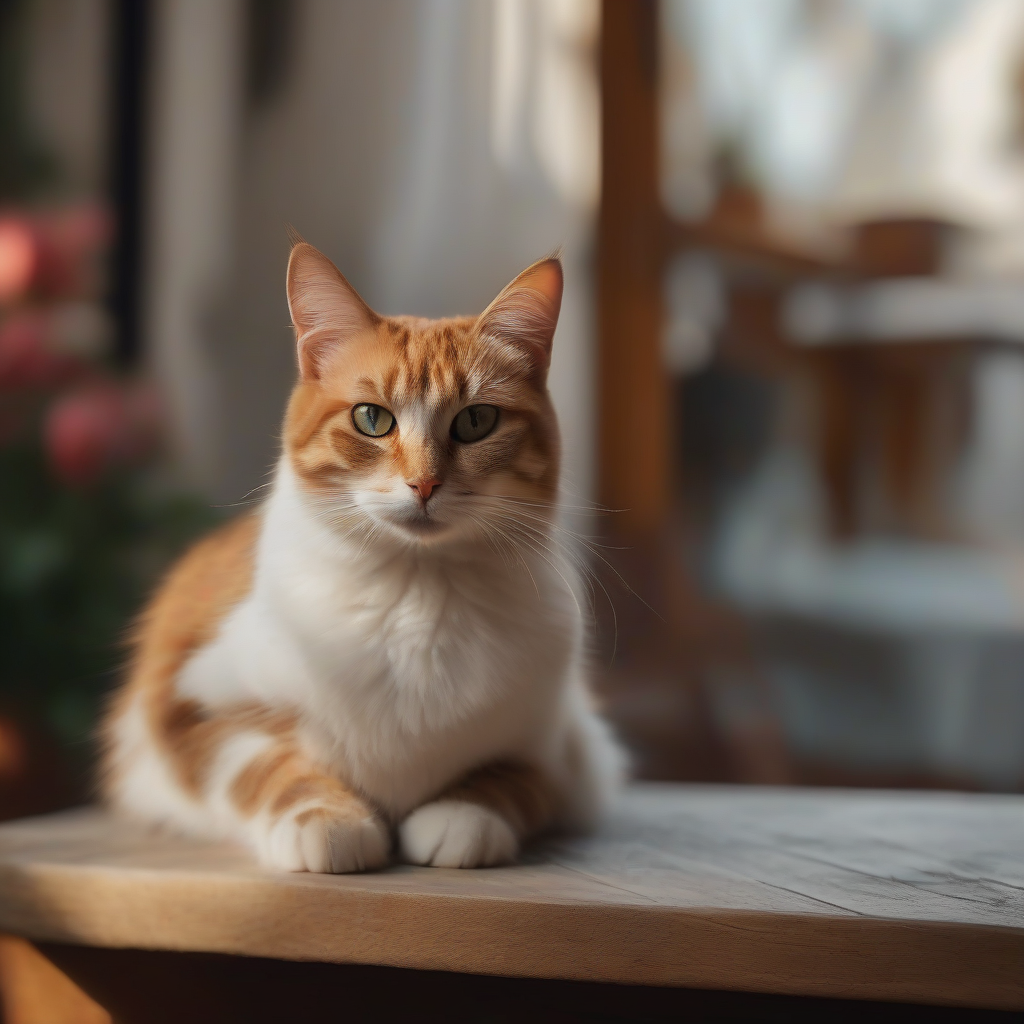
Have you ever noticed your cat growling at their water bowl, refusing to share a toy, or aggressively defending their bed? Discover the deep neurocognitive secrets of 'resource guarding' underlying these behaviors and scientific ways to live harmoniously with your cat.


In this article, you will find comprehensive information on the insidious neurophysiological effects of life-threatening acute gastrointestinal stasis (GI stasis) on the rabbit's brain, and the lifesaving scientific intervention codes you must apply in this emergency situation.
In this article, you will discover how your cat remembers hidden spaces and objects at home, the neurocognitive foundations of this process, and how we can use this knowledge for their well-being.

In this article, you will discover how over-bathing and incorrect shampoo choices affect your dog's skin barrier, their insidious neurobiological reflections in the brain, and scientific strategies to protect skin health.
Cats, despite their elegant and independent nature, can exhibit an extreme tendency to possess and guard certain resources (such as food, water, toys, beds, or even their owners). This behavior is called 'resource guarding' and, although often more prominent in dogs, is frequently observed in cats as well. If you've ever wondered why your cat suddenly attacked a toy, became aggressive around their food bowl, or guarded their favorite sleeping spot, this article will uncover the hidden neurocognitive codes in their brains. Understanding the scientific mechanisms behind this complex behavior is crucial for both enhancing your cat's well-being and ensuring peace in your home.
Resource guarding can be a significant stress factor for pets, especially in multi-animal households. However, with proper understanding and scientific approaches, these behaviors can be managed and even largely reduced. Let's delve into the depths of your cat's brain and discover the causes and solutions for this 'secret treasure hunt.'
The amygdala in your cat's brain is the center for perceiving fear and threat. When a cat believes a certain resource (like food or water) is scarce or could be taken by another, the amygdala becomes active. This is a primal instinct developed over millions of years for survival in the wild. Cats act on this 'scarcity perception' inherited from their ancestors. The thought of potentially losing a resource creates an alarm state in the brain, pushing the cat to aggressively guard that resource. This perception can be stronger in cats who have previously experienced resource scarcity or were adopted from the streets. The amygdala triggers a defense mechanism against this "loss" threat, which can result in aggressive behaviors such as growling, hissing, or scratching.
Cats' hippocampus is responsible for spatial and episodic memory. When a cat begins to perceive a certain toy, bed, or even a human as "their property," this information is stored in the hippocampus. Cats have the ability to remember that resources belong to them and to develop this sense of "ownership." This is not only about the physical presence of resources but also reinforced by positive experiences associated with their use. A cat's routine use of a particular spot or item strengthens the perception that the item belongs to its "territory" or "possession." This memory formation facilitates the activation of protective behaviors when a potential "thief" is perceived in the future.
The prefrontal cortex is the region of the brain responsible for high cognitive functions such as decision-making and threat assessment. A cat exhibiting resource guarding evaluates other animals or humans in its environment as a potential threat. This assessment is shaped by the cat's past experiences, body language, and ambient stress levels. If the prefrontal cortex determines that a threat is real, the cat initiates a fight-or-flight response. This region also determines how "harshly" the cat will react to guard a resource. For instance, a cat feeling more dominant might settle for less intimidation, while an insecure cat might be more aggressive.
In multi-cat households, resource guarding is often intertwined with social hierarchies. Neuropeptides like oxytocin and vasopressin play significant roles in social bonding and territorial behaviors. The hierarchy among cats can influence who can use which resources and when. A lower-status cat, seeing a higher-status cat guarding resources, may sometimes tend to guard its own resources more intensely. This hormonal balance can shift during social stress situations, both triggering and influencing the severity of resource guarding behaviors. To understand these dynamics, it is crucial to observe interactions between cats carefully. Your cat's expectations in its relationship with other cats or with you can trigger resource guarding. Our article Your Cat's Brain's 'Expectation Code': 5 Insidious Neurobiological Collapses Triggered by Routine Changes and Scientific Secrets to Harmonious Living! offers more information on this topic.
The cat's brain continuously changes and learns through neuroplasticity. When a cat exhibits resource guarding, and this behavior results in them achieving what they want (keeping the resource, the other animal moving away, etc.), the behavior is reinforced. The brain "learns" that this strategy works, and neural pathways are strengthened to repeat this behavior. What might start as a small hiss or growl can escalate into more serious aggression over time. These learned defensive strategies are directly related to the cat's interactions with its environment and previous experiences. Positive reinforcement and reward-based training techniques can be used to alter these learned strategies. Your Cat's 'Hidden Perception Map': 5 Neurocognitive Secrets to Boosting Their Brain with Play-Based Learning! can guide you in this process.
Understanding resource guarding in cats is the first step towards resolving the problem. However, implementing scientifically based strategies for behavioral intervention is vital:
It is essential to have enough food and water bowls, litter boxes, beds, and toys for every cat in the house. The "number of cats plus one" rule is often recommended (e.g., three litter boxes for two cats). This reduces scarcity perception and ensures each cat has its own dedicated resources. Additionally, distributing resources to different, quiet, and safe areas of the house reduces competition and tension.
Providing environmental enrichment (scratching posts, tunnels, interactive toys) to keep your cat's brain active and reduce stress is important. A consistent routine allows cats to know when they will eat or play, reducing resource guarding related to anticipation stress. Our article titled Your Cat's 'Hidden Safe Zone' Illusion: 5 Insidious Neurobiological Effects of Insufficient Escape Routes and Secrets to a Peaceful Life! emphasizes the importance of safe zones.
Reward your cat when they behave calmly near their resource. This helps them associate the presence of the resource with positive experiences. Also, reward them when they act calmly towards another animal or human approaching the resource. For example, give your cat a tasty treat when they remain calm instead of growling as you approach their food bowl. Such training can reshape neural pathways in the cat's brain, replacing negative reactions with positive ones. Your Cat's Brain's 'Emotion Receptors': 5 Mysterious Neurobiological Secrets to Sensing Your Owner's Mood and Scientific Ways to Build a Deep Bond! can assist you in this process.
If resource guarding leads to aggressive behaviors or seriously affects household peace, seeking help from a veterinarian or certified cat behaviorist is crucial. Experts can rule out underlying medical causes and create a personalized behavior modification plan.
Resource guarding in cats is not just "naughtiness" but a complex behavior stemming from deep neurocognitive processes in the brain. Scarcity perception, possession memory, threat assessment, social dynamics, and learned defensive strategies form the basis of this behavior. Understanding these secrets and applying scientific solutions will enrich your cat's inner world and strengthen your bond with them, ensuring a more harmonious life in your home. Remember, patience, understanding, and the right approaches can transform your cat's 'secret treasure hunt' into a peaceful existence.
