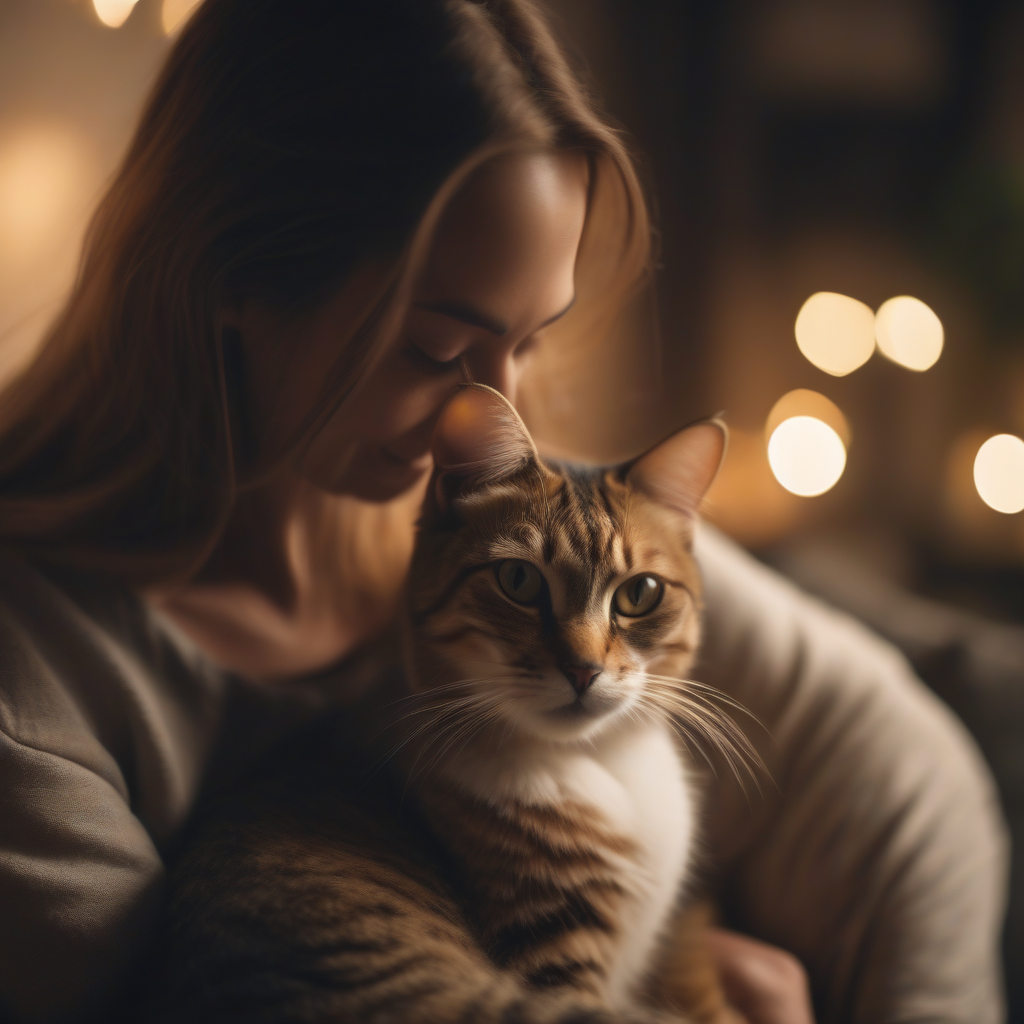
In this article, you will discover how cats perceive their owners' emotional states, the mysterious neurobiological processes behind this complex ability, and scientific ways to build a deeper bond with your feline friend.

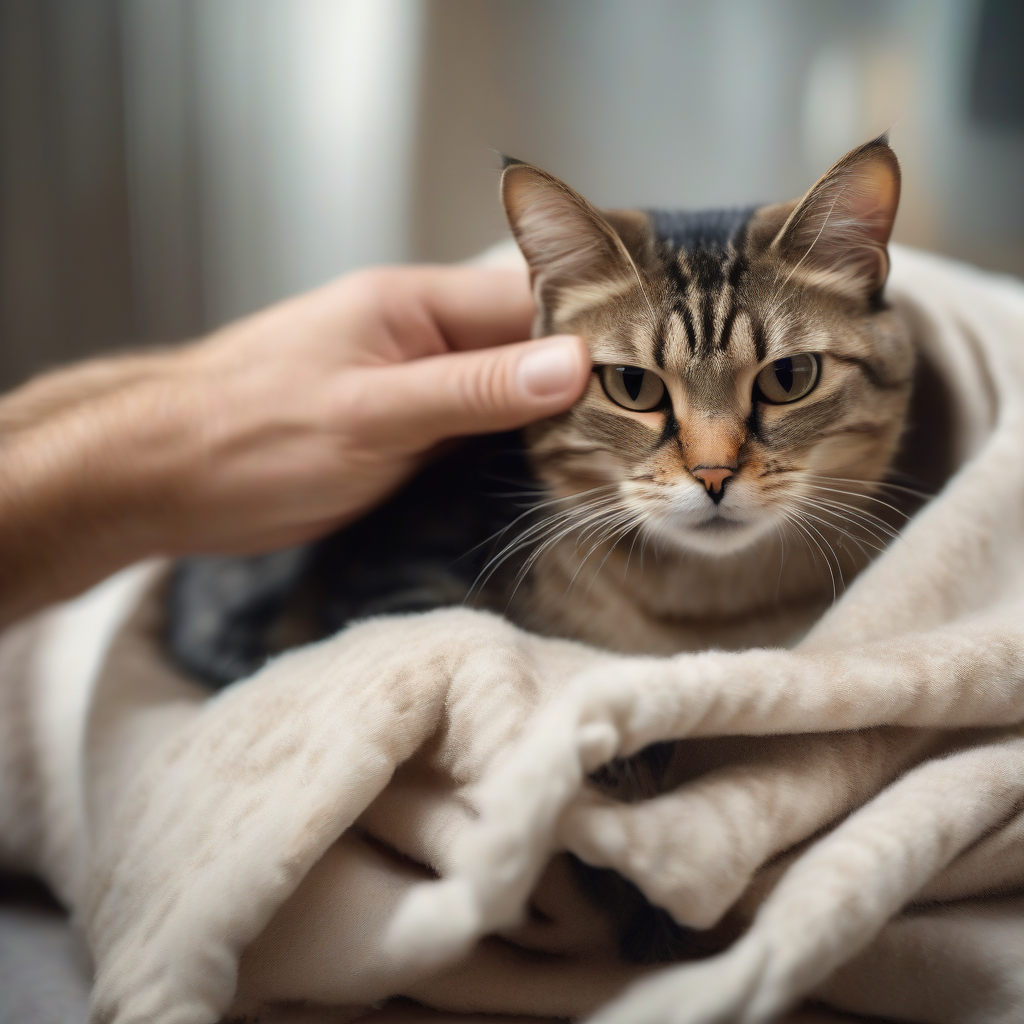
While cats possess a surprising ability to adapt to high-rise fall traumas, the insidious neurophysiological effects on their brain carry vital risks. In this article, we reveal 5 critical neurobiological effects your cat may experience after a fall and the lifesaving emergency intervention codes with scientific secrets.

In this article, you will discover how your rabbit copes with unexpected situations and its neurocognitive responses to non-routine events. Learn scientific secrets to enhance mental flexibility and manage stress.

In this article, you will find comprehensive information on the insidious neurophysiological effects of seizures in cats' brains and lifesaving emergency intervention codes during a seizure.
It is a widespread belief that our beloved pets, especially cats, sense our moods with surprising accuracy. They come to our side when we are sad, console us with their paws during stressful moments, or get energized with us when we are joyful. But is this just a coincidence, or do cats truly possess hidden 'emotion receptors' that allow them to perceive their owner's emotional state at a neurobiological level? In May 2026, we illuminate this ancient mystery in the light of modern science. By delving into your cat's inner world, we will uncover the neurobiological secrets of the deep bond they share with you.
In humans, 'mirror neurons' are believed to be at the core of empathy. When we observe someone else's action or emotional expression, these neurons in our brain activate as if we were performing that action or experiencing that emotion ourselves. While it has not yet been definitively proven that mirror neurons in cats are as developed as in humans, they are known to exhibit complex social learning and imitative behaviors. This suggests that cats may possess specialized neural mechanisms capable of 'deciphering' subtle micro-expressions, body language, and vocal tone of their owners, rather than merely 'imitating' them. Regions in their limbic system, particularly the amygdala, play a critical role in converting visual and auditory signals into emotional meanings. Thus, even if cats don't directly experience your sadness or happiness, they can perceive the behavioral and physiological changes these emotions cause in you.
Cats are incredibly sensitive to changes in your voice tone and the rhythm of your speech (prosody). High-pitched, soft tones are generally associated with positive emotions (happiness, affection), while low-pitched, harsh tones can signal potential threat or negativity (anger, frustration). Cats' auditory cortices meticulously process these acoustic differences. Studies have shown that cats can distinguish their owners' voices from those of other people, and even that differences in voice tone can alter their heart rate and behavior. This indicates that your cat's brain constructs a kind of 'emotional map' through sounds, and uses this map to understand your mood.
While cats do not have complex facial expressions like humans, they can observe subtle shifts in your facial muscles and eyes, as well as differences in your posture or gestures. For example, furrowing your brow, slumping your shoulders, or exhibiting a tense posture are visual cues that are processed in your cat's visual cortex and associated with previously learned outcomes. If a particular facial expression or body language has been associated with a positive experience for your cat (love, play), this leads your cat to develop a positive expectation. Conversely, encountering negative reactions (shouting, less touching) from an angry or stressed owner can lead the cat to associate these situations with avoidance or hiding behaviors. This complex Your Cat's Mind: The 'Orientation to the Unknown' – 5 Hidden Neurocognitive Decision-Making Secrets in New Objects and Environmental Changes! process indicates that your cat not only sees you but also tries to understand you.
One of cats' most powerful senses is their sense of smell, and this sense plays a critical role in perceiving their owner's emotional state. When humans experience intense emotional states such as stress, fear, or happiness, their bodies can release different chemical compounds, or 'emotional pheromones'. Cats can detect these chemical signals thanks to their vomeronasal organ (Jacobson's organ) located in their noses. Every human has a unique 'scent signature', and this signature can change with emotional states. Your cat learns these scent signatures over time spent with you and associates specific smells with specific emotional states. For example, the scent you emit when stressed can cause your cat to become anxious or exhibit avoidance behavior. For more information on this topic, you can refer to our article, Your Cat's Secret 'Scent Architecture': The Neurobiological Impact of Pheromone Signals at Home and Scientific Design Secrets to Zero Out Stress!.
Cats are highly intelligent animals and have a strong ability to learn through experience. They can form strong associations between their owner's emotional states and the outcomes they experience. For instance, positive experiences such as a happy and relaxed owner playing more, petting, or giving treats activate 'reward centers' in the cat's brain. This leads the cat to expect a reward when it perceives its owner as happy. Conversely, a cat that encounters negative reactions (shouting, less touching) from an angry or stressed owner may associate these situations with avoidance or hiding behaviors. The hippocampus and amygdala in the brain play crucial roles in the formation and reinforcement of such emotional memories. These learned associations shape your cat's responses to your emotional signals over time and determine the dynamics of your bond.
Your stress level can also affect your cat's physiology. Research shows that cats with highly stressed owners also exhibit increased levels of stress hormones (cortisol). This indicates that pets are in a kind of 'physiological synchronization' with their owners. When your stress increases, the rise in your cat's cortisol level suggests that your cat's stress response mechanisms in the brain are activated, and it not only perceives your emotional state but also 'internalizes' it. This can directly affect your cat's overall well-being and, in the long term, lead to physiological symptoms such as Your Cat's Hidden 'Stress Reservoir': 5 Neurobiological Signs in Hair Loss and Scientific Solutions!. For your cat to have a healthy gut microbiome, which is important for stress management, you can benefit from our article Your Cat's Hidden 'Gut Codes': 5 Shocking Neurochemical Effects of Probiotics on Brain Health!.
Touch and physical proximity trigger the release of oxytocin, also known as the 'love hormone', in both humans and cats. When you pet or hold your cat during happy, relaxed, and loving moments, oxytocin levels rise in both your brain and your cat's brain. This neurochemical response strengthens the bond between you and increases mutual trust. Oxytocin also has stress-reducing and calming effects. Therefore, your loving touches performed with a positive mood create a positive chemical relationship with your emotion in your cat's brain. For more information on the neurobiological effects of brushing and massage in cats, you can check out our article Decoding Your Cat's 'Secret Touch Map': 5 Neurobiological Secrets of Brushing and Massage, and Scientific Paths to Optimal Well-being!. This mutual oxytocin release ensures that your cat sees you not just as a food provider, but also as a source of emotional support and security.
Your cat's ability to perceive your emotional state is a combination of complex neurobiological mechanisms, acute senses, and learned experiences. To strengthen this deep connection, it's important to be aware of the impact of your own emotional state on your cat. A calm, positive, and consistent approach will help your cat feel safe and peaceful. Trying to understand their silent communication and sending them positive signals with our own body language, voice tone, and scent will deepen the bond between us. Remember, your cat is not just a housemate, but a unique being in emotional resonance with you.
