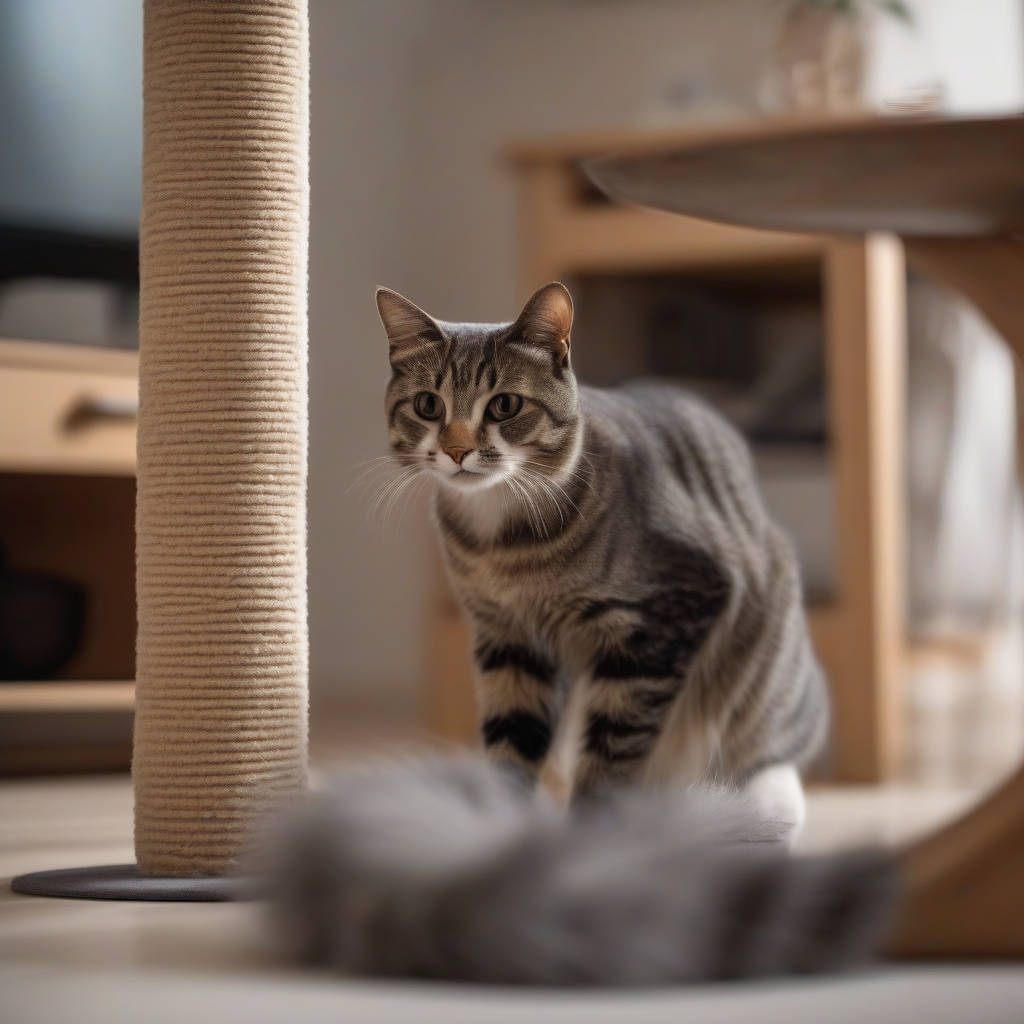
Did you know that stopping your cat's undesirable behaviors (scratching, biting, meowing excessively, etc.) involves more than just saying 'no'? In this article, you will discover how to activate your cat's brain's 'secret no button' and reset behaviors using scientific and neurobiological methods.


In this article, you will discover the little-known but profound effects of the acoustic environment in rabbit living spaces on their brain health and general well-being, exploring the neurobiological consequences of both sound deprivation and overstimulation, and scientific secrets to creating a peaceful environment. Understand and optimize your rabbit's world with expert tips.

In this article, you will find comprehensive information about the insidious neurobiological effects of artificial colorings, preservatives, and flavors found in commercial bird feeds on your bird's brain health and mental vitality. We explore scientific nutritional secrets to combat these hidden dangers, shedding light on a wide spectrum of effects from behavioral changes to cognitive decline.

In this article, you can discover the scientific secrets to understanding your cat's undesirable habits, deciphering the neurocognitive mechanisms in their brain, and establishing lasting new routines.
Cats are fascinating creatures known for their independence and complex instincts. However, this independence can sometimes lead to undesirable behaviors for owners: scratching furniture, jumping on countertops, excessive meowing, or even aggressive play. Often, our first reaction in these situations is to say 'no' or resort to punishment. But research and veterinary behaviorists show that cats' learning mechanisms are much more nuanced, and punishments, instead of being effective in the long run, can damage the bond with your cat. So, is there really a 'secret button' in your cat's brain to stop an unwanted behavior? How can we 'activate' this button with scientific approaches?
In this comprehensive guide, we will delve into the behavioral patterns of cats and the neurobiological mechanisms that change them. You will understand why your cat exhibits certain behaviors and learn evidence-based, positive reinforcement strategies to permanently reset these behaviors.
While cats may not be as command-driven as dogs, they constantly learn from their environment and experiences. Their learning processes are generally based on the principles of operant conditioning, also known as consequential learning. This means that the outcome following a behavior influences the likelihood of that behavior being repeated in the future. At a neurobiological level, this is closely related to the brain's reward systems (neurotransmitters like dopamine, serotonin) and threat perception mechanisms (stress hormones).
Physical punishments or harsh 'no' reactions create fear and anxiety in cats. This leads to an over-activation of brain regions like the amygdala and triggers the release of stress hormones (cortisol). Chronic stress can weaken cats' immune systems, lead to new behavioral problems, and erode their trust in their owner. Most importantly, punishment does not teach the cat what to do, only what not to do and with whom not to do it.
Conversely, positive reinforcement increases the likelihood of a desired behavior being repeated by rewarding it. Rewards (a tasty treat, an affectionate touch, play) activate the brain's reward centers, releasing dopamine and creating a 'feel-good' sensation in the cat. This makes learning more enjoyable and lasting. Positive reinforcement enables the formation of new, positive neural pathways in your cat's brain, weakening the old pathways associated with undesirable behaviors.
Understanding the underlying reasons for your cat's undesirable behavior is the first step in the solution process. These behaviors often stem from a combination of genetic predisposition, environmental factors, health issues, or learned responses. For example, scratching is a natural instinct for cats, necessary for sharpening their claws, marking their territory, and stretching their muscles. This is a deeply ingrained behavior in the brain's motor cortex.
Stress and anxiety can be triggers for many undesirable behaviors in cats. Situations like the arrival of a new pet, changes in living space, or the owner's prolonged absence can trigger an alarm state in your cat's brain. These situations are closely related to topics like Your Cat's Secret 'Scent Architecture': The Neurobiological Impact of Pheromone Signals at Home and Scientific Design Secrets to Zero Out Stress! and are explored in more detail in our article Your Cat's 'Silent Sanctuary Quest': 5 Neurobiological Keystone Points for New Home Adaptation and Scientific Harmony Secrets to Zero Out Stress!.
Activating the 'no' button to stop your cat's undesirable behaviors is not about punishing the cat, but rather guiding it towards new, more appropriate behaviors and reinforcing these behaviors at a neural level. Here are 5 scientifically based secrets:
Every behavior is a 'chain'; it starts with a specific trigger and ends with an outcome. The first step to stopping an undesirable behavior is to identify and break this chain. For example, does your cat meow or go to a specific spot right before it starts scratching the sofa? Identify the trigger at the beginning of the behavior and stop your cat with a distracting and redirecting action just before it performs that behavior. This prevents the brain from repeatedly using the same neural pathway and opens a new 'path'.
Instead of just expecting your cat to stop a behavior, teach it what to do. Is there a sofa-scratching problem? Provide it with an attractive scratching post and reward it immediately when it uses the post. This positive reinforcement activates the brain's reward centers and creates a strong neural connection between using the scratching post and 'feeling good'. This is also closely related to Your Cat's Secret 'Play Zone' Algorithm: Neuroscientific Bonding and Mental Stimulation Tactics, as play and mental stimulation can also encourage alternative behaviors.
Many undesirable behaviors stem from insufficient environmental stimulation or stress. Enriching your cat's living space allows it to satisfy its natural instincts (hunting, exploring, hiding), thereby reducing its stress levels. This improves neuronal health in brain regions like the hippocampus and prefrontal cortex, reducing anxiety. Providing climbing areas at different heights, interactive toys, and safe hiding places positively affects your cat's mood and behaviors. For more information on this, you can refer to our article Your Cat's 'Hidden Space' Crises: 5 Neurobiological Voids in the Home and Scientific Design Secrets to Zero Out Stress!.
Timing is everything in training. You should reward your cat the moment it performs the desired behavior, when the neural connection is strongest. This ensures the brain clearly codes the relationship between that behavior and the reward. Furthermore, repetitions are vital for strengthening neural pathways and making the behavior permanent. Short, consistent training sessions help your cat maintain focus and optimize the learning process. Remember, cats can sometimes seem to 'ignore' commands; our article Your Cat's 'Secret Listening Filter': Why Do They Seem to Ignore Some Commands? 5 Neurocognitive Secrets in Their Brains and Communication Strategies! will help you better understand this phenomenon.
Cats read much more than our verbal commands – they read our body language and environmental cues. Maintaining a calm and confident demeanor reassures your cat. Additionally, synthetic pheromone diffusers or sprays (like Feliway) can reduce your cat's environmental stress by calming its brain's stress response pathways. These pheromones send neurochemical signals that lower the perceived threat level in your cat's brain, making it more receptive to learning. For more information on the effects of pheromones on your cat, you can refer to our article Your Cat's Secret 'Scent Architecture'.
Resetting your cat's undesirable behaviors requires patience, consistency, and a scientific understanding. The 'secret no button' is actually your cat's brain's potential for learning and adaptation. Instead of punishing it, by understanding the cause and using positive reinforcement, you can both improve your cat's well-being and strengthen your bond. Remember, every cat is an individual, and do not hesitate to seek professional support from your veterinarian or a cat behavior specialist for the best results.
