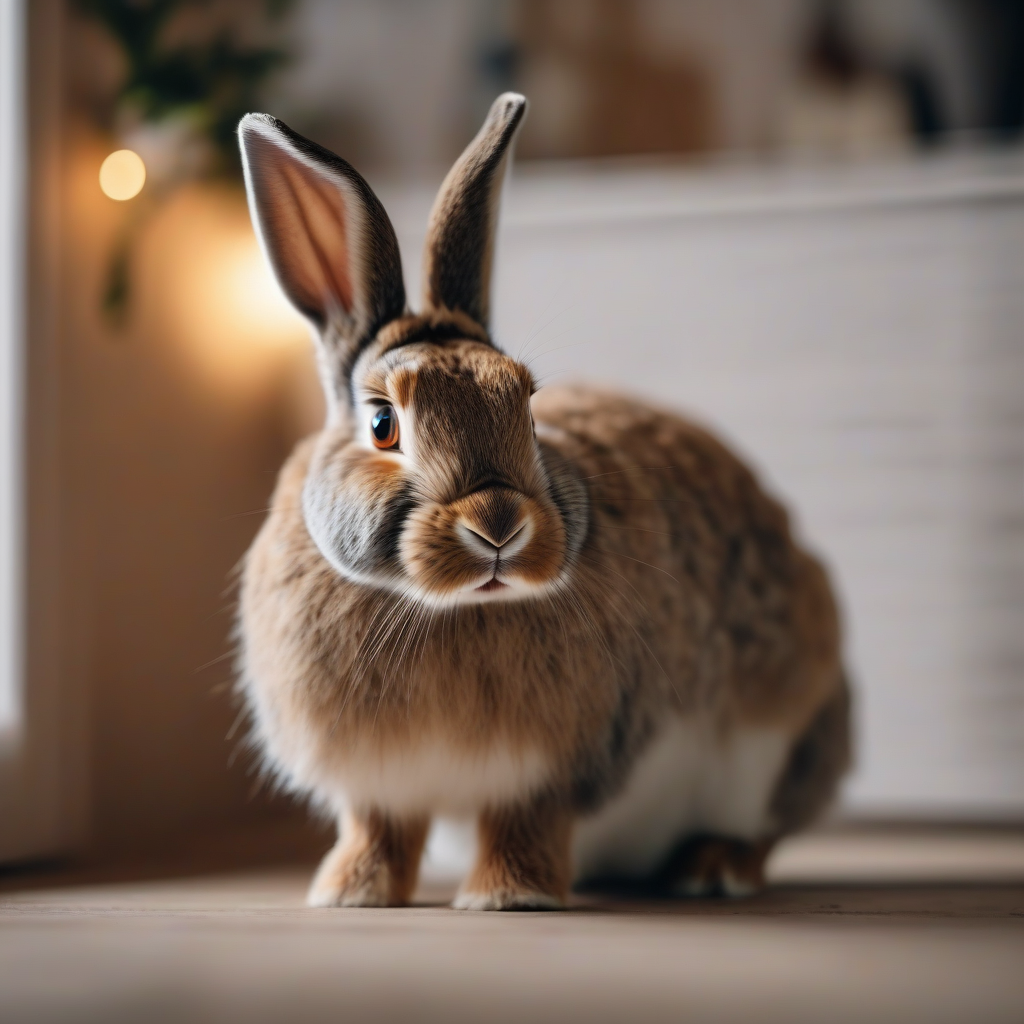
In this article, you will find comprehensive information on the overlooked neurocognitive signals of vision loss in rabbits and scientific strategies to improve our little friends' quality of life.


Discover the types of burns your dog can suffer, the 5 insidious neurophysiological effects these burns create in the brain and body, and lifesaving emergency intervention strategies in this comprehensive guide. We shed light on the dangers behind forgotten household accidents from a scientific perspective.

Discover the neurobiological signals of hidden stress your newly adopted cat experiences during adaptation to a new social environment. This article reveals 5 insidious signs of your cat's silent struggle and scientific strategies for peaceful, long-term harmony.

Your dog's anal sacs, located beneath the tail, can be hidden alarm bells often overlooked but profoundly affecting their quality of life. In this article, you will discover the 5 insidious neurobiological effects of anal sac problems on the brain and the lifesaving care secrets you need to know for your furry friend to live a peaceful life.
Dear rabbit owners, in the silent and fragile world of our beloved pets, even the most critical health issues can sometimes go unnoticed. Rabbits, by their very nature as prey animals, are masters at hiding their weaknesses and illnesses. This makes early detection of subtly progressing conditions like vision loss particularly challenging. However, as your rabbit's world darkens, many 'hidden signals' emerge in their brain and behavior. As of April 2026, understanding and intervening with these signals from a scientific perspective is vital for your rabbit's well-being. In this article, we will delve into the neurocognitive processes behind vision loss, the insidious signs that appear, and scientific strategies to enhance your tiny friend's quality of life.
Rabbits' vision is known for their wide field of view and superior motion detection. However, their eyesight can deteriorate over time or suddenly due to various reasons such as eye infections, traumas, cataracts, glaucoma, or age-related degenerative diseases. A rabbit, driven by its instinct to protect itself from predators, will hide its illness or weakness as much as possible. This instinct leads to neurocognitive adaptations in a rabbit experiencing vision loss, prompting them to rely more heavily on their other senses (smell and hearing) to camouflage their condition. These adaptations make the problem difficult to spot externally; however, changes in the brain's visual processing centers and associated behavioral deviations harbor 'hidden signals' for the observant owner.
Rabbits with vision loss may bump into objects, become disoriented, or struggle to navigate simple obstacles like stairs even in a familiar environment. This is due to the lack of visual input affecting the hippocampus and parietal lobe regions of the brain, which are crucial for spatial navigation. Your rabbit's hesitation in areas they usually navigate comfortably or their unexpected movements could be one of the first neurocognitive signs of a change in their vision. In cases of sudden shock or trauma, this disorientation can become even more pronounced, challenging your rabbit's Hidden 'Shock Shield': 5-Second Lifesaving Scientific Intervention Codes for Sudden Traumas! mechanisms.
Rabbits with impaired vision may exhibit changes in their interactions with humans or other rabbits. They might suddenly startle at touch, react excessively to approaching hands or objects, or avoid social interactions they once enjoyed. This is linked to the amygdala's fear response being triggered without adequate visual cues. Your rabbit's previous behavioral patterns, such as those discussed in Your Rabbit's 'Hidden Resistance': 5 Neurocognitive Training Codes to Break Resistance to Handling!, may change because they can no longer visually perceive threats and feel vulnerable.
A rabbit with weakening vision may struggle to locate its food bowl or water bottle. This can be explained by the weakening of visual connections between the brain's reward centers (ventral tegmental area and nucleus accumbens) and cortical regions that govern foraging behavior. Behaviors such as spending more time at the food bowl but eating less, sniffing the water before drinking, or heading in the wrong direction may be observed. If adequate nutrition is not received, your rabbit's overall health and energy levels can be negatively impacted, which can severely affect its Secret Mood Compass: 5 Insidious Neurocognitive Locks Behind Sudden Behavioral Changes!.
Vision loss creates a constant sense of uncertainty and danger for rabbits, which can lead to chronic stress. Levels of stress hormones like cortisol increase, causing changes in the brain's prefrontal cortex, affecting decision-making and problem-solving abilities. Your rabbit's tendency to startle easily, hide without reason, excessive fur pulling, or freezing behavior could be a neurobiological reflection of impaired vision. This continuous state of anxiety can negatively impact your rabbit's Secret Mind Map: Decoding the Neurobiological Codes of Calmness and Trust!, diminishing their overall well-being.
Vision loss can disrupt rabbits' circadian rhythms and sleep-wake cycles due to reduced light perception impacting the brain's suprachiasmatic nucleus (SCN), which governs these cycles. Some rabbits may become more active at night, while others may develop complete apathy. Significant deviations in these rhythmic cycles of rabbits, which are normally crepuscular animals, result from the brain's inability to synchronize its natural clock due to damage in photoreceptor cells or the optic nerve. These changes directly affect your rabbit's overall energy level and quality of life.
To improve the quality of life for a rabbit experiencing vision loss, scientifically-backed approaches are crucial:
Make your rabbit's living space safe and consistent. Avoid moving furniture and objects. Create soft-floored areas free of sharp corners. Instead of slippery surfaces, provide stable bedding using the principles highlighted in our article Your Rabbit's 'Hidden Space Stress': 5 Unknown Neurobiological Effects of Cage Substrate and Scientific Principles Triggering Welfare!. Always keep food and water bowls in the same place and ensure they are easily accessible. You can add auditory toys and scented herbs for environmental enrichment.
Rabbits have highly developed senses of smell and hearing. In cases of vision loss, implement strategies to further activate these senses. Offer chew toys with different textures, scented plants (safe for rabbits), and toys that make soft sounds. Use a soft and consistent tone of voice when speaking. Always announce your presence with your voice when approaching.
Regular veterinary check-ups are vital to determine the cause of vision loss and evaluate treatment options. Your veterinarian can diagnose underlying conditions such as cataracts, glaucoma, or infections and recommend an appropriate treatment plan. Early diagnosis can, in some cases, slow the progression of vision loss or partially reverse it.
In conclusion, while it is disheartening to face an insidious health issue like vision loss in your rabbit, you can rebuild their world with scientific methods and maximize their well-being. Observing subtle changes in your little friend's behavior and routines is the first step to illuminating this 'hidden darkness.' Remember, with love, patience, and scientifically-based approaches, ensuring your rabbit lives a high-quality life is in your hands.
