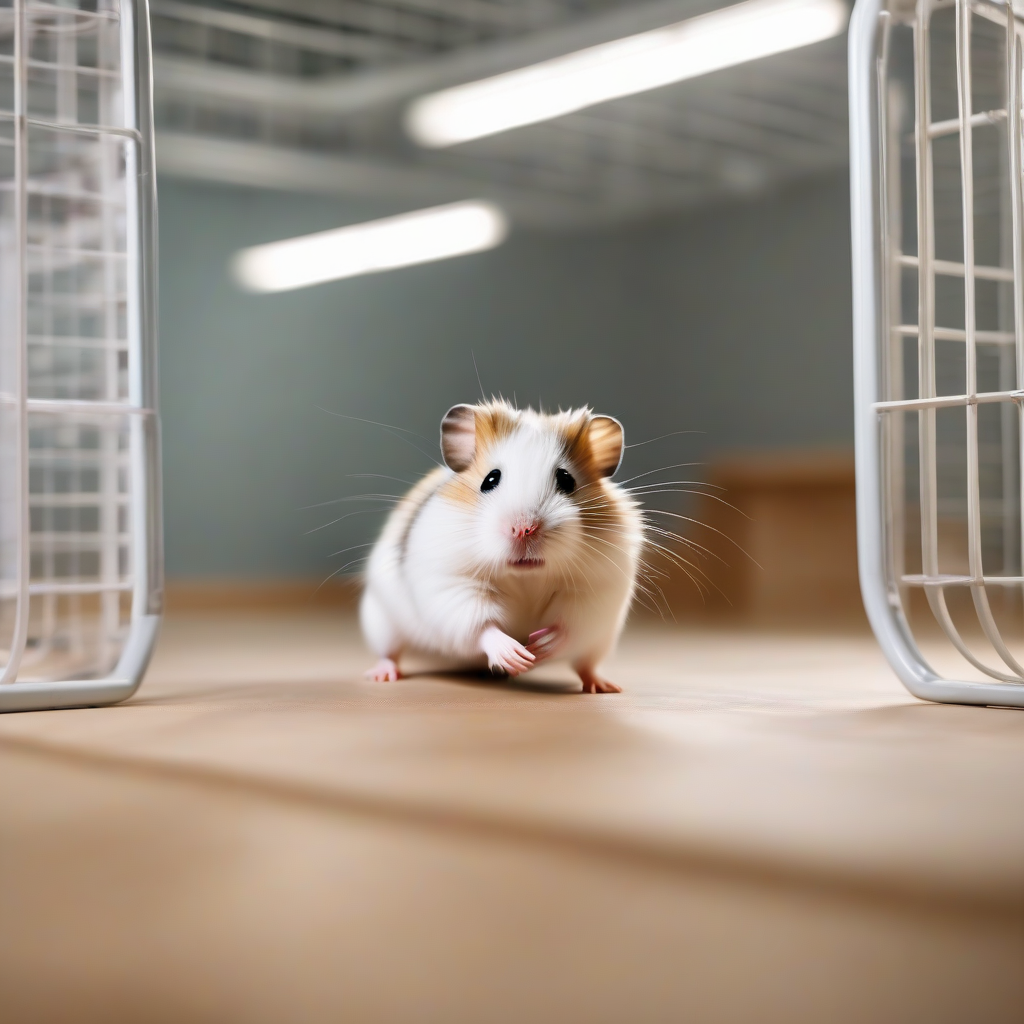
In this article, you will find critical neurobiomechanical effects of your hamster's exercise wheel choice on spinal health and scientific solutions to prevent potential 'silent wheel trauma.'


While cats possess a surprising ability to adapt to high-rise fall traumas, the insidious neurophysiological effects on their brain carry vital risks. In this article, we reveal 5 critical neurobiological effects your cat may experience after a fall and the lifesaving emergency intervention codes with scientific secrets.

In this article, you will discover how your rabbit copes with unexpected situations and its neurocognitive responses to non-routine events. Learn scientific secrets to enhance mental flexibility and manage stress.

In this article, you will find comprehensive information on the insidious neurophysiological effects of seizures in cats' brains and lifesaving emergency intervention codes during a seizure.
Our tiny hamster companions are known for their energy and constant need for movement. These creatures, capable of covering miles in their natural habitat, rely on an exercise wheel as an indispensable part of their cage life. However, not every wheel is merely an innocent plaything. Scientific research and veterinary experience show that an improperly chosen exercise wheel can lead to chronic physical and neurological problems in your hamster, referred to as "silent wheel trauma." Although difficult to notice externally, this trauma can cause permanent damage to their tiny spine and nervous system.
In this article, we will detail the vital importance of your hamster's exercise wheel choice, the neurobiomechanical risks triggered by incorrect wheels, and the scientific precautions you can take to prevent these insidious dangers. Our goal is to help you provide a happy, healthy, and mentally sound life for your hamster.
Hamsters are constantly moving creatures in the wild, foraging for food, building nests, and escaping predators. This deep-seated instinct persists in domesticated hamsters. In a cage environment, one of the most effective ways to meet this natural need is through an exercise wheel. Regular exercise not only prevents obesity but also reduces stress hormones, supports digestion, and improves overall mood. However, the quality and design of the wheel play a key role in achieving these benefits.
'Silent wheel trauma' refers to physical and neurological damages that accumulate over time, often unnoticed immediately, resulting from the use of an exercise wheel that is not suitable for the hamster's body structure or does not meet safety standards. This trauma can lead to serious consequences such as chronic pain, nerve damage, loss of motor skills, and general stress. Given the delicate biomechanics of their bodies, even the slightest incompatibility can cause significant problems in the long run.
One of the most common and insidious dangers is an exercise wheel with a diameter that is too small for the hamster's size. Hamsters are forced to run in a constantly arched position rather than keeping their backs straight. This creates abnormal pressure on the spinal discs and vertebrae. Over time, this continuous arching can lead to chronic back pain, spondylosis (spinal arthritis), and even nerve compression. This biomechanical stress restricts the hamster's overall mobility and severely reduces its quality of life. This situation operates via a similar mechanism to the general stress and physical health impacts of inadequate environmental conditions, much like in Hamster Cage's Hidden 'Stress Canyons': The Invisible Neurobiological Effects of Insufficient Digging Space and Happy Home Secrets.
Old-fashioned, wire or mesh-surfaced exercise wheels pose serious risks to hamsters' paws and legs. While running, their paws can get caught in the wires, leading to sprains, fractures, torn nails, or inflammatory wound infections known as 'bumblefoot'. Such physical traumas not only cause acute pain but can also lead to chronic pain syndromes and gait abnormalities. The neurological signals of pain adversely affect the animal's overall well-being, putting it in a constant state of stress. Like sudden physical crises such as Your Hamster's Cheek Pouch's 'Hidden Time Bomb', these situations may require urgent intervention.
Low-quality or worn exercise wheels often squeak loudly or vibrate. Hamsters have highly developed hearing, and constant noise is a significant stressor for them. Chronic noise exposure leads to the continuous release of stress hormones like cortisol, which can weaken the immune system, cause loss of appetite, and disrupt sleep patterns. This results in consequences similar to the neurobiological anxiety effects triggered by inadequate sleep environments, such as Your Hamster's 'Silent Anxiety Zones'. A peaceful environment is indispensable for their mental health.
Exercise wheels with smooth, slippery surfaces can cause hamsters to lose balance and fall while running. This significantly increases the risk of serious injury, especially for young or elderly hamsters. Repeated falls cause trauma to the musculoskeletal system and also diminish the animal's willingness to exercise. The inability to move on a secure surface negatively affects the hamster's natural exploration and safe discovery behaviors, such as Your Hamster's 'New Object Bewilderment', thus creating a lack of a sense of security.
Some inexpensive exercise wheels on the market may contain toxic plastics, paints, or adhesives that hamsters can chew on. Hamsters are naturally driven to chew and tend to explore everything in their cage. Ingestion of these toxic substances can lead to a range of health problems, from gastrointestinal issues to more severe neurological poisoning. Poisoning affecting the nervous system can result in loss of coordination, tremors, seizures, and even death. Therefore, selecting safe materials is vital to protect Your Hamster's 'Secret Chemical Shield'.
Choosing the right exercise wheel is critical to protecting your hamster's health and well-being. Here are the ideal wheel characteristics based on scientific recommendations:
Your hamster's exercise wheel is not just a toy for them; it is a fundamental pillar of their physical and mental health. A wrong choice can lead to severe and irreversible 'silent wheel traumas' in your tiny friend's life. By understanding the neurobiomechanical roots of these traumas and choosing the right wheel with science-backed solutions, you can ensure your hamster lives a happy, healthy, and long life. Remember, small details make big differences in the well-being of small creatures.
