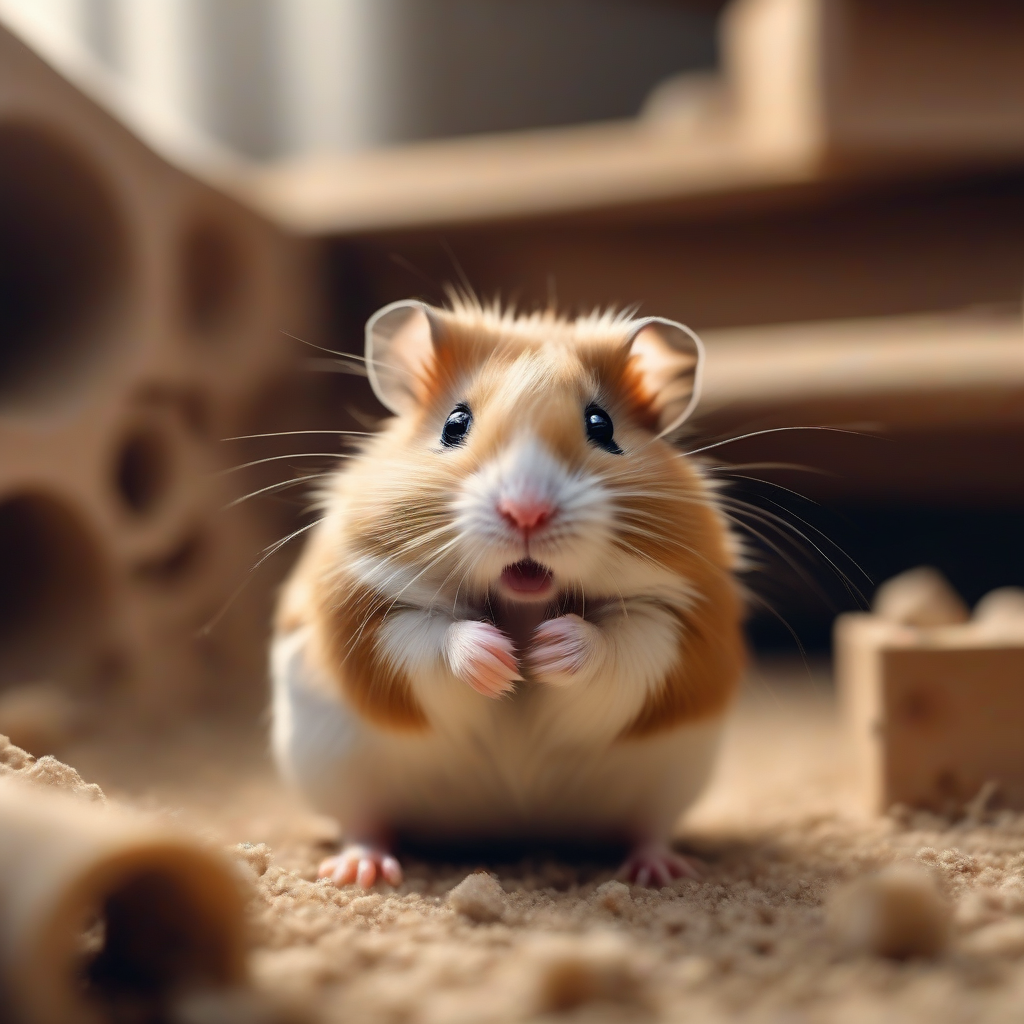
In this article, you will discover the hidden architectural needs of hamsters in their living spaces, the neurocognitive effects of environmental enrichment, and scientific design secrets for eliminating stress.


Discover the neurobiological signals of hidden stress your newly adopted cat experiences during adaptation to a new social environment. This article reveals 5 insidious signs of your cat's silent struggle and scientific strategies for peaceful, long-term harmony.

Your dog's anal sacs, located beneath the tail, can be hidden alarm bells often overlooked but profoundly affecting their quality of life. In this article, you will discover the 5 insidious neurobiological effects of anal sac problems on the brain and the lifesaving care secrets you need to know for your furry friend to live a peaceful life.
In this article, you will find comprehensive information on the insidious neurotoxic effects of heavy metal poisoning in aquarium fish, its symptoms, and lifesaving emergency intervention codes. This condition, which can arise from household water sources, improper equipment, or neglect, can severely threaten your fish's quality of life and lifespan.
Hamsters, despite their small size, possess incredibly complex neurocognitive structures and strong instincts inherited from their wild ancestors. When these often-overlooked instincts are not met in domestic living spaces, they can lead to chronic stress, behavioral disorders, and even serious health issues. As a veterinary content strategist, our goal is to enlighten hamster owners about these 'invisible architectural needs' and enhance their well-being through a scientifically grounded approach. As of March 2026, we're unveiling 5 critical secrets to enriching our tiny friends' inner worlds, based on the latest scientific findings in hamster habitat design.
Hamsters are 'fossorial' animals, meaning they naturally construct extensive and complex tunnel systems underground in their natural habitats. These tunnels are not just for shelter but are also vital for predator avoidance, food storage, and thermal regulation. Failing to provide a sufficiently deep and diggable substrate in a home environment can cause significant anxiety and stress in hamsters. Offering nesting materials of adequate depth (at least 15-20 cm, or even more) and varied textures (paper-based bedding, hay, wood shavings mix) satisfies this natural instinct, supporting melatonin production, improving sleep quality, and stabilizing overall mood. Research indicates that hamsters provided with deep nesting opportunities exhibit significantly lower cortisol levels (the stress hormone).
Understanding your pet's instincts related to Your Hamster's 'Underground Engineering': Scientific Secrets of How Complex Tunnel Systems Shape the Brain! is key to providing them with an environment similar to their natural habitat.
A hamster confined to moving only on a horizontal plane is deprived of the complexity found in its natural environment. Wild hamsters move through grasses, shrubs, and across different elevations. Providing access to various levels, bridges, ramps, and climbing materials (safe wooden branches, rope bridges) within the cage enhances their cognitive mapping abilities. This diversity encourages the formation of new synaptic connections in their brains, sharpens problem-solving skills, and prevents boredom. Conditions like stereotypical behaviors, as discussed in Your Hamster's 'Invisible Captivity': Scientific Secrets of Stereotypic Behaviors and 5 Critical Steps to Reprogramming the Brain!, often stem from inadequate environmental enrichment.
Hamsters are small prey animals and require multiple hiding and retreat areas to feel secure. Tunnels, small houses, ceramic pots, or coconut shells provide places for them to escape from potential threats (sudden noises, quick movements, other pets). These areas serve not only as physical refuge but also as a psychological buffer. Feeling safe helps strengthen their immune systems and reduces the risk of stress-related illnesses such as Your Hamster's 'Hidden Gut Crisis': 5 Deadly Signs of Wet Tail (Proliferative Ileitis) and an Emergency Scientific Treatment Protocol!. Furthermore, these hiding spots allow hamsters to create Your Hamster's 'Invisible Map Laboratory': Neurobiological Secrets of Mysterious Mental Spaces Formed by Scent and Touch, and Optimal Brain-Developing Habitat Design! by depositing their scents.
Hamsters' teeth grow continuously, necessitating a constant need for gnawing. However, gnawing is not just for dental health; it's also a critical function for stress relief and mental stimulation. It's essential to offer a variety of safe chewing materials such as wooden toys, mineral stones, cardboard tubes, or specially formulated hamster chew blocks. Providing alternatives with different hardness and textures, rather than just one type, increases mental stimulation and strengthens chewing muscles. Lack of adequate chewing materials can lead to dental overgrowth issues, loss of appetite, and increased stress levels.
As energetic creatures, regular physical activity is indispensable for hamsters. A sufficiently large and safe running wheel (with a solid surface to prevent spinal curvature) forms the foundation of this need. However, exercise isn't limited to the wheel. A spacious cage area, tunnel systems, and obstacle courses also encourage physical activity. On the other hand, quiet, dim, and comfortable nesting areas are also important for post-activity relaxation and rest. For unknown scientific secrets about wheel selection and use, refer to the article Your Hamster's 'Invisible Treadmill': 5 Unknown Scientific Secrets of Wheel Selection and Use for Maximum Well-being!. Correct habitat design also helps prevent situations like Your Hamster's 'Invisible Fractures': Unknown Dangers of Cage Accidents and 5 Critical Lifesaving Emergency Interventions! that might arise from overexertion.
Your hamster's living space should not just be a cage, but a miniature world that meets all its ecological and psychological needs. Designs based on these 5 architectural secrets will ensure your pet not only survives but also thrives, leading a happy and healthy life. Remember, a well-thought-out habitat is an investment in both your hamster's mind and body.
