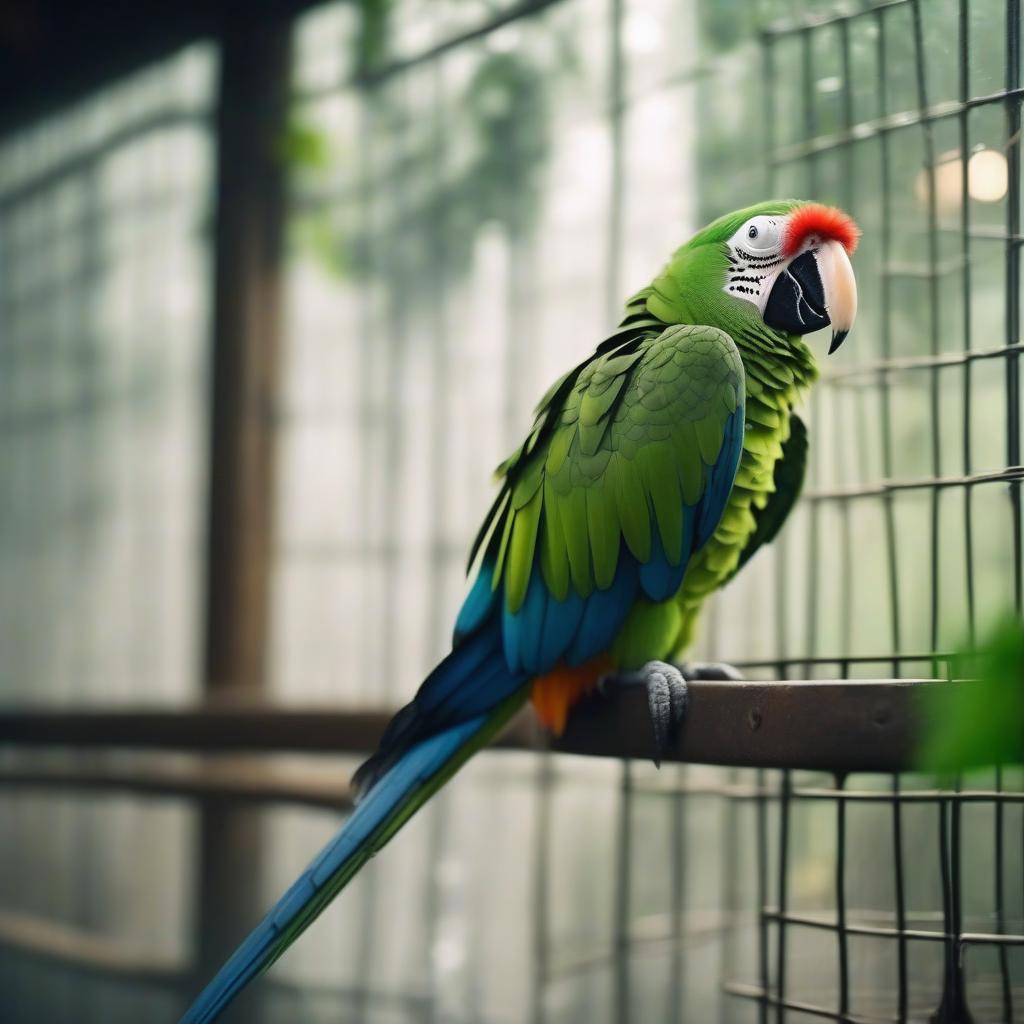
In this article, we will delve into the critical yet often overlooked humidity factor affecting your bird's respiratory health, the scientific impacts of humidity imbalance, and lifesaving care strategies.


Discover the neurobiological signals of hidden stress your newly adopted cat experiences during adaptation to a new social environment. This article reveals 5 insidious signs of your cat's silent struggle and scientific strategies for peaceful, long-term harmony.

Your dog's anal sacs, located beneath the tail, can be hidden alarm bells often overlooked but profoundly affecting their quality of life. In this article, you will discover the 5 insidious neurobiological effects of anal sac problems on the brain and the lifesaving care secrets you need to know for your furry friend to live a peaceful life.
In this article, you will find comprehensive information on the insidious neurotoxic effects of heavy metal poisoning in aquarium fish, its symptoms, and lifesaving emergency intervention codes. This condition, which can arise from household water sources, improper equipment, or neglect, can severely threaten your fish's quality of life and lifespan.
Our birds' respiratory systems are highly sensitive to environmental factors due to their delicate structure. One of these often-overlooked factors, which can have devastating effects on their health, is the level of humidity in their environment. For many bird owners, humidity might seem like just a weather term, but it is, in fact, a critical scientific balance for our feathered friends' overall well-being, feather health, and especially their resistance to respiratory infections. In this article, we will delve into the hidden humidity wars your bird might face and the scientific strategies you should implement to emerge victorious.
Birds are creatures adapted to specific humidity ranges in their wild habitats. Even in a home environment, deviations from ideal humidity levels can significantly impact a bird's physiology. Their high metabolic rates necessitate efficient oxygen uptake. The respiratory tracts undertake crucial tasks such as filtering, warming, and humidifying the air. Chronic deviations in ambient humidity can weaken the mucosal defenses in the respiratory pathways, opening the door for pathogens, thereby reducing your bird's resistance to diseases.
Each bird species has a humidity requirement specific to its natural habitat. For instance, parrots from tropical regions are adapted to higher humidity levels, while desert birds are more tolerant of drier environments. These physiological adaptations determine how their respiratory systems cope with moist air and how much humidity they require. Maintaining this balance in a home environment is fundamental for your bird's lungs and air sacs to function most efficiently.
Let's uncover five critical scientific secrets behind humidity imbalance that affect your bird's health, often going unnoticed:
Especially during winter months or in dry climates, when heating systems are active, household humidity levels can drop below 30-40%. This excessively low humidity dries out the birds' respiratory tracts. The mucous layer lining the respiratory passages acts as a protective barrier, trapping dust particles and microbes. Dryness impairs the function of this mucous layer, leading to irritation, inflammation, and easy colonization by bacteria and viruses. In the long term, it increases the risk of serious respiratory ailments such as sinus infections, tracheitis, and chronic bronchitis.
Conversely, consistently high humidity (>70-80%) provides an ideal breeding ground for bacteria and fungi, especially dangerous Aspergillus species, within the cage and general living area. This condition can lead to deadly fungal infections like Your Bird's 'Hidden Breath Killer': 5 Insidious Signs of Aspergillosis and Lifesaving Scientific Interventions!, particularly in birds with sensitive respiratory systems. High humidity environments can also encourage fungal growth on birds' feathers, inviting dermatological problems.
Humidity significantly affects the perceived temperature, or thermal comfort, of birds. High humidity makes heat dissipation difficult due to birds' inability to sweat, leading to thermal stress as we highlighted in our article Your Bird's 'Invisible Environmental Stress Signals': Unknown Behavioral Effects of Cage Size and Lighting!. This situation lowers the bird's energy levels and creates a general sense of discomfort. Low humidity, on the other hand, can make cold air feel even sharper, causing the bird to expend more energy to maintain its body temperature.
Birds' feathers perform vital functions such as thermoregulation, flight, and protection. Humidity is crucial for keeping feathers flexible and shiny, maintaining a healthy feather structure. Insufficient humidity can lead to dry, brittle feathers, flakiness, excessive itching, and even abnormal feather plucking behavior or poor feather quality. Furthermore, when combined with nutritional deficiencies, such as those discussed in Your Bird's 'Invisible Building Blocks': 5 Insidious Signs of Essential Amino Acid Deficiencies and Scientific Nutrition Strategies!, feather problems can worsen.
Chronic humidity imbalance can increase oxidative stress levels in birds' physiological systems. Oxidative stress refers to an increase in free radicals that damage cells, weakening the immune system and reducing resistance to diseases. This condition can make your bird more susceptible to infections and accelerate the overall aging process. For a healthy immune system, the advice in our article Your Bird's 'Invisible Microbiome Shield': 5 Insidious Signs of Gut Health and Scientific Nutrition Secrets for Brain Development! is also important, as gut health is fundamental for overall immunity.
Properly managing the humidity in your bird's living space is vital for their health and well-being. Here are science-backed solutions you can implement:
The most fundamental step toward optimal humidity management is acquiring a reliable hygrometer (humidity meter). This device allows you to track the immediate humidity level around the cage. For most parrot species, 50-70% is considered ideal, while desert birds may require lower (30-50%) and tropical birds higher (60-80%) percentages. You should research the ideal range specific to your bird's species and strive to maintain it.
In dry environments, ultrasonic humidifiers are an effective and safe way to increase humidity levels. However, ensure the humidifier water is always clean and fresh, and regularly maintain the device to prevent the growth of bacteria or mold. In humid environments, providing good air circulation (but ensuring the bird is not in a draft) and using dehumidifiers if necessary can help prevent mold and bacterial growth.
Offering birds regular bathing opportunities (a water dish, a dedicated bird bath, or a gentle spray bath) not only cleans their feathers but also helps naturally humidify their respiratory tracts and mucous membranes. Bath water should always be clean and at room temperature. Fresh and clean drinking water should also always be easily accessible, which is critical for overall hydration.
Adding live plants safe for birds that release moisture (e.g., spider plants, areca palms, or Boston ferns) to the room can provide natural humidification. Plants contribute to ambient humidity by releasing water vapor through photosynthesis. However, it is crucial to avoid plants that may be toxic to birds. Thorough research is essential before placing any plant near the cage.
The humidity balance in your bird's living space is not just a comfort factor; it is a vital health parameter. Understanding these hidden humidity wars and taking appropriate measures are among the most important steps to ensure our feathered friends live long, healthy, and happy lives. Remember, proactive care is always more valuable than reactive treatment. Through regular observation and scientifically grounded practices, ensure your bird receives the best possible care and lives in optimal humidity levels.
