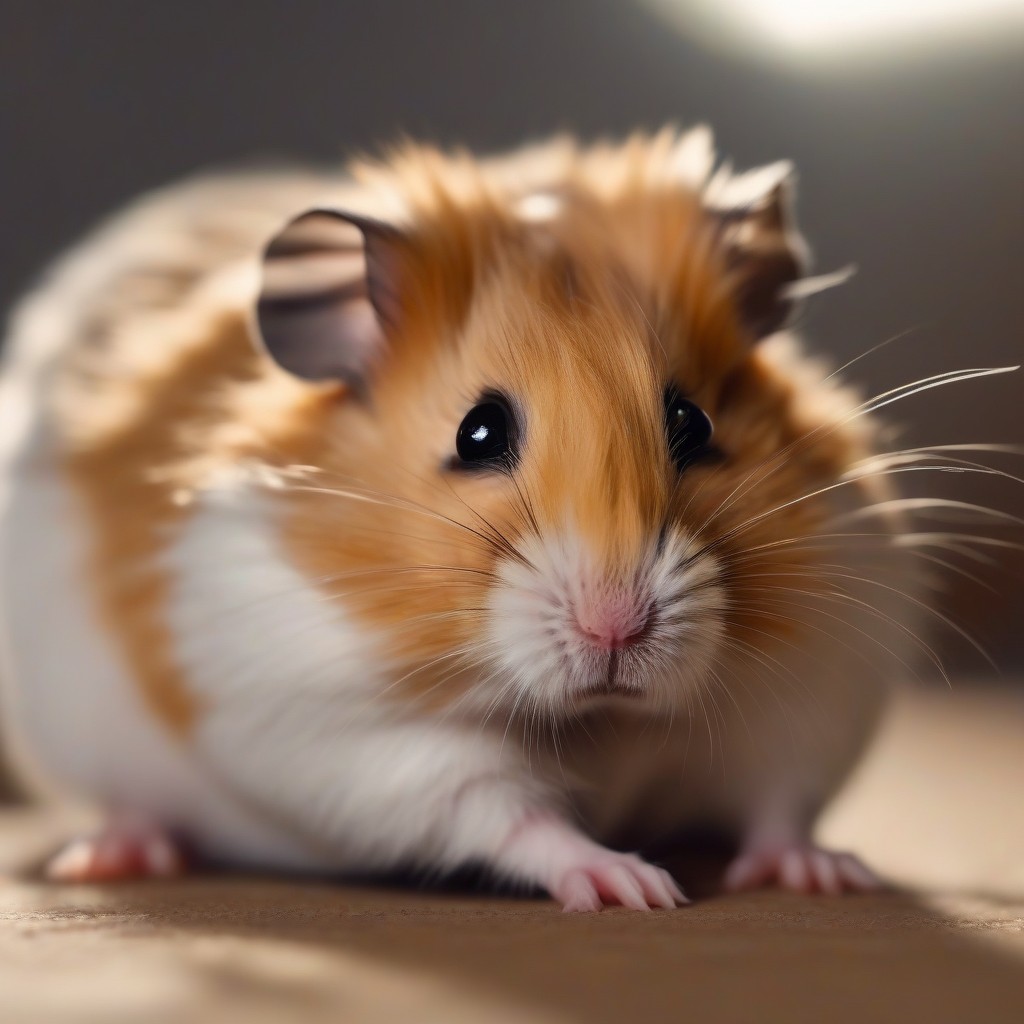
Discover 5 neurobiological secrets to ensure your hamster's optimal circadian rhythms and stress-free sleep for a healthy life. Enhance your tiny companion's rest quality with this scientific guide.


In this article, you will discover the little-known but profound effects of the acoustic environment in rabbit living spaces on their brain health and general well-being, exploring the neurobiological consequences of both sound deprivation and overstimulation, and scientific secrets to creating a peaceful environment. Understand and optimize your rabbit's world with expert tips.

In this article, you will find comprehensive information about the insidious neurobiological effects of artificial colorings, preservatives, and flavors found in commercial bird feeds on your bird's brain health and mental vitality. We explore scientific nutritional secrets to combat these hidden dangers, shedding light on a wide spectrum of effects from behavioral changes to cognitive decline.

In this article, you can discover the scientific secrets to understanding your cat's undesirable habits, deciphering the neurocognitive mechanisms in their brain, and establishing lasting new routines.
Although our tiny friends, hamsters, are known as active members of the nightlife, the resting and sleeping processes they undertake during the day are vitally important for their overall health and well-being. Optimal sleep patterns deeply affect not only their physical well-being but also their cognitive functions and mental balance. In this article, we reveal how to optimize your hamster's circadian rhythms and stress-free resting environment, with 5 critical neurobiological secrets enlightened by science.
Circadian rhythms are biological processes that living organisms exhibit in approximately 24-hour cycles. In nocturnal animals like hamsters, these rhythms are closely linked to the light-dark cycle and regulate essential functions such as sleep-wakefulness, feeding, and metabolism. The proper functioning of this delicate internal clock is directly connected to neurological processes like melatonin production and is indispensable for your hamster's physical and mental health. Disruptions to these rhythms can lead to stress, weakened immune systems, and behavioral problems.
Hamsters require deep sleep during daylight hours. In their natural habitat, they rest in underground burrows where they feel safe. In a home environment, it is crucial that their cages are not exposed to direct sunlight or artificial light sources. Photoreceptors in their retinas can detect even the lowest light levels, which can disrupt melatonin production, thereby disturbing their circadian rhythms. This leads to chronic stress and sleep disorders. Placing their cages in a dark, calm area during the day or covering them to create a 'dark sanctuary' supports their neurological resting processes. This is part of proper cage design, as mentioned in the article Your Hamster's 'Secret Architectural Secrets': 5 Neurobiological Traps in Cage Placement and Scientific Design Codes for Mental Well-being.
Body temperature and humidity are factors that directly affect hamsters' sleep quality. Excessively hot or cold environments strain the animal's thermoregulation mechanisms and cause energy expenditure during sleep. Ideally, the cage environment should be kept at a stable temperature between 20-22°C (68-72°F), and sudden temperature changes should be avoided. High humidity can lead to respiratory problems, while low humidity can adversely affect skin and coat health. Creating a stable microclimate that allows the hamster's body temperature to naturally drop during sleep is essential for neurological relaxation to ensure smooth circadian rhythms.
Hamsters have highly developed hearing and are sensitive to even the slightest sound fluctuations. Sudden or continuous noises they are exposed to during daytime sleep (such as television, conversation sounds, slamming doors) can cause the release of stress hormones like cortisol, disrupting their sleep cycles. This reduces sleep quality and can lead to chronic stress in the long term. Positioning your hamster's cage in a quiet corner away from household noise calms neuronal activity and deepens their rest. This acoustic isolation is a fundamental prerequisite for their cognitive processes, such as those discussed in Your Hamster's 'Mind Maze': 5 Neurocognitive Training Secrets to Develop Problem-Solving Skills!.
Hamsters, by natural instinct, build complex underground tunnels and nests for sleeping and food storage. This behavior gives them a sense of security and protection from predators. Providing adequate depth (at least 15-20 cm / 6-8 inches) and various textures of bedding material (paper-based, dust-free, hemp-based, etc.) in their cages allows them to exhibit these natural behaviors. Quality and deep substrate enable hamsters to burrow comfortably and satisfy their instinctive needs, thereby improving sleep quality. The importance of this topic is detailed in the article Your Hamster's 'Subterranean Illusion': Neurobiological Secrets of Hidden Cage Substrate Layers and Stress-Eliminating Design Codes.
Certain nutrients in your hamster's diet are critical for the production of neurotransmitters and hormones that affect sleep patterns. Foods rich in tryptophan (some seeds, nuts), in particular, are essential for melatonin and serotonin synthesis. Melatonin is a hormone that regulates the sleep-wake cycle. A balanced and varied diet supports the natural production of these hormones and helps maintain circadian rhythms. Avoiding excessive sugar or processed foods reduces metabolic stress, thereby improving sleep quality. For more information on this topic, you can refer to our article Your Hamster's 'Hidden Brain Fuel': 5 Unknown Neurometabolic Secrets of Omega-3 Fatty Acids and a Guide to Optimal Mental Agility!.
When an optimal sleep environment is not provided, hamsters can experience a range of health and behavioral problems, including chronic stress, weakened immune systems, aggressive behaviors, weight loss or excessive weight gain, apathy, and cognitive decline. In the long term, this can shorten their lifespan and reduce their overall quality of life.
Optimizing your hamster's circadian rhythms and resting environment is essential for a long, healthy, and happy life. By paying attention to factors such as light, temperature, sound insulation, nesting opportunities, and a balanced diet, you can provide a living space that meets their neurobiological needs. Remember, good sleep is the foundation of good health.
