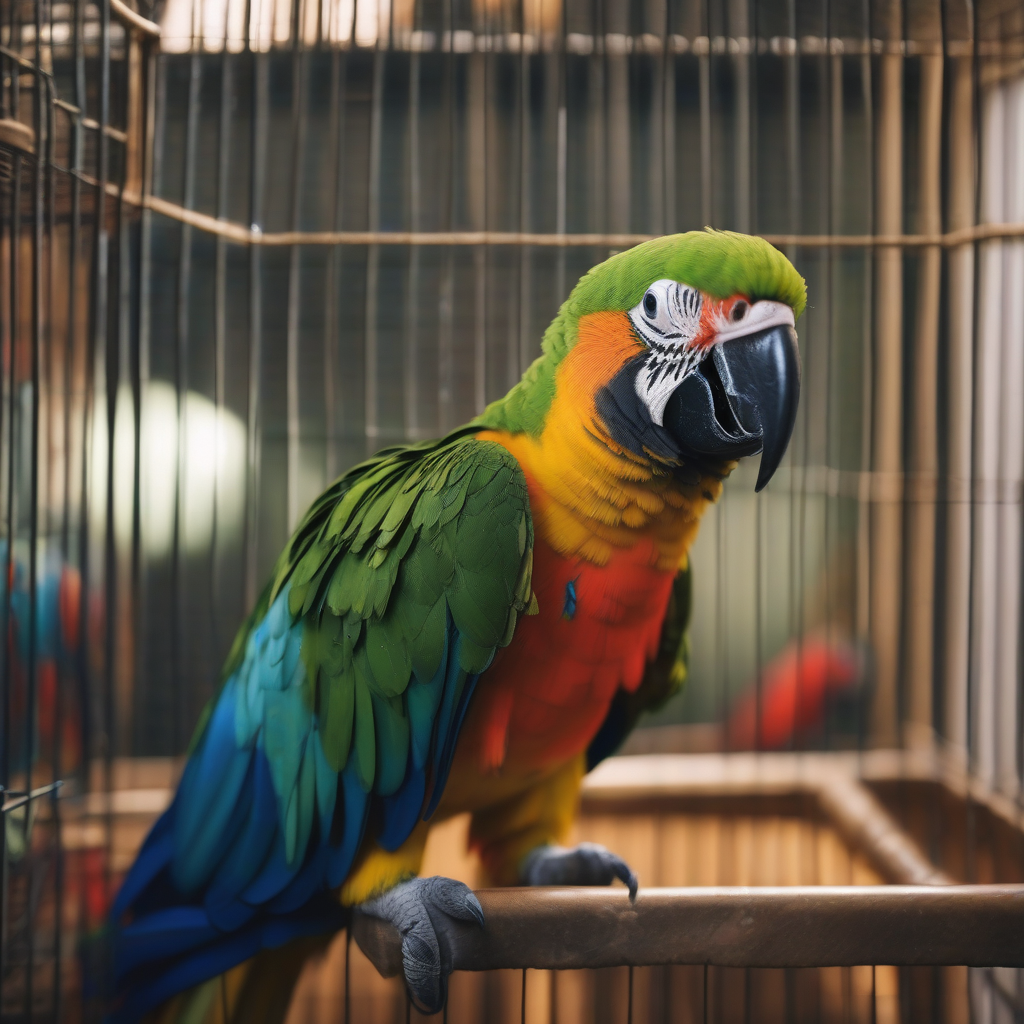
Did you know your bird's living space is more than just a shelter, but a critical 'climate engineering' zone directly impacting their nervous system and mood? In this article, discover 5 unknown effects of cage placement and lighting on your bird's neurobiology and ways to create a happier, healthier living space using this knowledge.


Discover the types of burns your dog can suffer, the 5 insidious neurophysiological effects these burns create in the brain and body, and lifesaving emergency intervention strategies in this comprehensive guide. We shed light on the dangers behind forgotten household accidents from a scientific perspective.

Discover the neurobiological signals of hidden stress your newly adopted cat experiences during adaptation to a new social environment. This article reveals 5 insidious signs of your cat's silent struggle and scientific strategies for peaceful, long-term harmony.

Your dog's anal sacs, located beneath the tail, can be hidden alarm bells often overlooked but profoundly affecting their quality of life. In this article, you will discover the 5 insidious neurobiological effects of anal sac problems on the brain and the lifesaving care secrets you need to know for your furry friend to live a peaceful life.
The living spaces of our pet birds are more than just places for them to reside; they are complex ecosystems that have profound effects on their physical and mental health. As of April 2026, scientific research indicates that cage placement and lighting play a significantly larger role in the nervous system and overall well-being of our birds than previously understood. These often overlooked 'climate engineering' elements can influence numerous factors, from your bird's behavior to their stress levels.
The placement of a cage within a home provides crucial neural cues to your bird about how 'safe' or 'threatening' the environment is. A cage in a high-traffic area can trigger a constant state of alertness. This situation can lead to overactivation of your bird's sympathetic nervous system, resulting in chronic stress. Conversely, a completely isolated corner can lead to loneliness and boredom by depriving them of social interaction.
Correct positioning allows your bird to be socially integrated while also feeling relaxed. A location near a window that receives natural light, but is not exposed to direct sunlight, helps regulate your bird's circadian rhythms. However, it should not be directly in front of a door or window, as this can cause stress due to sudden drafts and human traffic. Helping your bird adapt to this new environment is a neurologically critical process, as discussed in Your Bird's 'Invisible Mind Bonds': 5 Secret Social Codes for New Environment Adaptation!. Improper cage placement can negatively impact this process.
Not just the presence of daylight, but also the spectral composition of light, has significant effects on the brains of our birds. Full-spectrum light regulates birds' vision and day-night cycles, while also being essential for vitamin D synthesis. When it comes to artificial light sources, particularly those with high blue light intensity, they can suppress melatonin production in birds, disrupting their sleep patterns.
This can create an imbalance in the nervous system, potentially making your bird more irritable or depressed. Especially in the growth and development of young birds, correct lighting supports calcium metabolism, which is necessary for bone health, as mentioned in Your Bird's 'Secret Feather Structure Codes': 5 Unknown Calcium-Binding Mechanisms for Healthy Feathers!.
Cage size allows your bird not only to move physically but also to remain mentally engaged. Sufficient space enables your bird to exhibit natural behaviors such as flapping, climbing, and exploring. These behaviors reduce the release of stress hormones and promote the production of mood-enhancing neurotransmitters like dopamine. Confined spaces can lead your bird to feel trapped and develop repetitive stress behaviors.
The arrangement of toys and perches within the cage is also important. A layout that allows your bird to move at different levels enhances its spatial perception and problem-solving skills. This supports cognitive development, which also aligns with topics like Your Bird's 'Secret Learning Map': 5 Neurocognitive Secrets to Understanding Simple Commands in the Aquarium!. Every detail in your bird's living environment shapes its mental world.
Birds have extremely sensitive respiratory systems, and the air quality in their living spaces directly affects their capacity to transport oxygen to their brains, and thus their cognitive functions. Pollutants such as cigarette smoke, chemical cleaning products, perfumes, and dusty substrates can cause inflammation in your bird's airways and even lead to dangerous conditions. Topics like Your Bird's 'Hidden Humidity Wars': 5 Unknown Secrets of Humidity Imbalance Threatening the Respiratory System! highlight this sensitivity.
Adequate humidity levels are also critical for respiratory health. Too dry air can cause airways to dry out and become irritated, while excessive humidity creates a breeding ground for fungi and bacteria. Maintaining this balance ensures that your bird can breathe comfortably physically and that its brain activity remains optimal. Air purifiers and regular ventilation play a key role in achieving this balance.
Birds are highly sensitive to the sounds in their environment. Sudden and loud noises (e.g., vacuum cleaners, slamming doors, even some television programs) can trigger your bird's stress response. These responses can lead to a sudden increase in heart rate, rapid breathing, and an urge to flee. Information in Your Bird's 'Hidden Heart Whispers': 5 Insidious Cardiovascular Signs Triggering Sudden Death Risk and Lifesaving Scientific Strategies! demonstrates how serious the consequences of such stress can be.
Conversely, calm and monotonous sounds can relax your bird. Some bird species may enjoy listening to calming music. The intensity and nature of sounds directly affect your bird's 'sense of security.' Therefore, arranging the living space to offer a quiet and soothing sound environment is vital for your bird's overall mental health. Such environmental adjustments, in relation to topics like Your Bird's 'Hidden Decision Mechanisms': 5 Neurocognitive Solutions in Moments of Uncertainty and Trust-Building Strategies!, help your bird exhibit a more secure and positive attitude towards its surroundings.
Conclusion:
Cage placement and lighting are not merely decorative elements of a bird's living space but fundamental factors that directly influence its neurobiology and well-being. Optimizing these 'hidden climate engineering' elements is the key to ensuring your bird leads a happier, healthier, and more balanced life. Remember, a bird's quality of life is directly proportional to the quality of its environment.
