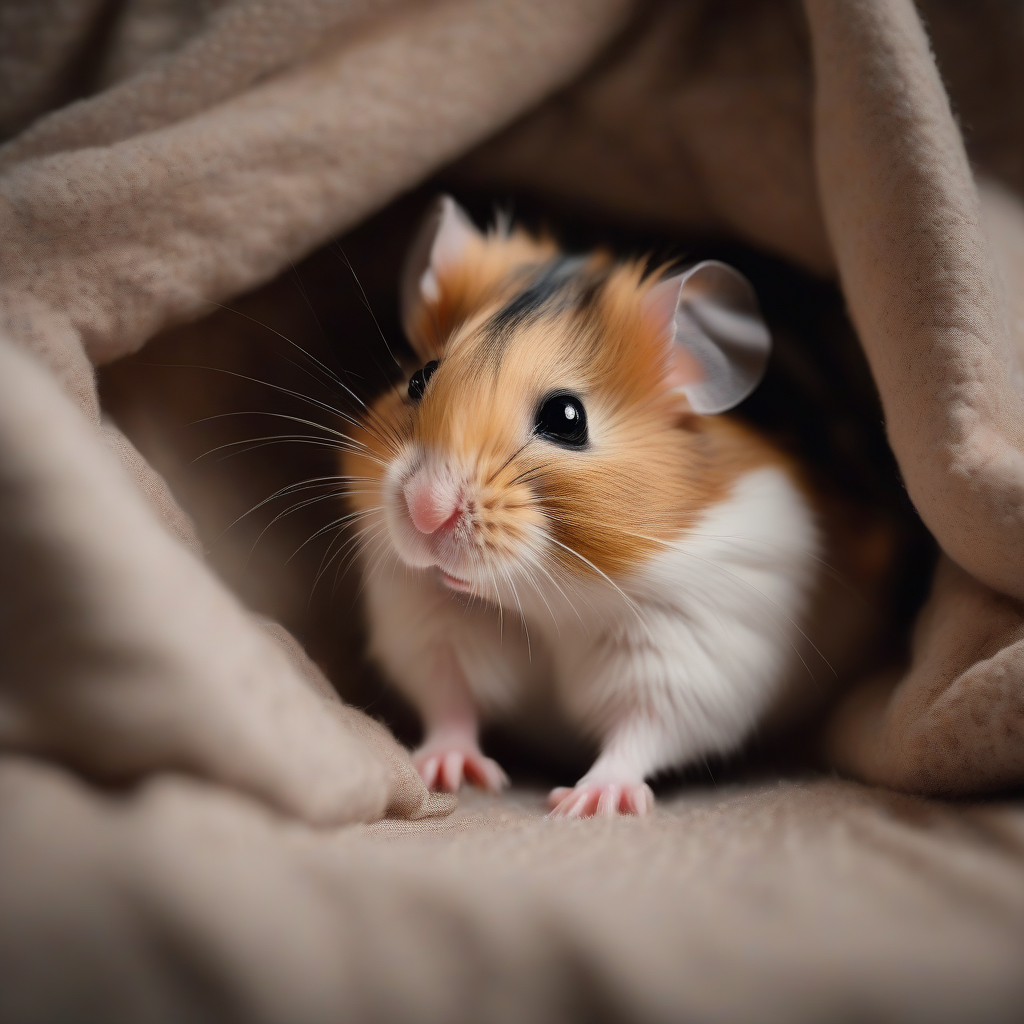
In this article, you will discover the profound impact of your hamster's habitat scent profile on its mood and health. Learn scientific secrets, from cage cleaning routines to material selection, to eliminate invisible stressors and enhance well-being.


In this article, you will discover the 5 insidious neurobiological effects of the Encephalitozoon Cuniculi parasite, which is often overlooked in rabbits but severely affects the brain, along with lifesaving early diagnosis methods.

In this article, we will deeply explore the insidious neurobiological effects of gut microbiome imbalance (dysbiosis) on your rabbit's brain health and provide scientific-based solutions to maintain mental vitality.

In this article, you can find comprehensive information on how pancreatitis in dogs not only affects the digestive system but also insidiously impacts the brain, its neuroinflammatory mechanisms, and lifesaving emergency intervention strategies.
Your hamster's world possesses a sensory richness vastly different from our own. While their eyesight may not be their sharpest sense, their nose serves as a navigation device, a social communication tool, and a survival guide. Their cages are essentially 'scent maps,' and how these maps are drawn can influence everything from your tiny friend's mood to its physical health. As of March 2026, research on hamster welfare increasingly highlights that the olfactory profile within the cage is far more critical than we once imagined. So, how is this "invisible scent map" formed, and how can we, as owners, manage it correctly?
Hamsters are nocturnal creatures that live under the constant threat of predators in their natural habitats. Scent is their most reliable guide in this complex and dangerous world. They rely on their sense of smell for every step, from finding food to choosing mates, marking territory, and detecting potential dangers. Domesticated hamsters carry this powerful sensory legacy from their ancestors.
Hamsters leave scent marks in their environment with pheromones secreted from special glands on their cheeks and flanks, as well as through urine and feces. These marks communicate their age, sex, reproductive status, and even mood to other hamsters. These natural marks within the cage allow the hamster to delineate its 'home' boundaries and feel secure. To delve deeper into this topic, you can explore our article Your Hamster's 'Hidden Sensory Universe': How Scents and Vibrations Shape Their Subconscious Behaviors!.
The scent of natural predators (such as cats or dogs) is an immediate stress trigger for a hamster. This holds true in a home environment as well. If there are other pets in the house, it is crucial that their scents do not permeate the cage or are not strongly present near it. Even human scent, especially for a newly adopted hamster, can initially be perceived as a threat.
Cage cleaning is indispensable for hamster health, but how and how often it is done directly affects the hamster's scent map and can become a potential source of stress.
Too frequent and thorough cleaning can erase a hamster's own scent marks, leaving it in an 'identity-less' space. This can disorient the animal, make it feel insecure, and consequently lead to stress. Furthermore, residues or odors from harsh chemical cleaners can irritate the hamster's sensitive respiratory tracts and cause toxic effects, leading to chronic stress and health problems in the long run. As we noted in our article Your Hamster's 'Invisible Potty Codes': Dirty Cages Are History! Scientific Litter Training and Behavioral Solution Secrets!, there's a close relationship between potty habits and scent marks.
Just as over-cleaning is problematic, so is insufficient cleaning. Accumulated urine, feces, and spoiled food lead to the formation of ammonia and other harmful gases. These gases damage the hamster's respiratory system, increase the risk of infection, and create a severe stress environment in addition to a generally poor odor profile.
The ideal approach is a 'strategic' cleaning routine that doesn't obliterate all scent traces but maintains hygienic balance. Weekly, only change a portion of the soiled bedding and avoid disturbing scent-marked nests or hiding spots to help the hamster feel secure. Deep cleaning should be done monthly or every other month, ensuring that some old bedding is transferred to the new to preserve 'familiar' scents.
The type of materials used in the cage significantly impacts scent absorption and diffusion. These choices directly shape your hamster's olfactory experience.
Highly absorbent, odor-trapping natural bedding materials (such as paper-based bedding, hemp fiber) help reduce ammonia buildup in the cage. Synthetic scented bedding materials should be avoided, as these scents can irritate the hamster's sensitive nose and lead to respiratory problems. Our article Overlooked Danger: The Insidious Traps of Hamster Bedding Material Selection and 5 Lifesaving Scientific Rules offers more information on this topic.
Plastic cage accessories (tunnels, houses, toys) can absorb urine odors over time and become difficult to clean. Natural materials (untreated wood, ceramic, cardboard), on the other hand, generally breathe better and retain less odor. Wooden toys or tunnels satisfy the hamster's gnawing needs while also providing an environment rich in natural scents.
Hamsters' self-scent-marked nests and hiding spots are sacred and safe zones for them. Frequent cleaning or changing of these areas undermines the animal's sense of security. It's crucial that these areas of the cage do not acquire the scents of other pets or strong human odors. Remember, as discussed in Your Hamster's Hidden Stress Points: Insidious Home Dangers and the Science of Creating a Safe Haven!, safe spaces are fundamental to their mental health.
Hamsters associate their environment with their scent memory. This is a critical factor for them to develop a sense of belonging and trust.
The cage is not just a living space for a hamster, but also a 'kingdom' marked by its scent. This olfactory belonging reduces their stress levels and allows them to exhibit natural behaviors. The need to leave their own scent is a natural instinct, and preventing this can lead to anxiety.
When you adopt a new hamster or significantly change the cage layout, it can take time for the animal to get used to the new olfactory environment. During this process, transferring some scented bedding material from the animal's old cage to the new one can create a 'scent bridge,' facilitating adaptation and reducing stress.
To enhance your hamster's quality of life, you can take a few simple steps to positively impact its scent map:
Opt for natural alternatives like unscented soaps or a vinegar-water solution instead of chemical-laden cleaners. Ensure good ventilation of the cage after cleaning. Avoid using cigarette smoke, strong perfumes, or air fresheners in the room where the cage is located.
Instead of cleaning the entire cage at once, weekly change only the dirtiest areas or a portion of the bedding. This helps the hamster retain familiar scents and feel secure.
You can enrich your hamster's living space with safe and natural scents. For instance, occasionally adding small amounts of safe plants (like dried chamomile or mint leaves) to the cage can provide opportunities for exploration and chewing. However, always research beforehand, as not all plants are safe for hamsters.
Your hamster's well-being depends not only on food and water but also on the intricacies of its invisible sensory world. By understanding and managing the scent map in its cage through proper cleaning and material choices, you can create a stress-free, happy, and healthy living space for your tiny friend. Remember, a good veterinarian will always provide the most accurate guidance on these matters.
