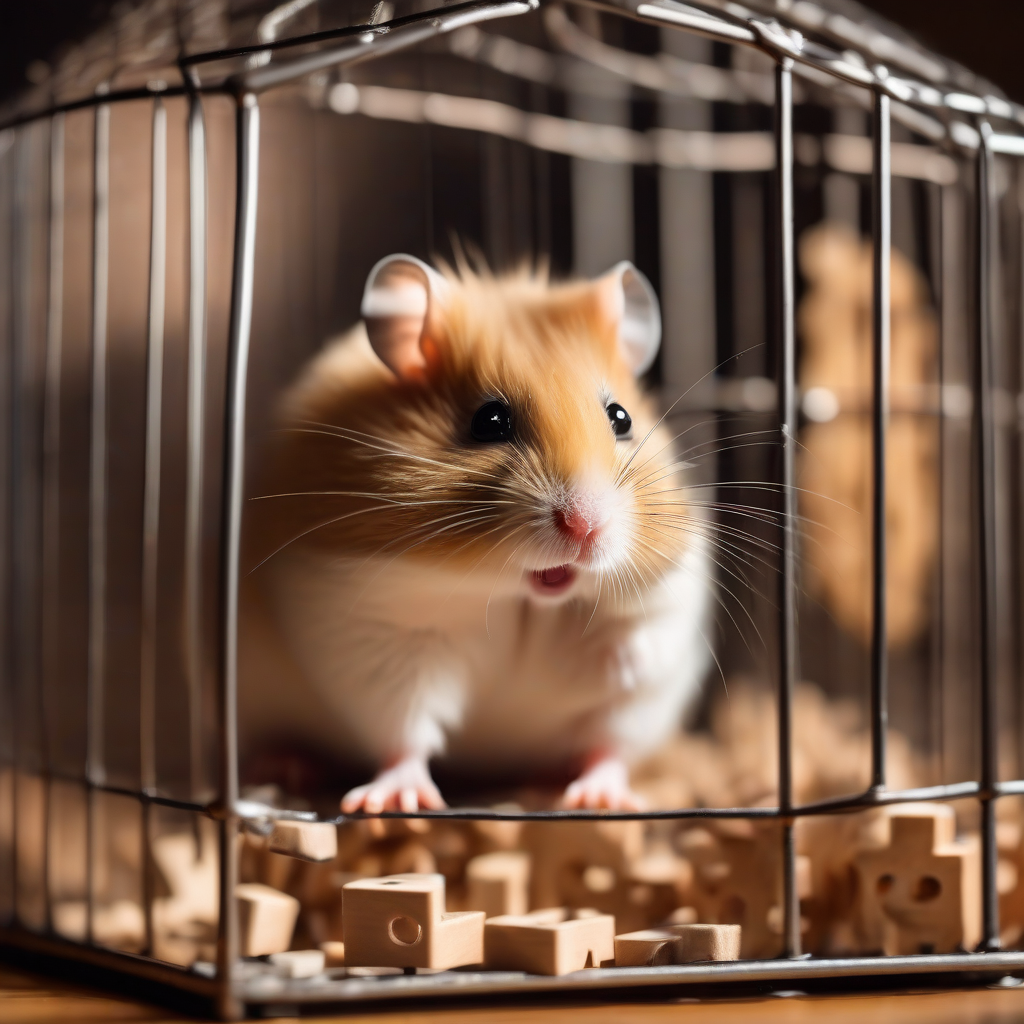
In this article, you will discover how to enhance your hamster's problem-solving skills, explore 5 neurocognitive strategies to stimulate their mental development with in-cage puzzles, and learn scientific approaches to ensure a happier and healthier life for your pet.


Discover the types of burns your dog can suffer, the 5 insidious neurophysiological effects these burns create in the brain and body, and lifesaving emergency intervention strategies in this comprehensive guide. We shed light on the dangers behind forgotten household accidents from a scientific perspective.

Discover the neurobiological signals of hidden stress your newly adopted cat experiences during adaptation to a new social environment. This article reveals 5 insidious signs of your cat's silent struggle and scientific strategies for peaceful, long-term harmony.

Your dog's anal sacs, located beneath the tail, can be hidden alarm bells often overlooked but profoundly affecting their quality of life. In this article, you will discover the 5 insidious neurobiological effects of anal sac problems on the brain and the lifesaving care secrets you need to know for your furry friend to live a peaceful life.
Hamsters, despite their small size, are surprisingly intelligent and curious creatures. Although often perceived as simple animals that just run on their wheels or hoard food, their brains constantly seek new stimuli, and their problem-solving abilities are quite developed. A lack of mental stimulation can lead to stress, boredom, and even behavioral problems in hamsters. Therefore, developing "training" strategies that stimulate their cognitive abilities, activate their natural instincts, and enhance their overall well-being is critically important. In this article, we will scientifically examine 5 neurocognitive strategies to uncover your hamster's hidden problem-solving intelligence and trigger their mental development with in-cage puzzles.
In their natural habitat, hamsters constantly encounter environmental challenges to forage for food, dig burrows, and hide from predators. These behaviors involve complex neurocognitive processes that activate reward mechanisms in their brains. In-cage problem-solving games mimic these natural behaviors, increasing dopamine release in their brains, supporting synaptic plasticity (the brain's ability to learn and adapt), and enhancing cognitive flexibility. Research shows that enriched environments and mental activities strengthen learning capacity and memory in rodents. This is not just a form of entertainment but a vital support for your hamster's mental health.
Hamsters are natural foragers. Instead of finding their food easily in a bowl, engaging them with puzzles that encourage them to find hidden rewards activates the hunting and exploration circuits in their brains. For example, hiding a small amount of food inside a toilet paper roll and bending its ends, or using specially designed food-dispensing toys, develops their problem-solving skills. Such puzzles not only provide physical activity but also increase cognitive effort. This process offers the hamster the dopamine reward associated with the act of "seeking" and makes the feeding experience richer. To discover more scientific secrets on this topic, you can refer to our article Your Hamster's 'Hidden Food Bowl Tactics': 5 Neurobiological Signals Overlooked During Feeding and Scientific Strategies for Optimal Digestion.
Simple mazes or tunnel systems are excellent for developing hamsters' spatial awareness and memory abilities. Design a small maze from cardboard boxes or specialized tunnel sets, place your hamster inside, and have a reward waiting at the end. As hamsters overcome obstacles and try to find the correct path, their hippocampus (involved in memory and spatial navigation) works intensively. Repeated maze experiences accelerate their learning curve and help them memorize new routes faster. For more information on their ability to recognize objects and environment, you can read our article Your Hamster's 'Hidden Object Perception': 5 Neurocognitive Secrets of Object Recognition Training and Mental Development Strategies!.
Interaction with materials of different textures stimulates hamsters' sensory cortices and encourages the formation of new neural pathways. Include objects with various textures in the cage, such as safe wooden blocks, cardboard pieces, natural fibers, or clean, soft fabric scraps. You can use these objects within a puzzle, for example, to hide a food reward. As hamsters chew, climb, or hide in these materials, they process sensory information, and their brains develop the ability to adapt to the environment. For a deeper understanding of the neurobiological effects of cage placement, you can explore our article Your Hamster's 'Secret Architectural Secrets': 5 Neurobiological Traps in Cage Placement and Scientific Design Codes for Mental Well-being.
More complex puzzles challenge hamsters' planning and decision-making abilities. You can design mini-labyrinths that require several steps to solve or boxes that necessitate opening different doors. Such tasks activate their prefrontal cortex (associated with decision-making and problem-solving). The hamster must think through its steps, use trial-and-error, and learn from its failures to reach the goal. This cognitive flexibility enhances their ability to adapt to environmental changes. For the importance of "shaping" techniques in hamster training for such tasks, refer to our article Your Hamster's 'Hidden Shaping Codes': Unlock 5 Unknown Neurocognitive Keys in Training!.
Simple puzzles that you can solve together with your hamster can strengthen the bond between you while also increasing their motivation to learn. For instance, you can hold a food reward in your hand, gently encouraging them to find it or move in a specific direction. During these interactions, your hamster perceives your body language and tone of voice, engaging social learning processes. Positive reinforcement and patient interaction solidify your hamster's trust in you and make them more eager to learn new things. To learn more about the neurobiological codes of trust building, you can read the article Your Hamster's 'First Contact Enigma': 5 Neurobiological Codes of Resistance to Touching and Scientific Secrets to Building Trust!.
Nurturing your hamster's mental health is as crucial as their physical well-being. With in-cage problem-solving games and neurocognitive strategies, you not only provide them with an engaging activity but also satisfy their natural instincts, enhance brain functions, and help them lead a more balanced, happier life. Through these scientific approaches, you can fully unleash your tiny friend's potential.
