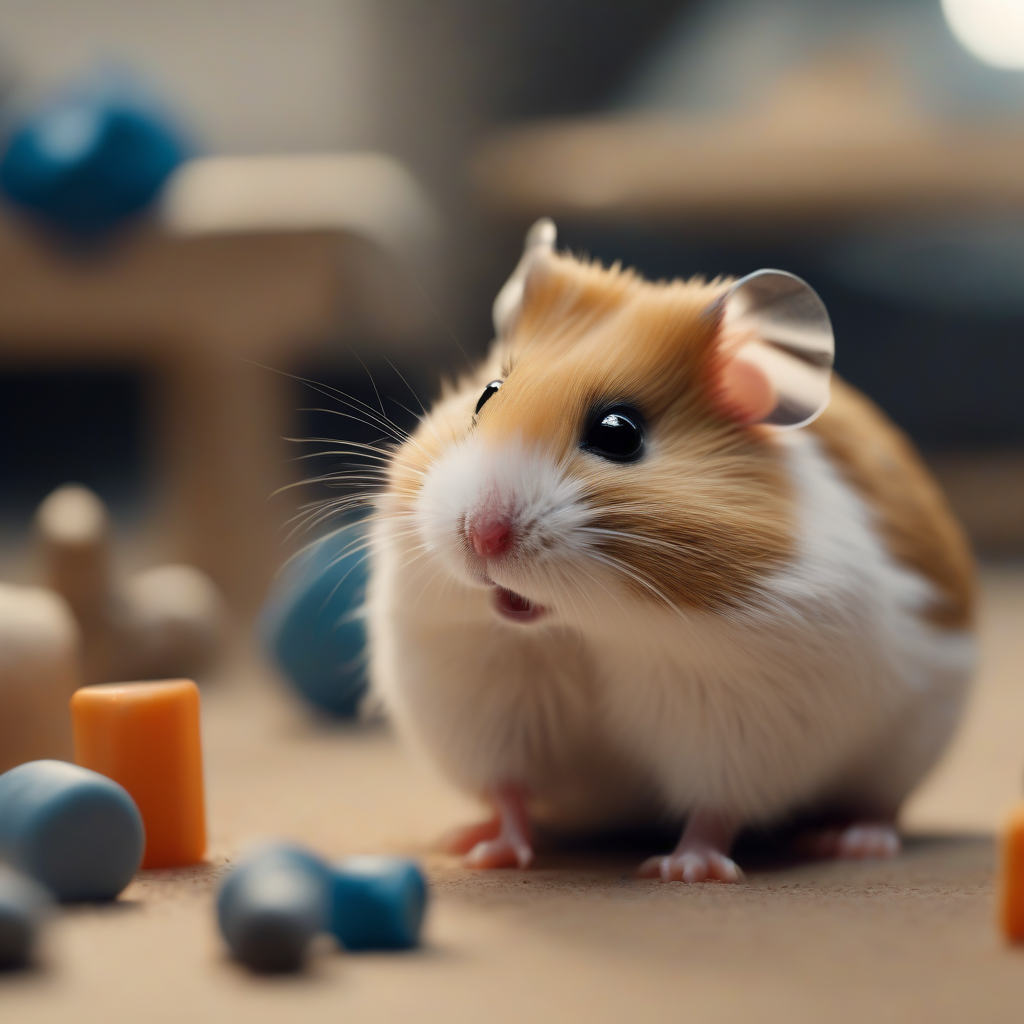
In this article, you will discover 5 neurocognitive secrets to enhance your hamster's object recognition ability and scientific training strategies to support their mental development.


Discover the types of burns your dog can suffer, the 5 insidious neurophysiological effects these burns create in the brain and body, and lifesaving emergency intervention strategies in this comprehensive guide. We shed light on the dangers behind forgotten household accidents from a scientific perspective.

Discover the neurobiological signals of hidden stress your newly adopted cat experiences during adaptation to a new social environment. This article reveals 5 insidious signs of your cat's silent struggle and scientific strategies for peaceful, long-term harmony.

Your dog's anal sacs, located beneath the tail, can be hidden alarm bells often overlooked but profoundly affecting their quality of life. In this article, you will discover the 5 insidious neurobiological effects of anal sac problems on the brain and the lifesaving care secrets you need to know for your furry friend to live a peaceful life.
Hamsters, despite their tiny size, are intelligent creatures capable of surprising cognitive abilities. Seeing them merely as pets that run in a cage, collect, and hoard can be an underestimation of their mental potential. Modern veterinary science and neurocognitive research show that hamsters, like many other animals, can recognize specific objects and even interact with them given the right approaches. This article offers an in-depth guide to developing your hamster's object recognition skills, opening the doors to your tiny friend's cognitive world, and examining the 5 neurocognitive secrets behind this special training from a scientific perspective.
It's possible to strengthen the bond with your hamster while simultaneously supporting their mental health and well-being. Mental stimulation not only alleviates boredom but also enhances their learning capacity by strengthening neuronal networks in their brains. So, how do hamsters perceive objects, and how can we translate this perception into training?
Hamsters' brains, much like those of other mammals, possess the ability to learn through repetitive stimuli. The process of recognizing an object begins in the brain's visual cortex and integrates with memory and emotion centers in the hippocampus and amygdala. Repeatedly associating an object with a specific reward strengthens these neuronal connections, forming a lasting recognition memory for the object.
Each repetition triggers synaptic plasticity, meaning the connections between nerve cells become stronger and more efficient. When a hamster sees a particular toy or object and subsequently experiences a positive outcome (a reward), the relevant neuronal pathways in the brain are activated. Continuous activation of these pathways allows the hamster to permanently associate the object with a "recognize" command. This process forms the foundation of positive reinforcement, as emphasized in the article Your Hamster's 'Hidden Shaping Codes': Unlock 5 Unknown Neurocognitive Keys in Training!.
Dopamine is a neurotransmitter that plays a critical role in learning and motivation. When a hamster correctly identifies an object and is rewarded, the mesolimbic reward pathway in its brain is activated, releasing dopamine. This creates a strong intrinsic motivation for the hamster to repeat the behavior. The value of the chosen reward (such as a piece of their favorite food) directly influences the strength of this dopaminergic response.
Hamsters, in contrast to their relatively poor eyesight, possess exceptional senses of smell and touch. The integration of these senses in object recognition training is a key factor that deepens learning and forms more robust memory traces.
The unique scent of an object can create a powerful "scent map" in a hamster's brain. When starting training, you can begin by associating objects with your own scent or a known safe environmental scent. Since hamsters use their sense of smell intensively, especially when foraging for food, associating the scent of the reward with the object can accelerate the learning process.
Hamsters explore the shape, texture, and size of objects in their environment through their whiskers (vibrissae). In training, you can engage your hamster's tactile perception by using objects with different textures. This multisensory approach allows them to perceive the object more comprehensively and process it into their memory more permanently.
While hamsters' vision may not be as sharp as humans', they can perceive moving objects and differences in contrast. In object recognition training, we can enhance these skills by specifically drawing attention to visual cues.
Hamsters are not colorblind, but they perceive colors in different tones. They are more sensitive to differences in contrast and brightness. Therefore, using high-contrast or distinctly shaped objects in training will help them distinguish the object from others.
Starting training with simple geometric shapes and gradually moving to more complex patterns increases your hamster's visual discrimination skills. This is a similar approach to developing cognitive flexibility, as mentioned in the article Your Hamster's 'Mind Maze': 5 Neurocognitive Training Secrets to Develop Problem-Solving Skills!.
Hamsters possess an extraordinary spatial memory when it comes to hoarding food and finding their nests in their natural habitats. This innate ability can be reinforced in object recognition training by associating a specific object with a particular location.
Hamsters remember where they hide their food very well. This behavior is an indication of their ability to learn object-place relationships. In object recognition training, always keeping the object to be recognized in a specific place or hiding the reward next to the object activates this spatial memory.
Regular objects within the cage serve as navigation cues for the hamster. Presenting the trained object always within the same environmental context facilitates its recognition. For example, always placing the object near a favorite tunnel or next to the wheel. You can find more details on the importance of cage arrangement and mental well-being in the article Your Hamster's 'Secret Architectural Secrets': 5 Neurobiological Traps in Cage Placement and Scientific Design Codes for Mental Well-being.
Recognizing objects is one thing, but exhibiting goal-oriented behaviors such as selecting or marking them requires more complex cognitive processes. This means the hamster distinguishes one object from others and associates it with a specific action.
As mentioned earlier, dopamine is closely linked to reward expectation and motivation. As the hamster learns to select the correct object, the selection process itself can trigger dopamine release, thereby reinforcing the behavior. Finding the correct option among choices becomes a "problem-solving" experience for the hamster, which enhances their cognitive flexibility.
Hamsters can mark their territories by leaving their scent. In training, you can reinforce this goal-oriented behavior by starting with a simple action like pointing at an object or moving towards it. This strengthens the relationship between the command you give and the object.
To develop your hamster's object recognition skills, follow these steps:
Developing your hamster's object recognition skills is not just a fun activity; it's also critically important for their mental health. Understanding these 5 neurocognitive secrets and implementing practical training strategies will enrich your tiny friend's cognitive abilities, reduce boredom, and further strengthen the bond between you. Remember, every hamster has an individual learning pace; patience, consistency, and positive reinforcement are the keys to success. This process will allow you to unleash your hamster's hidden intelligence and interact with them on a deeper level.
