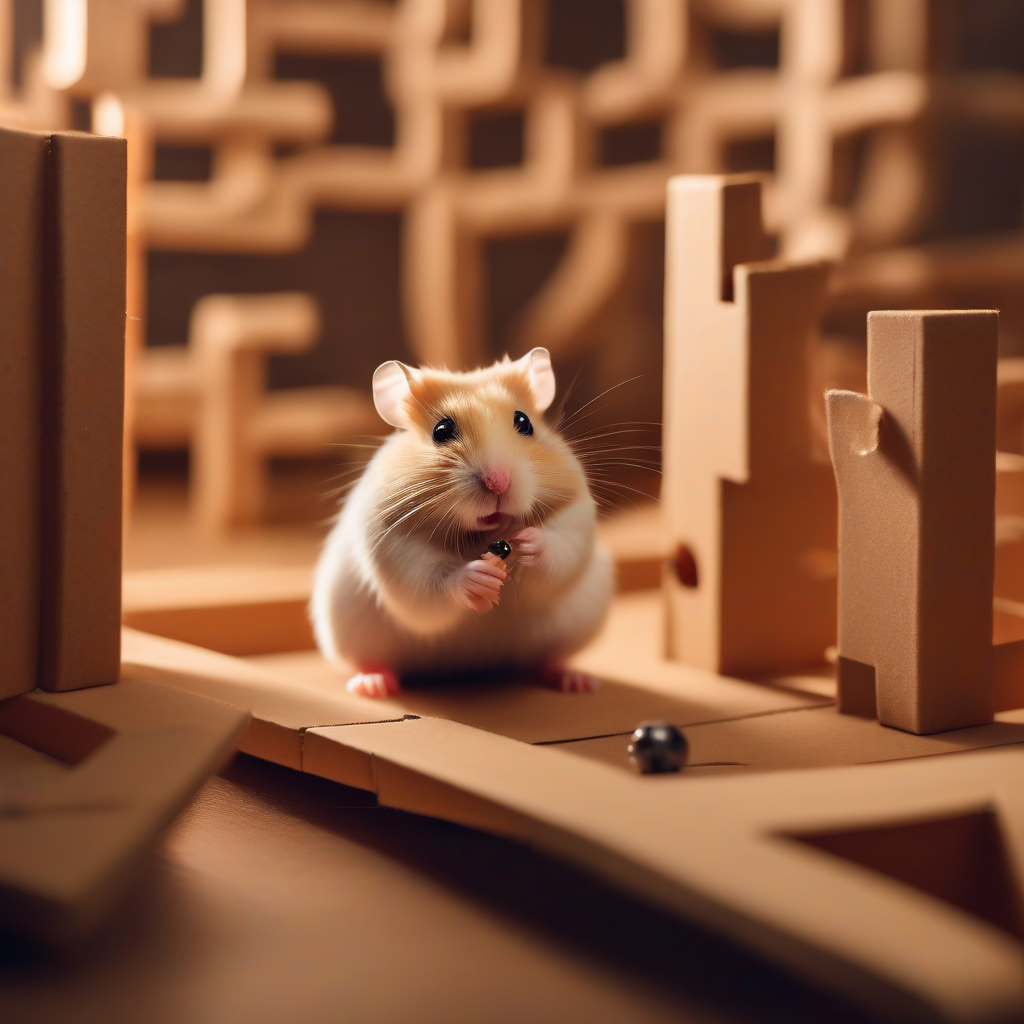
In this article, discover 5 scientific intelligence games and training strategies designed to explore your hamster's intellectual potential and enhance their cognitive abilities. Learn how to maximize your tiny friend's mental well-being.


Discover the neurobiological signals of hidden stress your newly adopted cat experiences during adaptation to a new social environment. This article reveals 5 insidious signs of your cat's silent struggle and scientific strategies for peaceful, long-term harmony.

Your dog's anal sacs, located beneath the tail, can be hidden alarm bells often overlooked but profoundly affecting their quality of life. In this article, you will discover the 5 insidious neurobiological effects of anal sac problems on the brain and the lifesaving care secrets you need to know for your furry friend to live a peaceful life.
In this article, you will find comprehensive information on the insidious neurotoxic effects of heavy metal poisoning in aquarium fish, its symptoms, and lifesaving emergency intervention codes. This condition, which can arise from household water sources, improper equipment, or neglect, can severely threaten your fish's quality of life and lifespan.
Despite their small size, hamsters can possess surprising intelligence and learning capacity. While many of us see them merely as cute rodents running in their cages or stashing food, with the right approach, it's possible to develop their cognitive abilities and forge a deep bond with them. As of March 2026, scientific advancements in pet training emphasize the importance of mental enrichment even for hamsters. In this article, we'll uncover the secrets of 5 scientific intelligence games that will unleash your tiny friend's genius, reduce their stress, and improve their overall quality of life.
Keeping hamsters mentally active is crucial not only for their entertainment but also for their health. In their natural habitat, they are programmed to constantly explore new things, forage for food, and build nests. A cage environment can restrict these natural instincts, leading to boredom, stress, and undesirable behaviors. Cognitive training is an effective way to overcome these issues.
Mental exercise keeps hamsters active not just mentally, but physically too. Games requiring problem-solving skills encourage physical activity, which helps reduce the risk of obesity. Simultaneously, it stimulates brain functions, potentially delaying age-related cognitive decline and positively impacting their overall lifespan.
A bored hamster may tend to chew cage bars, excessively groom, or display aggressive behaviors. Intelligence games reduce these negative behaviors by channeling your hamster's energy in a positive direction. Such activities satisfy their natural instincts for exploration and foraging, making their living spaces more enriching and stimulating. Remember, a happy hamster is a less stressed hamster, leading to healthier interactions with you. To build trust with your tiny friend from day one, you can check out our article Your Hamster's First Days: 3 Secret Steps to Winning Your Tiny Friend's Heart.
Hamsters may not learn complex commands like dogs or cats, but with positive reinforcement and patience, they can achieve surprising things. Understanding the following fundamental principles before starting training is essential.
The most effective training method for hamsters is positive reinforcement. This involves giving them a favorite treat (a small nut, seed, or dried fruit piece) when they exhibit the desired behavior. Never use punishment; it only leads to fear and distrust. Treats should be your hamster's favorite snacks and should not be given in excess.
Hamsters have short attention spans. Therefore, training sessions should be brief (5-10 minutes) and repeated several times a day. If it becomes boring or stressful, end the training immediately. Always try to end on a positive note.
Hamsters are natural burrowers and explorers. You can create a simple maze from cardboard boxes or toilet paper rolls to tap into these instincts. Place a small treat at the end of the maze. Start with simple, short mazes and gradually increase complexity. Allow your hamster to figure out how the maze works, and reward them as they find their way. This develops problem-solving and navigation skills.
Hamsters have a highly developed sense of smell. In this game, hide small treats in different parts of their cage or play area. Initially, hide them in easily discoverable spots, then in more hidden locations. Watching your hamster follow the scent to find the treats is both entertaining for you and a great mental exercise for them. This game mimics their natural foraging behavior and enhances cognitive flexibility.
Construct an obstacle course with tunnels and small barriers using cardboard or specialized pet materials. Encourage your hamster to navigate this course to reach a reward. The course can include small climbs, passages, or gentle inclines. The goal is to have your hamster overcome various physical and mental challenges. This activity enhances motor skills and environmental awareness. If you're looking for more ideas to enrich your hamster's living space, the article Your Hamster's Secret Habitat Secrets: A Scientific Journey from Escape Burrows to Mini Forests will inspire you.
Prepare two or three small, identical boxes. Hide a small treat under one of the boxes and leave the others empty. Encourage your hamster to find the treat by sniffing or experimenting with the boxes. Reward them when they choose the correct box. This game strengthens their decision-making abilities and memory. You can make the game more engaging by constantly changing the position of the boxes. This type of mental stimulation is vital for their overall well-being. To learn about cage arrangements that deeply affect your hamster's psychology, check out the article Your Hamster's Secret Architect: Factors Shaping Your Tiny Friend's Psychology (March 2026).
Target training involves teaching your hamster to touch a specific object (e.g., a pen or a small stick). Hold the stick close to your hamster's nose. Reward them immediately when they touch it. With repetition, your hamster will learn to associate touching the stick with a reward. Later, you can move the stick to guide your hamster in a specific direction or to climb a small obstacle. This basic training lays the groundwork for teaching more complex behaviors in the future and strengthens your communication with them. If your hamster tends to bite during training, the article Why Does Your Hamster Bite? The Secret Key to Building Trust and Socialization After Adoption can help you with this issue.
Every hamster learns at a different pace. Be patient and practice consistently. It's important to keep every session a positive experience.
Pay attention to signs that indicate your hamster is stressed or tired (lethargy, hiding, aggression). In such cases, stop the training and give them time to rest.
The training area should always be safe and free from distractions. Ensure your hamster cannot escape or harm themselves.
Playing intelligence games with your hamster not only improves their mental and physical health but also strengthens the bond between you. By applying these 'scientific secrets,' you'll see that your tiny friend can achieve much more than expected. Remember, every small step is a significant step on the path to great mental development.
