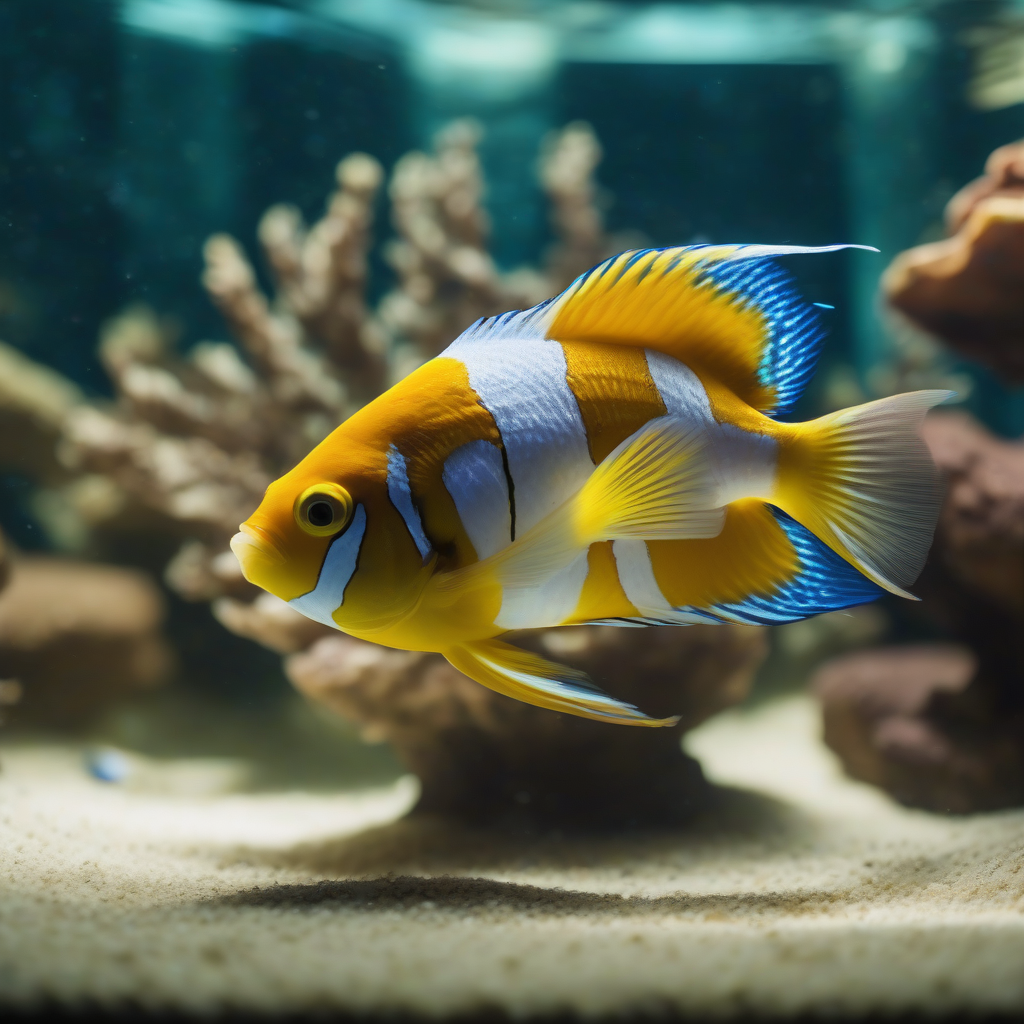
In this article, you will discover the neurocognitive mechanisms behind fish's ability to overcome unexpected obstacles in the aquarium and how to enhance this mental flexibility.


In this article, you will discover the little-known but profound effects of the acoustic environment in rabbit living spaces on their brain health and general well-being, exploring the neurobiological consequences of both sound deprivation and overstimulation, and scientific secrets to creating a peaceful environment. Understand and optimize your rabbit's world with expert tips.

In this article, you will find comprehensive information about the insidious neurobiological effects of artificial colorings, preservatives, and flavors found in commercial bird feeds on your bird's brain health and mental vitality. We explore scientific nutritional secrets to combat these hidden dangers, shedding light on a wide spectrum of effects from behavioral changes to cognitive decline.

In this article, you can discover the scientific secrets to understanding your cat's undesirable habits, deciphering the neurocognitive mechanisms in their brain, and establishing lasting new routines.
Aquarium fish, often perceived as simple creatures that merely swim and eat, are, according to recent scientific research, surprisingly cognitively capable. Their complex problem-solving and mental flexibility, especially when faced with unexpected obstacles, indicate that they are not only driven by survival instincts but also by a sophisticated capacity for learning and adaptation. So, how do fish come up with solutions when faced with an unforeseen situation? Let's delve into the 5 insidious neurocognitive secrets governing this 'unexpected obstacle' intelligence in their brains and the scientific tactics to enhance these abilities.
Fish's problem-solving abilities are based on evolutionarily well-developed brain structures. These structures perform functions similar to the hippocampus and prefrontal cortex in mammals, playing a critical role in spatial memory, learning, and decision-making processes. When a fish encounters a new obstacle, its brain rapidly processes environmental information, compares it with past experiences, and evaluates potential solutions. This process requires not only a reflexive response but also a cognitive effort.
Certain regions in fish brains, particularly in the telencephalon, manage spatial memory similarly to the mammalian hippocampus. This allows fish to remember the layout of their aquarium, hiding spots, and the location of food sources. When an unexpected obstacle appears, these memory circuits compare the new situation with the existing 'mental map,' detect a mismatch, and trigger the search for a solution.
Beyond simple conditioning, fish possess more complex adaptation mechanisms such as observational learning and social learning. When adapting to a new situation, they demonstrate the ability to use previous knowledge and integrate new information into their existing schemas. This forms the basis of their problem-solving abilities. For more information, you can check out our article: The Fish's Hidden 'Understanding Cycle' in the Aquarium: Surprising Neurocognitive Secrets of Learning Capacity!.
Fish's ability to solve complex problems arises from a combination of several fundamental neurocognitive secrets:
This secret refers to the fish's ability to apply a previously learned behavior or solution to a completely different-looking new situation. For example, a fish that learns to find a reward in one maze might attempt similar strategies in a new maze with a different arrangement. This proves that fish do not just memorize but can generalize and demonstrate cognitive flexibility. This capability is closely related to their Fish 'Pattern Intelligence' Code: 5 Insidious Neurocognitive Effects of Solving Complex Visual Puzzles in the Aquarium and Mind-Revolutionizing Training Secrets!.
Fish can mentally outline sequential steps to achieve a goal. This means they perform a conscious series of actions to reach a reward or a safe area beyond an obstacle, rather than simply avoiding it. This planning ability becomes evident, especially when they navigate complex routes to access a new food source or hide from a predator.
When known methods fail, some fish species can develop surprisingly innovative solutions. This might include behaviors like moving an object, utilizing a specific current, or exploring an unexpected path. Such behaviors require a high level of adaptive cognitive processing and are rarely observed in a monotonous environment.
Fish have the ability to learn from their mistakes during trial-and-error processes and adjust their approaches accordingly. When a solution is attempted and fails, the fish's brain processes this information, allowing it to switch to a different strategy in the next attempt. This adaptive behavior is crucial for survival and learning.
Visual, chemical, and mechanical cues in the aquarium provide significant feedback in fish's problem-solving processes. Factors like the texture or color of an obstacle, or the surrounding water current, are analyzed by the fish's brain to help it find the most suitable solution. This indicates that they are in constant interaction with their aquarium environment and actively gather information from this interaction.
To enhance your fish's problem-solving abilities and mental flexibility, you can consciously enrich their aquarium environment:
Periodically change the aquarium setup to keep your fish mentally stimulated. Adding new rocks, plants, or decorative items encourages them to create new spatial maps and explore different pathways. However, these changes should be gradual and consider your fish's stress levels. We have examined the importance of mental stimulation in detail in our article: Your Fish's 'Hidden Curiosity Drive': 5 Insidious Neurocognitive Effects of a Monotonous Aquarium Environment on the Brain and Secrets to Mental Enrichment!.
Use puzzle feeders or feeding systems specifically designed for fish that require a slight physical action to access food. Such systems ensure that fish are mentally engaged and develop a strategy for a reward. Simple mazes or obstacle courses can also help them exercise their problem-solving muscles.
Observe how your fish cope with new obstacles. Rewarding successful solutions (e.g., by dropping a small amount of food in that area) can increase the likelihood of them repeating these behaviors. Remember, each fish's learning speed and problem-solving style may vary. Our article Your Fish's 'Social Personality Inventory': 5 Neurobiological Types Triggering Harmony and Conflict in the Aquarium and Grouping Secrets! can help you understand your fish's individual differences.
Fish's 'unexpected obstacle' intelligence demonstrates that they are more than just pets; they are living beings that interact with their environment and utilize cognitive abilities. Understanding these insidious neurocognitive secrets and arranging the aquarium environment accordingly can help your fish lead a richer, more active, and mentally satisfying life. Provide them not just a home but also an opportunity to think and explore, revealing the true potential of their underwater world.
