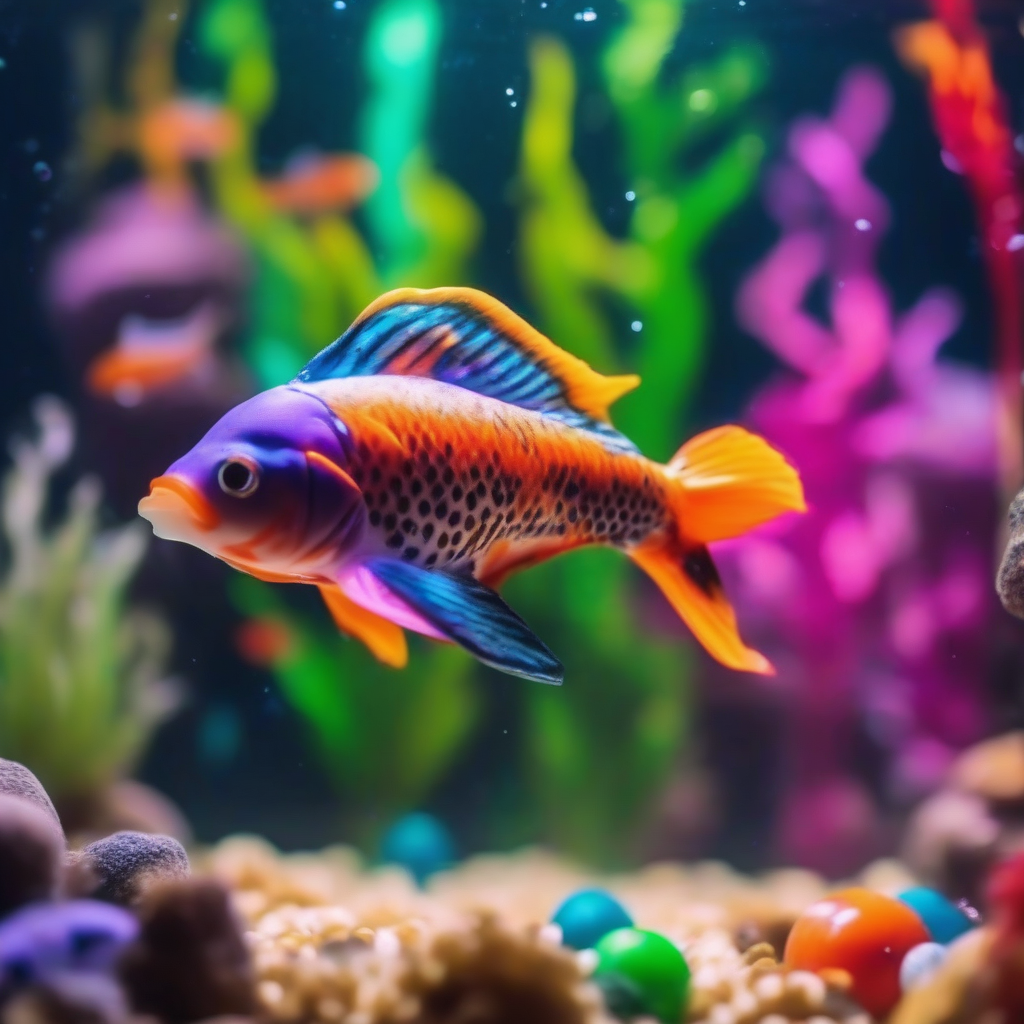
In this article, you will discover scientific intelligence games and behavioral enrichment strategies that enhance your fish's cognitive abilities, reduce their stress, and improve their quality of life. Unlock this hidden potential in your aquarium!


In this article, we will deeply explore the insidious neurobiological effects of gut microbiome imbalance (dysbiosis) on your rabbit's brain health and provide scientific-based solutions to maintain mental vitality.

In this article, you can find comprehensive information on how pancreatitis in dogs not only affects the digestive system but also insidiously impacts the brain, its neuroinflammatory mechanisms, and lifesaving emergency intervention strategies.

Discover the 5 insidious effects of overfeeding, one of the most stealthy threats to your fish's health, causing neurometabolic destruction in their brains, and learn scientific feeding strategies to prevent this demise. Uncover the silent danger in your aquarium!
For many aquarium owners, fish are simply easy-to-care-for creatures that swim silently in a glass box. However, this common misconception leads us to overlook the incredible cognitive abilities and complex behavioral needs of fish. Science proves that fish are much smarter, more receptive to learning, and even more emotional than we realize. So, how can you unleash the mental potential of your silent companions in your aquarium? In this comprehensive guide, we will explore the scientific secrets of cognitive stimulation and behavioral enrichment strategies that will enhance your fish's quality of life and well-being.
The belief that fish are simple, instinct-driven creatures has been refuted by modern ethology and neurobiology studies. We now know that fish can form complex social structures, solve problems, even use basic tools, and possess long-term memory. This indicates that they are driven not only by survival instincts but also by a desire to learn and interact with their environment.
Research has shown that fish can learn through classical and operant conditioning. For example, they can learn to swim through a hoop to receive food in response to a specific light or sound signal. This demonstrates their capacity to interpret environmental cues and adapt their behavior based on this information. Furthermore, some fish species are known to have memories lasting months or even years. Such deep memory allows them to recall complex details in their habitats and learn from positive/negative experiences.
In their natural habitats, fish encounter various challenges such as hunting, evading predators, and finding suitable mates. They develop different strategies to solve these problems. In an aquarium environment, it is possible to trigger these problem-solving abilities with specially designed intelligence games. Tasks like navigating a maze to reach a food reward or manipulating a lever allow fish to demonstrate their mental agility.
Understanding the cognitive abilities of fish provides the key to offering them a better life in an aquarium environment. A monotonous and unstimulating aquarium can lead to chronic stress, apathy, and even a weakened immune system in fish. Cognitive stimulation and behavioral enrichment, on the other hand, provide the exact opposite.
Sensory and mental stimulation encourages fish to exhibit their natural behaviors and prevents boredom. Fish that actively explore their environment and learn new things tend to be less stressed and happier. This directly affects their overall health and lifespan. For instance, proper management of the biofilm ecosystem in the aquarium and its impact on behavioral well-being can significantly influence fish stress levels. Your Fish's 'Invisible Chemical Labyrinth': Scientific Secrets of the Aquarium Biofilm Ecosystem and Its Impact on Behavioral Well-being!
Behavioral enrichment encompasses anything that provides physical and mental stimulation by mimicking the complexity of a fish's natural habitat. This includes not just toys or training, but also water quality, aquarium layout, plant selection, and inter-species interactions. Every detail in your aquarium affects your fish's ability to learn and interact. Understanding the emotional spectrum of fish also helps us grasp how effective these enrichment efforts are. Your Fish's 'Hidden Emotional Spectrum': Deciphering Scientific Expressions of Joy, Fear, and Curiosity in the Aquarium!
Training and mentally enriching your fish is easier and more rewarding than you might think. Here are some scientifically-based strategies you can apply:
This involves your fish performing a specific action to receive a reward (usually food), similar to dog or cat training. Try to entice your fish to a specific spot by touching the aquarium glass with a small stick or your finger. Immediately provide a small piece of food when it reaches the target. With regular repetition, your fish will associate the touch with the reward and begin to swim to that spot. You can even progress to more complex tasks such as swimming through a hoop or pushing a small ball.
Add safe, non-sinking objects to your aquarium that your fish can move or interact with. For example, you can use a lightweight ball, a floating hoop, or specially designed fish toys. Fish exhibit a natural curiosity to explore new objects and interact with them. This is especially important for understanding how fish perceive their environment using their cognitive maps and social learning codes. Your Fish's 'Cognitive Map': Complex Social Learning Codes in the Aquarium and Secrets to a Calm Life
Colorful objects placed outside the aquarium or soft music can stimulate the senses of fish. Fish are known to perceive certain colors and sound vibrations. However, it is important to avoid overstimulation; sudden loud noises or bright, flashing lights can cause stress. Regular and gentle visual/auditory stimuli can add variety to their routine.
Periodically changing the internal layout of your aquarium allows fish to explore new areas and utilize their adaptation skills. Adding new rocks, plants, or decorative items offers them new hiding spots and new labyrinths to explore. This is particularly important if you keep multiple fish species, as proper environmental arrangement plays a critical role in the integration of new species and ensuring peaceful communities in the aquarium. Your Fish's 'Invisible Social Networks': Scientific Secrets of New Species Integration and Protocols Guaranteeing a Peaceful Aquarium Community!
Fish are much more complex and intelligent creatures than we often assume. It is the duty of a responsible aquarium owner to not only provide them with a space to live but also to ensure they have a mentally stimulated and happy life. Through scientifically-based intelligence games and behavioral enrichment techniques, you can unlock your fish's hidden potential, build a deeper bond with them, and create a truly vibrant, dynamic ecosystem in your aquarium. These efforts will not only enhance your fish's well-being but also your own enjoyment of your aquarium hobby.
