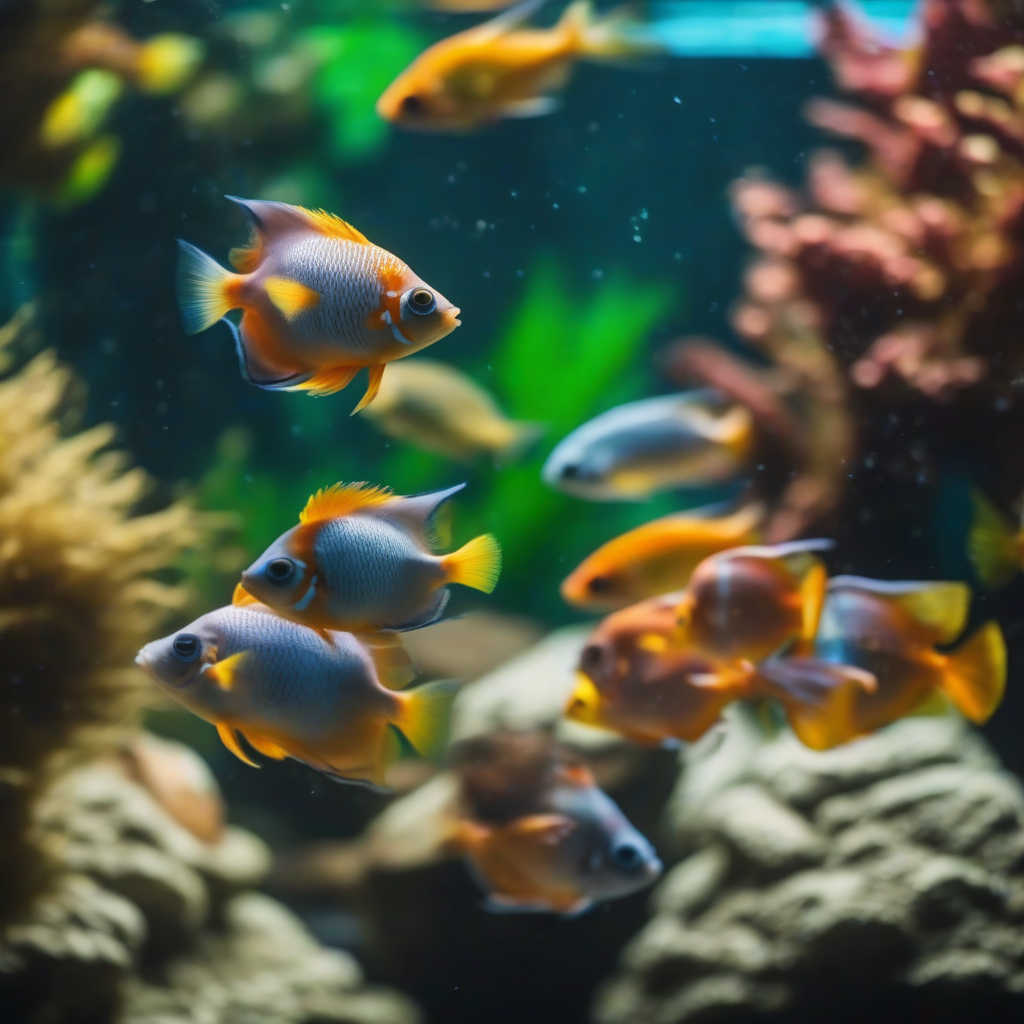
In this article, you will find comprehensive information about the often-overlooked emotional world of aquarium fish. By examining scientifically how fish experience and express complex feelings like joy, fear, and curiosity, you will learn practical strategies to enhance their welfare.


In this article, we will deeply explore the insidious neurobiological effects of gut microbiome imbalance (dysbiosis) on your rabbit's brain health and provide scientific-based solutions to maintain mental vitality.

In this article, you can find comprehensive information on how pancreatitis in dogs not only affects the digestive system but also insidiously impacts the brain, its neuroinflammatory mechanisms, and lifesaving emergency intervention strategies.

Discover the 5 insidious effects of overfeeding, one of the most stealthy threats to your fish's health, causing neurometabolic destruction in their brains, and learn scientific feeding strategies to prevent this demise. Uncover the silent danger in your aquarium!
Modern science constantly expands our understanding of our pets' inner worlds. While the complex emotional expressions of cats and dogs are now widely accepted, the emotional capacity of fish is still underestimated by many. Yet, recent research reveals that fish are not merely creatures acting on simple reflexes; instead, they can experience complex emotions such as joy, fear, curiosity, and even a form of social hierarchy. As of March 2026, the psychological well-being of aquarium fish has become one of the cornerstones of responsible fish ownership. So, what are these silent inhabitants of the underwater world trying to tell us?
For many years, there was a widespread belief that fish do not feel pain or possess emotional capacity. This was often attributed to their simple nervous systems and lack of vocalizations. However, scientific studies over the last decade have completely debunked this prejudice. When the neurological structures of fish are examined, the existence of neural pathways similar to pain and pleasure perception in mammals has been proven. This implies that fish can respond to environmental stimuli not only physiologically but also emotionally.
Research on fish cognition shows that they are much more intelligent and adaptable creatures than we might expect. For instance, as detailed in our article Your Fish's 'Invisible Memory Labyrinth': Scientific Secrets of Forgotten Information and Learned Behaviors in the Aquarium!, fish are known to have long-term memories and exhibit complex problem-solving skills. These cognitive abilities allow them to adapt to environmental changes, recognize dangers, and regulate their social interactions. Emotional expressions also emerge as a part of this cognitive capacity.
Observing signs of joy or contentment in fish is possible for a keen observer. A healthy and happy fish typically exhibits vibrant colors, has extended fins, and actively swims and explores the aquarium. Their rapid and energetic swimming movements, especially when new food is introduced or a new plant is added to the aquarium, can be interpreted as a type of 'joy dance.' This indicates anticipation and positive stimulation.
Some fish species may exhibit behaviors such as interacting with toys or 'playing' with water jets. This is a sign of their need for cognitive enrichment and their capacity for satisfaction. Enriching the aquarium environment with hiding places, tunnels, and plants satisfies the fish's exploratory instincts, enhancing their overall welfare and thus their 'joyful' states. Our article Invisible Micro Habitat Architecture in the Fish Aquarium: Scientific Secrets of Species-Specific Hidden Sanctuaries That Eliminate Stress! will guide you further on this topic.
Fear and stress are crucial parts of a fish's survival instinct. Fish react to potential threats in various ways. Behaviors such as excessively fast or erratic swimming, hiding, fading or darkening in color, rapid gill movements, and immobility (freezing) are clear signs of fear or stress. Sudden changes in the aquarium, aggressive tank mates, or unsuitable water conditions can trigger such reactions. Our article Your Fish's 'Invisible Mind Map': Social Codes in the Aquarium and Invisible Factors Triggering Stress can help you better understand stress factors.
When fish do not feel safe, their rapid retreat to hiding spots or withdrawal to the corners of the aquarium is a natural escape response. This behavior is an extension of their instinct to protect themselves from predators. A lack of sufficient hiding places in the aquarium can lead to constant stress and fear in fish. Such behaviors are particularly common in fish trying to adapt to a new aquarium. Our article Your Fish's 'Invisible Ghost Syndrome': Psychological Secrets of Hidden Fish in New Aquariums and Scientific Codes for Social Adaptation! sheds light on the psychological challenges faced during new environment adaptation.
Fish are eager to explore their environment and learn new things. The careful observation and approaches they show, especially when encountering a new object or food source, are indications of their curiosity. Some fish may even try to 'rearrange' objects in the aquarium, proving they are active environmental interactors.
Fish's adaptation processes to a new aquarium or changing conditions reveal their problem-solving abilities. Finding appropriate food sources, optimizing hiding places, or developing The 'Hidden Cognitive Map' of Fish: Complex Social Learning Codes and Secrets to a Calm Life in the Aquarium with new tank mates are evidence of their cognitive flexibility. Through their curiosity, they can generate creative solutions to the challenges they face.
Understanding the complex emotional spectrum of fish is key to ensuring they live a healthier and happier life. By arranging your aquarium according to your fish's species-specific needs, providing ample hiding and exploration areas, maintaining stable water quality, and choosing suitable tank mates, you can significantly enhance their emotional well-being. With regular and gentle observations, you can notice subtle changes in your fish's behavior, thereby better understanding their silent communication. Fish are much more than we think, and exploring their inner world will enrich your aquarium hobby.
