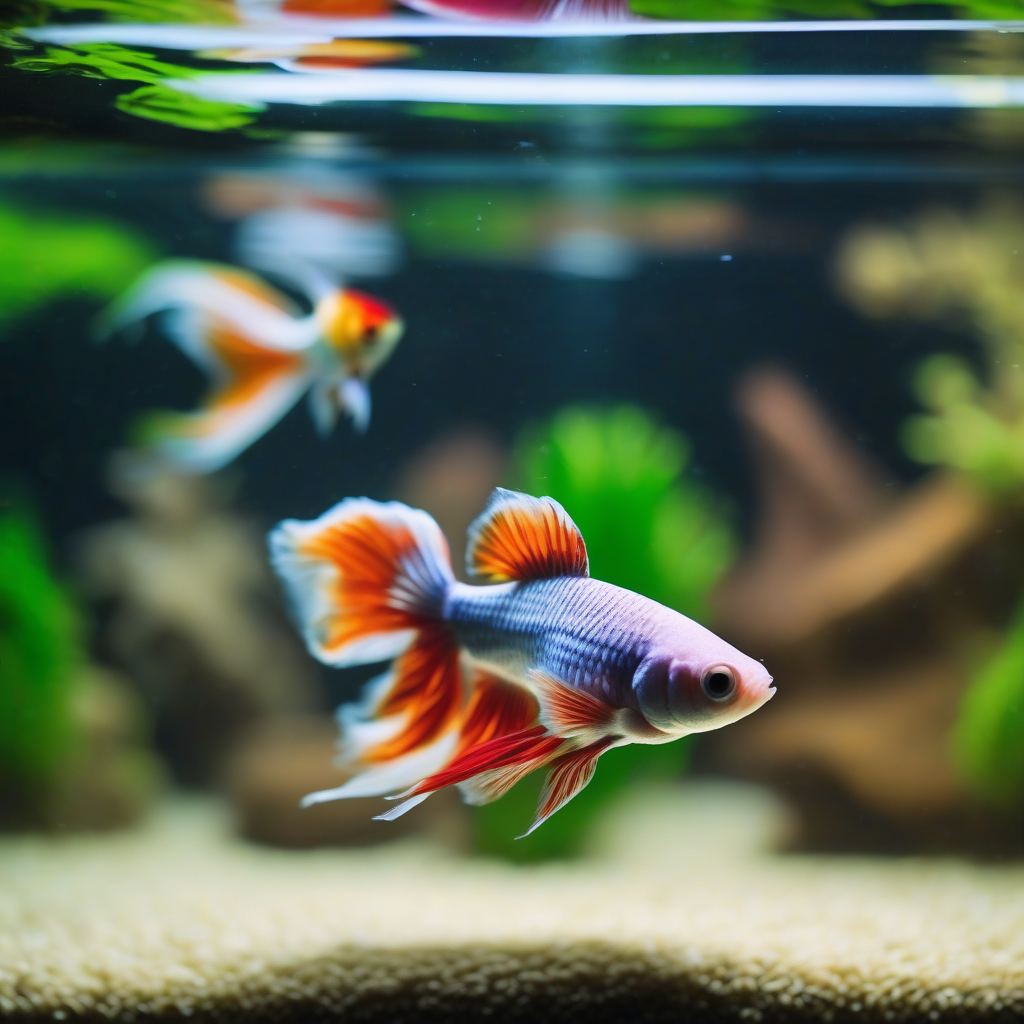
In this article, you will explore the surprisingly complex memory capacities of your fish, their learning mechanisms, and how these shape their aquarium lives, all through a scientific lens. Gain deep insights into their cognitive world and learn the secrets to transforming your aquarium into a richer and more welfare-rich environment.


In this article, you will discover the 5 insidious neurobiological effects of the Encephalitozoon Cuniculi parasite, which is often overlooked in rabbits but severely affects the brain, along with lifesaving early diagnosis methods.

In this article, we will deeply explore the insidious neurobiological effects of gut microbiome imbalance (dysbiosis) on your rabbit's brain health and provide scientific-based solutions to maintain mental vitality.

In this article, you can find comprehensive information on how pancreatitis in dogs not only affects the digestive system but also insidiously impacts the brain, its neuroinflammatory mechanisms, and lifesaving emergency intervention strategies.
While fish are often perceived as "forgetful" or "simple" creatures in the pet world, recent scientific research is fundamentally changing this perception. The silent swimmers in your aquarium possess a cognitive world far more complex than previously thought. The myth of the "three-second memory" has been debunked in the light of modern ethology. So, how much do fish truly remember? What information do they store, how do they learn, and how do these learned behaviors shape their aquarium lives? In this article, we delve into the depths of your fish's minds, unraveling the scientific secrets of their "invisible memory labyrinth." You will discover their learning abilities, how they process environmental information, and the impact of this knowledge on their well-being.
The memory capacity of fish, while varying from species to species, has been scientifically proven to allow them to recall complex tasks and learn from their experiences. Although their short-term and long-term memory mechanisms may not be as developed as in mammals, they are sufficient for making vital decisions within their own ecosystems.
Short-term memory enables fish to process immediate environmental cues and react quickly. For instance, their swift movement towards the feeding area when you drop food, or their reaction to a sudden movement. However, what's truly surprising is their long-term memory. Research indicates that fish can remember specific events, faces (including human faces), or locations for weeks, even months. This is crucial in many behavioral scenarios, from predator-prey relationships to mating rituals.
Fish can meticulously map out the complex "bio-architecture" of their aquariums. They remember which rock offers shelter, which plant cluster is safe for foraging, or which corner is ideal for resting. This spatial memory directly affects their stress levels. A monotonous and unstimulating environment can dull these cognitive abilities and lead to behavioral problems. Such hidden shelters and stress-reducing micro-habitats directly support your fish's memory and well-being.
Fish learn not only through innate instincts but also through experience. These learning processes significantly influence their behaviors in the aquarium and their interactions with humans.
Fish learn by associating a specific response with a stimulus (classical conditioning) or by linking a behavior with its consequence (operant conditioning). For example, when you approach the aquarium at feeding time, your fish swiftly gathering at the feeding area indicates they have associated your presence with food. Some species can recognize their caregivers and even learn to take food from their hands. This is evidence that you have also established a place in their cognitive maps. Understanding these complex social learning codes can be key to a peaceful life in the aquarium.
High stress levels, just like in humans, can negatively impact fish memory formation and recall. Sudden temperature changes, declines in water quality, aggressive tank mates, or acoustic stress can hinder fish's ability to learn and utilize stored information. Being knowledgeable about aquarium social codes and unseen stress-triggering factors is critically important for preserving your fish's cognitive health.
Supporting your fish's cognitive abilities ensures they lead happier and healthier lives.
Regularly changing the aquarium environment, adding new decorative elements, or diversifying feeding routines provides mental stimulation for fish. Offering complex hiding spots and areas to explore enhances their spatial memory and problem-solving skills.
Simple goal-oriented training (e.g., swimming through a specific hoop or reacting to a certain color) can unveil fish's learning capacities. Providing a small reward (food) for each correct behavior offers positive reinforcement, accelerating learning and strengthening your bond.
A balanced diet rich in micro-nutrients is fundamental for your fish's brain health and cognitive functions. Nutrients like omega-3 fatty acids, in particular, can have positive effects on nervous system development and memory.
Understanding your fish's "invisible memory labyrinth" will transform your perception of them. They are not merely simple beings swimming in an aquarium, but intelligent creatures who learn, remember, and interact with their environment. In the light of these scientific secrets, you can transform your aquarium into a mentally stimulating and welfare-rich habitat for them. Remember, your fish's memory is directly linked to the world you provide for them.
