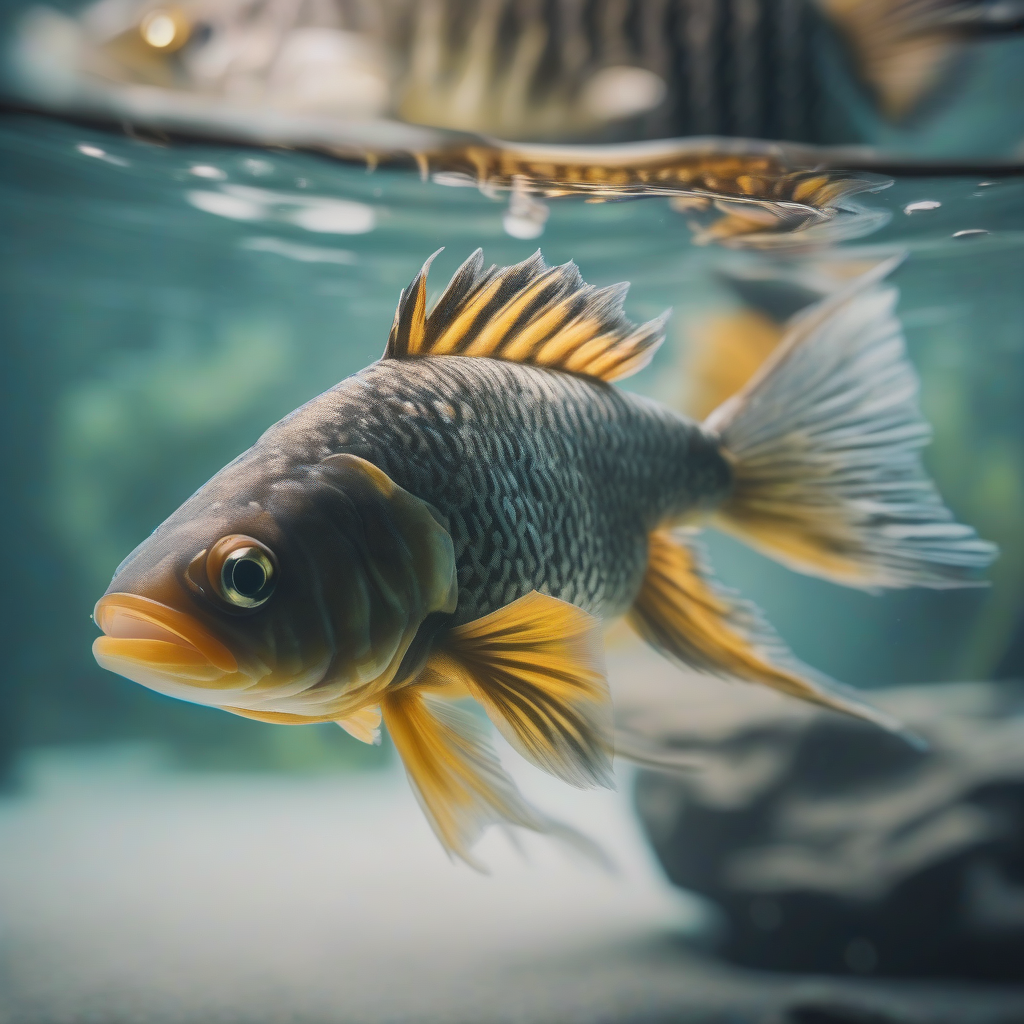
Decode your fish's complex social interactions and the invisible triggers of stress in their aquarium environment. This article scientifically explores the deep psychology behind fish behavior and the secrets to creating a harmonious underwater community.


In this article, we will deeply explore the insidious neurobiological effects of gut microbiome imbalance (dysbiosis) on your rabbit's brain health and provide scientific-based solutions to maintain mental vitality.

In this article, you can find comprehensive information on how pancreatitis in dogs not only affects the digestive system but also insidiously impacts the brain, its neuroinflammatory mechanisms, and lifesaving emergency intervention strategies.

Discover the 5 insidious effects of overfeeding, one of the most stealthy threats to your fish's health, causing neurometabolic destruction in their brains, and learn scientific feeding strategies to prevent this demise. Uncover the silent danger in your aquarium!
Aquariums are more than just tanks of water; they are small, complex ecosystems, and the fish residing within often possess a rich social life and psychological depth that we might not readily perceive. The world of fish is not limited to fin movements and color changes. They, too, have intricate communication networks, hierarchies, and even emotional states that they establish amongst themselves. In this article, we will delve into your fish's invisible mind map, decipher their aquarium social codes, and scientifically examine the unseen factors that trigger their stress.
The social structure of fish varies significantly depending on the species. Fish that live in shoals often establish a distinct hierarchy within their group. This hierarchy influences many processes, from feeding order and territory sharing to mate selection and reproduction. As we highlighted in our article, Your Fish's Secret Social Hierarchy in Aquariums: Scientific and Stress-Reducing Ways to Introduce New Species, introducing a new fish can significantly disrupt the existing balance due to these social dynamics.
Some fish species may have more defined territories and a tendency to defend these areas. This situation can lead to conflicts, especially for fish living in the confined space of an aquarium. These 'invisible boundaries' shape how fish interact with each other and often cause subtle tensions that an observer might miss.
Keeping different species together in the same aquarium is an 'art' in itself. However, this art must be based on scientific principles. As discussed in our article, Your Fish's Invisible 'New Neighbor Syndrome': Scientific Codes of Interspecies Harmony and Secrets of Sudden Behavioral Changes, the sudden or subtle reactions one species shows towards another are often signs of underlying social incompatibility. Dominant species can stress more passive ones, disrupt their feeding patterns, or restrict their living spaces. This 'invisible sociality' directly impacts the mental well-being of fish.
Stress for fish doesn't just stem from physical threats. Many unseen factors in the aquarium environment can negatively affect their psychology. One such factor is the sound and vibrations within the aquarium. As detailed in our article, Invisible Vibrations in Aquariums: Insidious Acoustic Stress Threatening Your Fish's Emotional Health and Scientific Secrets to Solutions, the constant vibrations created by pumps, filters, or external noises can lead to chronic stress in fish.
Similarly, as discussed in our article, Your Fish's 'Invisible Light Dance': Insidious Biological Clock Triggers of Aquarium Lighting and Secrets to Optimal Health, the cycle of aquarium lighting, its intensity, and type also directly affect the fish's biological clocks and overall well-being. Incorrect or unbalanced lighting can disrupt fish's natural sleep-wake cycles, causing stress.
Sudden changes in water chemistry, such as fluctuations in pH, ammonia, or nitrite levels, are a source of both physical and psychological trauma for fish. As Your Fish's 'Invisible Stress Source': Insidious Dangers of Aquarium pH and Hardness Fluctuations and Scientific Secrets to Solutions points out, these changes make fish feel as if they are under an 'invisible threat'.
Fish communicate amongst themselves and with their environment through an intricate 'invisible communication' network. This communication occurs through color changes, body postures, fin positions, and even subtle vibrations they perceive from each other. A fish's sudden color change or tendency to hide is often a signal of stress, fear, or threat. Our article, Your Fish's 'Silent Language of Emotion': Scientific Codes for Deciphering Invisible Social Signals in the Aquarium Post-Adoption, offers tips on how to read this silent language.
Especially during the adaptation phase in a new aquarium, fish can experience intense stress. This process of 'building invisible bridges' is critical for the fish to adapt to its new environment and feel secure. As emphasized in our article, Invisible Micro-Habitat Architecture in Fish Aquariums: Scientific Secrets of Species-Specific Hiding Places to Zero Out Stress, providing fish with hiding places and 'micro-habitats' where they can feel safe significantly eases the adaptation process.
Considering your fish's mental well-being, not just their physical health, is essential for a long-term aquarium experience. This means creating an environment where they can exhibit their natural behaviors, minimize stress, and have positive social interactions.
The world of fish is far more complex and fascinating than we often assume. By striving to understand their 'invisible mind map,' we can care for them better and ensure they lead more peaceful and healthy lives in our aquariums.
