
In this article, you will discover the amazing mental potential of your fish and learn 5 neurocognitive secrets, supported by scientific data, behind how they learn complex patterns and daily routines in the aquarium.


Discover the neurobiological signals of hidden stress your newly adopted cat experiences during adaptation to a new social environment. This article reveals 5 insidious signs of your cat's silent struggle and scientific strategies for peaceful, long-term harmony.

Your dog's anal sacs, located beneath the tail, can be hidden alarm bells often overlooked but profoundly affecting their quality of life. In this article, you will discover the 5 insidious neurobiological effects of anal sac problems on the brain and the lifesaving care secrets you need to know for your furry friend to live a peaceful life.
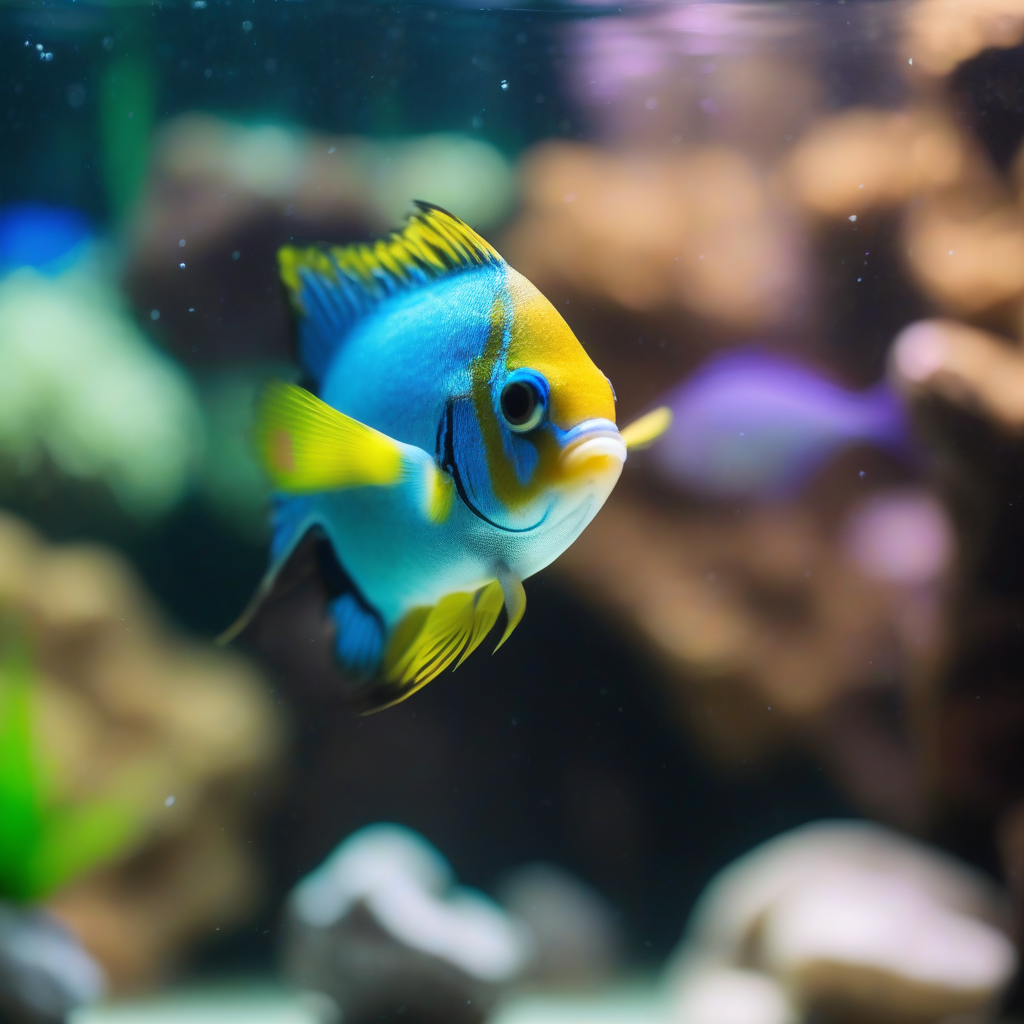
In this article, you will find comprehensive information on the insidious neurotoxic effects of heavy metal poisoning in aquarium fish, its symptoms, and lifesaving emergency intervention codes. This condition, which can arise from household water sources, improper equipment, or neglect, can severely threaten your fish's quality of life and lifespan.
If you believe the fish in your aquarium are merely decorative, you might be underestimating their mental potential. Scientific research reveals that fish possess surprisingly complex cognitive abilities. In particular, their skills in pattern recognition and routine learning profoundly impact their interactions with the aquarium environment and enhance their well-being. In this article, we will explore 5 neurocognitive secrets to understanding how your fish's brain works and how to use this knowledge to train them for a richer, more stimulating life. Get ready to forge a unique bond with your fish by deciphering their Hidden Mind Map in your aquarium.
Fish are creatures whose intelligence is often overlooked. However, studies among vertebrates show that fish, just like mammals, possess abilities for learning, memory, and problem-solving. This means that the inhabitants of your aquarium do not merely act on instinct but can actively acquire and process information from their environment.
Fish training primarily relies on the principles of classical (Pavlovian) and operant (Skinnerian) conditioning. Classical conditioning occurs when a fish associates a neutral stimulus (e.g., a light signal) with a natural stimulus (e.g., food). Over time, the neutral stimulus alone can trigger the response. Operant conditioning, on the other hand, involves the fish associating a specific behavior (e.g., following your finger) with a reward (again, food), increasing the likelihood of repeating that behavior. These principles form the foundation of how fish learn patterns and routines. For example, by looking at your fish's Secret Learning Map, it's evident how even simple commands can be taught using these types of conditioning.
Fish's visual perception and spatial memory play a critical role in pattern recognition and routine learning. Different decorations, plants, or even a specific corner of the glass in the aquarium can serve as important reference points for the fish. Using these reference points, fish navigate, remember potential dangers, and even associate complex patterns or specific areas with food. Thanks to their long-term spatial memory, fish can remember a particular feeding spot or hiding place for days, or even weeks.
To maximize your fish's cognitive abilities, understanding their mental processes is essential. Here are the 5 neurocognitive secrets behind pattern recognition and routine learning:
Fish do not rely solely on their visual senses when learning patterns and routines in their environment. They integrate multiple sensory inputs, such as water vibrations (lateral line organ), chemical signals (smell and taste), and light changes. For a fish to notice a specific pattern, that pattern must stand out from other environmental noise. Using distinct colors, shapes, or even subtle water movements during training helps the fish focus on that stimulus. This enables fish to unlock their behavioral training potential by deciphering the Secret Art of Communication in the aquarium.
As with all living beings, fish brains possess neuroplasticity; that is, the ability to change shape with experience. Consistent and regular repetition of a pattern or routine strengthens synaptic connections in the fish's brain. This ensures that learned information is more permanently embedded in long-term memory. Regular and predictable feeding times or rewarding with a specific signal helps the fish easily adopt this routine.
Positive reinforcement is one of the most powerful tools in fish training. When fish are rewarded (usually with food) after successfully recognizing a pattern or following a routine, "feel-good" neurotransmitters like dopamine are released in their brains. This chemical release associates the behavior with the reward, increasing the likelihood of its repetition in the future. Punishment-based training methods, however, can increase stress levels and negatively affect learning, potentially leading to your fish experiencing Invisible Adaptation Shock.
An enriched aquarium environment enhances fish's cognitive capacities. Decorations with different textures, hiding places, live plants, and even mechanisms that encourage foraging keep fish brains active. Fish living in an enriched environment tend to learn new patterns and routines faster because their brains are constantly accustomed to processing new information and adapting. This situation allows them to unlock their full cognitive potential.
Not every fish learns at the same pace or in the same way. Interspecies and even intraspecies individual differences play a significant role in learning abilities. Some fish are naturally more curious and exploratory, while others may be more timid. Genetic predispositions can influence their aptitude for learning specific patterns or routines. Therefore, tailoring training strategies to each fish's pace and personality increases the chances of success.
You can take practical steps to unleash your fish's cognitive potential:
Always start training with simple steps. For example, you can begin by consistently placing a brightly colored object in a specific corner of the aquarium and feeding in that area. Once your fish learn this pattern, you can slightly change the object's position without altering its color or shape. Over time, you can progress to more complex patterns involving multiple stimuli, such as intricate shapes or light signals. Consistency and patience are key.
Fish thrive on predictable routines. Feeding at specific times of the day helps your fish adapt to that schedule, and you can observe them gathering at the front of the aquarium as feeding time approaches. This provides a delightful experience for you and mentally stimulates your fish. Additionally, by scheduling other routines like aquarium cleaning or decoration changes for specific days and times, you can help your fish adapt more easily through Silent Social Reprogramming.
Conclusion
Realizing that your fish are not only beautiful but also surprisingly intelligent creatures can elevate your aquarium hobby to a whole new level. Their abilities in pattern recognition and routine learning are powerful tools that enhance their mental well-being and allow them to lead a more active and engaging life in your aquarium. By employing scientific principles, you can strengthen the bond with your fish and help them explore their cognitive wonderland. Remember, patience, consistency, and positive reinforcement will be your best guides on this fascinating journey.
