
Do you feel your dog forgets commands outside that they perform perfectly at home? In this comprehensive guide, you'll uncover the neurocognitive secrets of command generalization and learn 5 scientific strategies to ensure your dog exhibits learned behaviors in every environment.


Discover the neurobiological signals of hidden stress your newly adopted cat experiences during adaptation to a new social environment. This article reveals 5 insidious signs of your cat's silent struggle and scientific strategies for peaceful, long-term harmony.

Your dog's anal sacs, located beneath the tail, can be hidden alarm bells often overlooked but profoundly affecting their quality of life. In this article, you will discover the 5 insidious neurobiological effects of anal sac problems on the brain and the lifesaving care secrets you need to know for your furry friend to live a peaceful life.
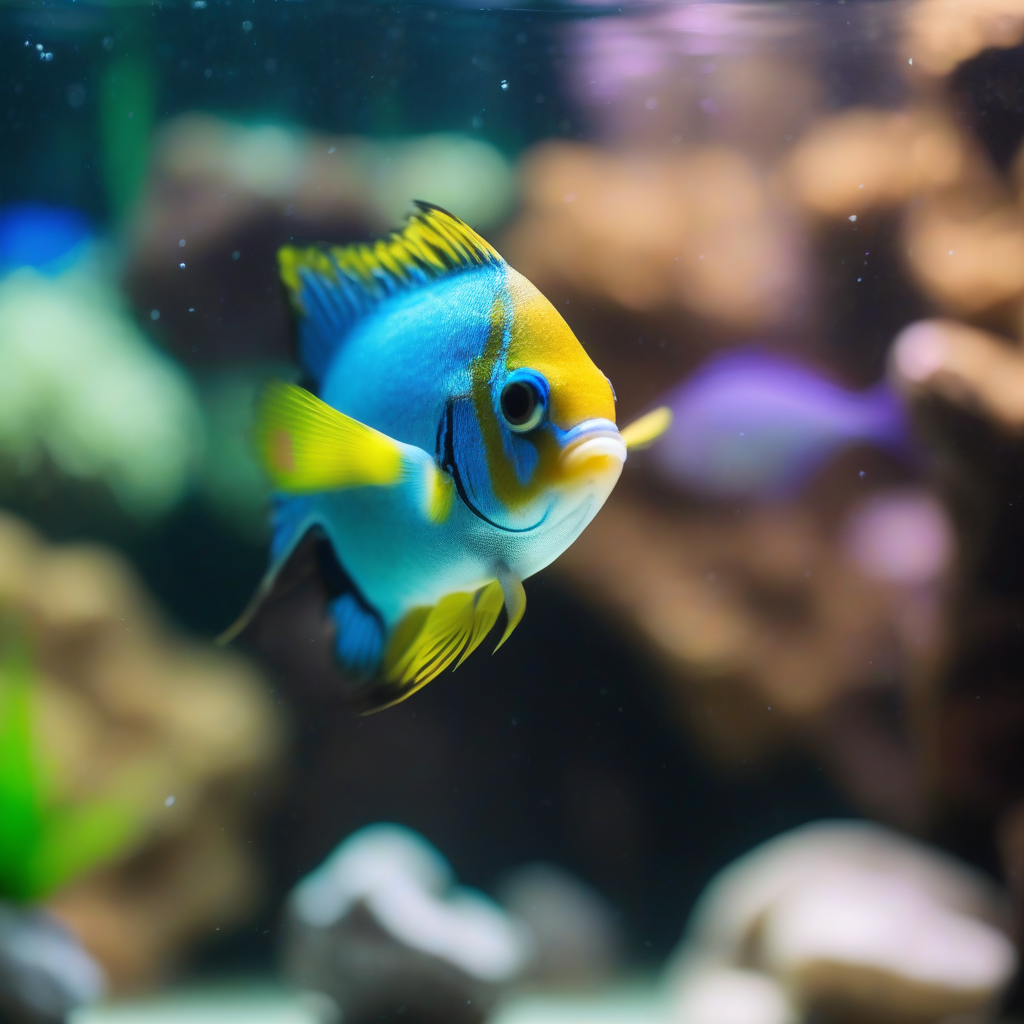
In this article, you will find comprehensive information on the insidious neurotoxic effects of heavy metal poisoning in aquarium fish, its symptoms, and lifesaving emergency intervention codes. This condition, which can arise from household water sources, improper equipment, or neglect, can severely threaten your fish's quality of life and lifespan.
Your furry friend who wags their tail and immediately sits when you say "sit" on the couch at home, why do they not respond to the same command when they see a squirrel in the park or on a busy street? This is a common fallacy many dog owners encounter: they think their dogs 'don't know' the command. However, the problem is often not about knowing, but rather their inability to 'generalize' that command across different environments. Your dog's brain frequently associates a command with the initial context in which it was learned. This phenomenon, scientifically referred to as 'contextual learning,' constitutes one of the most challenging stages of the training process. But don't worry, this article will shed light on the neurocognitive secrets and practical strategies that will enable your dog to apply what they've learned anywhere.
Command generalization is a dog's ability to confidently and correctly perform a specific command or behavior in new environments, different from the one where it was first learned. For example, performing the "come" command learned at home in the park, at the vet clinic, or at a friend's house. Dogs are incredibly environment-centric creatures. Their brains tightly bind learned information with environmental cues (smells, sounds, sights). This is especially pronounced at a young age, a period when synaptic connections in the brain are forming and strengthening.
For a dog, a new environment is not just a different scenery but also a myriad of new stimuli. These stimuli can weaken the neural connections established with previously learned commands or reduce the dog's capacity to process the command by distracting them. This situation is associated with overloading areas of the dog's brain responsible for attention, decision-making, and problem-solving, such as the prefrontal cortex. While processing the new context, the brain may struggle to access old information or fail to prioritize it.
Optimizing the command generalization process, enhancing your dog's mental capacity, and facilitating their adaptation to new environments requires implementing scientifically-based strategies. Here are 5 neurocognitive strategies that will accelerate and reinforce this process:
Instead of suddenly changing the environment where your dog learns commands, provide a slow and controlled transition. Begin training in the calmest room of your home, then move to a room with more stimuli (e.g., the kitchen), then to the garden, and finally to a quieter outdoor area like your front yard. This "stair-stepping" approach allows your dog's brain to gradually process each new environment and reinforce the command in every context. Reward them generously when they succeed at each step. This approach also helps your dog manage stress in new environments, as Your Dog's Invisible Stressor: Neurobiological Effects of Hidden Household Noise Pollution and 5 Scientific Strategies for Calmness! article states, stress can directly impact learning capacity.
Initially, it's crucial to use continuous reinforcement (reward) for every correct behavior. However, during the command generalization phase, transitioning to a variable reinforcement schedule increases your dog's motivation and resilience. This means you reward intermittently, not every time, keeping your dog's desire to perform the command alive. Neuroscientifically, variable reinforcement increases dopamine release in the brain's reward center, making the behavior more resistant to extinction. This can also help your dog break free from potential behavioral loops, such as those discussed in Your Dog's 'Hidden Obsessions': 5 Scientific Secrets of Repetitive Behaviors and 5 Critical Steps to Reprogramming the Brain!, as consistent but unpredictable reward systems strengthen learning.
To prevent your dog from associating the command with only a specific tone of voice or hand signal, use different cues. Experiment with varying voice tones, different hand signals, or even different body languages for the same command. This allows your dog's brain to match the essence of the command (the behavior) with various signals. Thanks to the brain's ability to integrate information from different sensory organs, your dog becomes less dependent on a single stimulus and develops a more flexible understanding. This also aligns with the behavioral modeling principles mentioned in Your Cat's Secret 'Intent Hunter' Ability: The Deep Science of Behavioral Modeling and 5 Critical Steps to Reset Undesirable Habits!, as different cues teach that the behavior can be triggered in different contexts.
The biggest obstacle in new environments is often distractions. Work on commands that draw your dog's attention to you (e.g., "look at me" or "focus"). Then, practice these commands with gradually increasing distractions. For example, after your dog learns the attention command at home, practice it in a park where another dog passes at a distance. Neuroscientifically, this develops your dog's ability to filter out irrelevant stimuli and focus on important ones (selective attention). This process is closely related to general training principles discussed in Your Cat's 'Secret Play Strategists': 5 Unsolved Neurological Secrets of Training and Behavioral Nuances, as attention is fundamental to all learning processes.
Turn every new training environment into a positive and rewarding experience for your dog. Use high-value rewards, praise, and play to help your dog associate new places and situations with positive emotions. This reduces potential anxiety in your dog's brain regarding new contexts and creates an optimal mental state for learning. Emotional state deeply affects cognitive functions; positive emotions facilitate learning and promote the encoding of information into long-term memory. This helps your dog feel safe and comfortable in new places, making it easier for them to perform commands.
Ensuring your dog perfectly executes commands in every environment requires patience, consistency, and a scientifically-based training approach. Command generalization is not just a training technique but also a process that enhances your dog's mental flexibility and self-confidence. By applying these 5 neurocognitive strategies, you will strengthen the bond with your dog and enable them to be an obedient and happy companion everywhere. Remember, every dog is an individual, and their learning speeds may vary. The key is to consistently progress with positive reinforcement and help your dog unlock their full potential.
