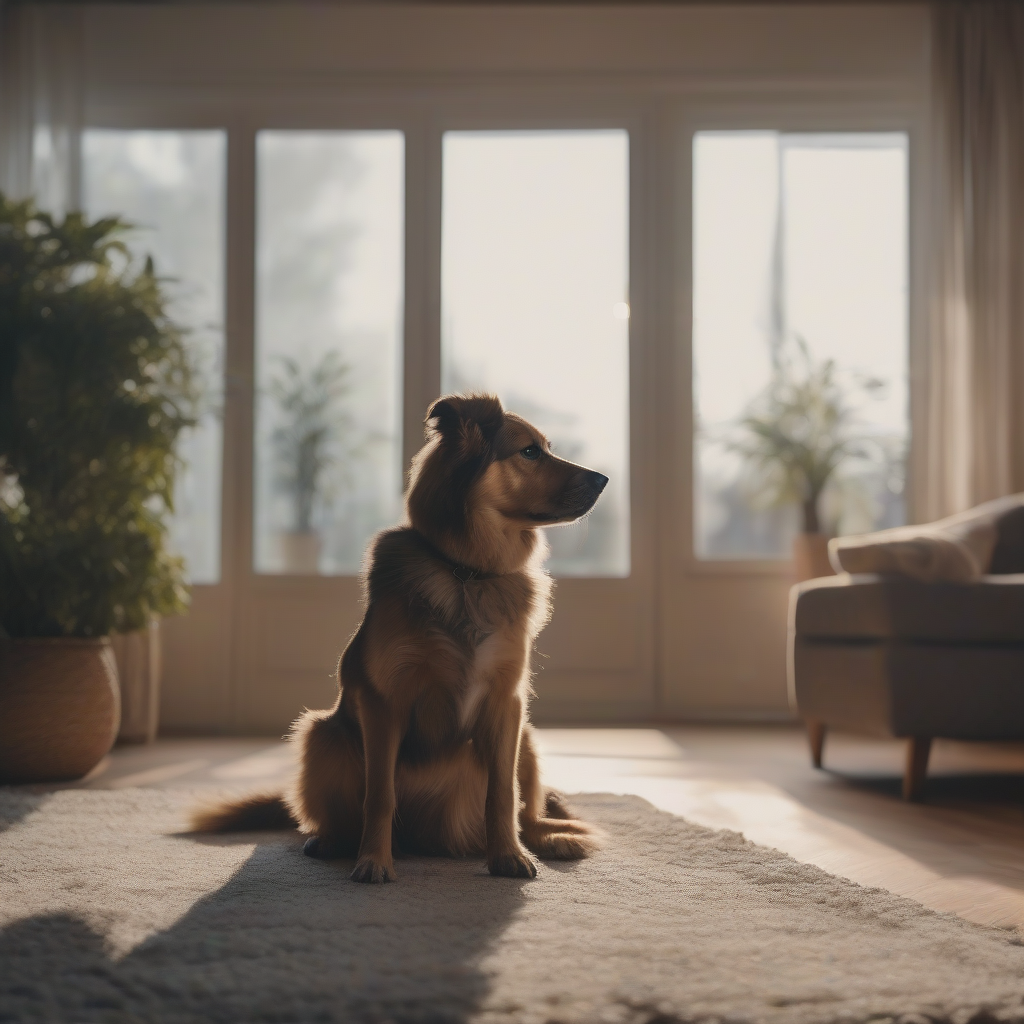
Have you ever wondered how your dog perceives the sound environment in your home and its insidious neurobiological effects on their behavior? In this article, you will discover the 5 critical impacts of the home's 'hidden soundscape' on your dog's mental and physical health and the scientific secrets to creating a peaceful living space.


In this article, you will discover the little-known but profound effects of the acoustic environment in rabbit living spaces on their brain health and general well-being, exploring the neurobiological consequences of both sound deprivation and overstimulation, and scientific secrets to creating a peaceful environment. Understand and optimize your rabbit's world with expert tips.

In this article, you will find comprehensive information about the insidious neurobiological effects of artificial colorings, preservatives, and flavors found in commercial bird feeds on your bird's brain health and mental vitality. We explore scientific nutritional secrets to combat these hidden dangers, shedding light on a wide spectrum of effects from behavioral changes to cognitive decline.

In this article, you can discover the scientific secrets to understanding your cat's undesirable habits, deciphering the neurocognitive mechanisms in their brain, and establishing lasting new routines.
As pet owners, we often focus on our dogs' visual and olfactory worlds. However, their auditory world, especially the 'micro-acoustic environment' within the home, is often overlooked. Dogs possess senses that can hear a much wider range of frequencies and distinguish sounds more sensitively than humans. This means that even seemingly silent whispers, hums, and vibrations in the home can evoke deep neurobiological echoes in their brains. So, how does your dog's 'hidden soundscape' actually affect its mood, stress levels, and overall well-being? Get ready to shed light on this question with scientific approaches.
Dogs can hear frequencies ranging from approximately 67 Hz to 45,000 Hz, while humans generally hear between 20 Hz and 20,000 Hz. This wider frequency range means your dog hears many sounds within the home that are imperceptible to the human ear. The faint hum of the refrigerator, the buzz of the TV in standby mode, the flickering sound of fluorescent lights, or high-frequency signals emitted by electronic devices can become a constant 'white noise' for your dog. This continuous and unnoticed auditory bombardment can constantly stimulate brain regions related to stress and memory, such as the amygdala and hippocampus, laying the groundwork for chronic stress. This can, over time, lead to invisible fatigue and behavioral changes, as also noted in the article Your Dog's 'Invisible Fatigue' Signals: Neurobiological Effects of Over-Exercise and Stress.
Check the noise levels of electronic devices at home and, if possible, opt for quieter models. Create 'quiet rooms' or areas with low sound levels where your dog can relax. If necessary, you can benefit from special insulation materials that block high frequencies.
Sound is not just a wave propagated through the air; it is also transmitted as vibration through objects and floors. Dogs can perceive these micro-vibrations through their paws and bodies. The operation of a washing machine, a neighbor walking upstairs, outdoor traffic noise, or even the sound of water flowing through pipes can create constant pressure on your dog's nervous system. These silent vibrations are processed in the brain's sensory cortex, leading to unexplained restlessness, tension, or even panic attacks similar to those described in Your Dog's 'Hidden Fear Tunnels': Why Do Some Dogs Panic for No Reason? 5 Neurobiological Root Causes and Solutions!. For more information on how even flooring types affect a dog's well-being, you can refer to the article Your Dog's 'Hidden Tunnels': Neurobiological Reflections of Flooring Types and Secrets to a Peaceful Living Environment.
Place vibration-absorbing pads under household appliances. Use thick carpets or mats in your dog's resting areas to reduce vibrations coming from the floor. Wall and floor insulation play an important role in minimizing external and structurally transmitted sounds.
Empty rooms, hard floors, and minimal furniture cause sound to reverberate easily. For dogs, such echoey environments can make it difficult to locate the source of sounds and create general auditory confusion. This can lead to increased anxiety, especially in puppies or adult dogs trying to adapt to a new environment. A acoustically poor environment can make it difficult for your dog to calm down, reducing sleep quality and triggering behavioral problems. As stated in Your Dog's 'Surface Sensitivity' Mystery: The Unknown 5 Neurobiological Effects of Home Textures and Scientific Design Secrets for Peace!, the acoustic effects of textures in the environment should be considered in addition to their visual impact.
Increase sound absorption by using thick curtains, rugs, pillows, and fabric-covered furniture in living areas. Bookshelves and plants can also help break sound waves and reduce reverberation. Having an acoustically more isolated corner of their own helps your dog feel more secure.
Dogs interpret their owners' vocalizations, door sounds, food preparation sounds, and other routine household noises as important social cues. These sounds can activate the brain's reward centers and trigger oxytocin release, creating feelings of attachment and security. However, sudden, loud, or unexpected noises (e.g., a falling object, a loud argument) can increase cortisol levels, causing stress and fear. These neurobiological responses directly affect your dog's trust in the environment and its bond with you. To understand how dogs process experiences, you can check out Your Dog's 'Memory Labyrinth': Neurocognitive Codes of Experiences and 5 Surprising Secrets of Long-Term Learning!.
Communicate with your dog using a calm and consistent tone of voice. Make the home's sound environment as predictable as possible. Observe their reactions to unexpected loud noises and try to habituate them to these sounds through positive reinforcement. Music or 'white noise' machines can mask disturbing external sounds and create a calming effect.
Dogs develop specific expectations for sound patterns integrated into their daily routines. Sounds like morning wake-up calls, the sound of food preparation, the doorbell ringing, or leash sounds trigger specific chemical reactions in your dog's brain. While these routines provide security and predictability, sudden or ambiguous sound patterns, especially those perceived as unusual or threatening, can lead to anxiety and apprehension. This is directly related to the stress points discussed under Your Dog's 'Silent Pressure Zones': Neurobiological Stress Points at Home and Secrets to a Peaceful Living Environment.
Maintain your dog's daily routine as consistently as possible to provide predictability in the sound environment. Implement a controlled and positive exposure process to new or potentially disturbing sounds (e.g., fireworks, vacuum cleaner) to reduce their sensitivity. This can be done through desensitization and counter-conditioning techniques, allowing your dog to associate these sounds with a reward or relaxation rather than a negative event.
Remember, your dog's auditory world is a crucial part of its inner well-being. Optimizing the micro-acoustic environment at home with scientific approaches will help your companion lead a more peaceful, happy, and healthy life.
