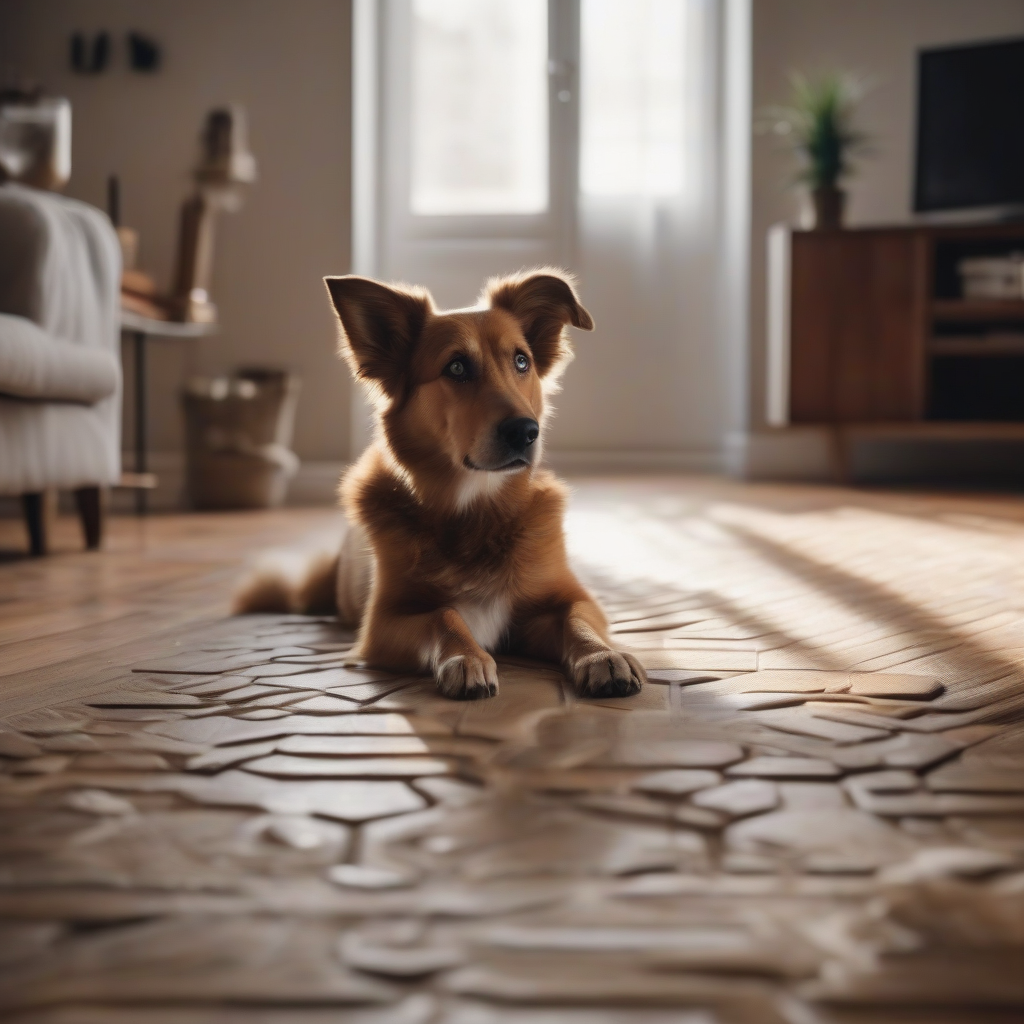
In this article, discover the 5 hidden neurosensory effects of home floor textures on your dog's paws, joints, and mind, and how to enhance their behavioral well-being.

Our homes are not just shelters for our furry companions, but also realms of sensory exploration. Their world is a symphony filled with floor textures, starting from beneath their paws and shaping their minds. However, this 'whisper zone,' often overlooked, can have profound effects on your dog's physical and mental health, far beyond what you might imagine. In this article, we will unveil the 5 hidden neurosensory secrets of different floor textures at home and their impact on your dog's paws, joints, and overall behavioral well-being.
Slippery floors, such as ceramic, marble, or polished wood, can create a 'hidden balance disorder' for dogs. The constant threat of slipping overworks their vestibular system. This can exacerbate joint pain, especially in older dogs or those with existing joint issues, and increase the risk of falls. Their reduced ability to feel grip on the floor can lead to insecurity and anxiety.
Carpets and rugs offer a soft and warm surface for dogs' paws. However, their effects can vary depending on their texture. Some dense, short-pile carpets can provide a slight 'hidden tactile richness' by offering subtle resistance under their paws. This offers extra comfort when playing or maintaining a specific stance. Conversely, very soft and deep-pile carpets can make walking and balancing difficult as paws sink in, leading to muscle fatigue and discomfort in joint positioning.
Properly finished and sealed wooden floors, provided they are not excessively slippery, can be surprisingly beneficial for dogs. The slight friction on their surface helps their paws gain better traction. This 'invisible friction mystery' prevents their paws from slipping, especially when running or making sudden turns, thereby reducing stress on their joints. This can help preserve joint health in the long run.
Hard floors like concrete and tile can help prevent dogs from overheating, especially during hot weather, by offering a cool surface. This creates an effect we can call 'temperature fluctuations.' However, during winter, these floors can become excessively cold, causing your dog to feel chilly. Lying on cold floors for extended periods can lead to muscle spasms and joint pain.
Areas where different floor textures meet within the home, termed 'hidden texture bridges,' create important spatial cues for dogs. For instance, the change in texture experienced when transitioning from carpet to tile provides them with a clue to understand their location and the next step. This helps them perceive their environment better and more easily recognize potential hazards or transition points.
Being aware of the floor textures in your dog's living space not only ensures their comfort but also directly impacts their mental and physical health. Understanding their silent 'whisper zone' is the key to fostering a happier and healthier companionship.
For more information on this topic, you can explore our article titled Your Dog's Secret Paw Print: 5 Neurosensory Secrets of Home Floor Textures on Paws, Joints, and Mind!. Additionally, for overall living space safety, you might find Your Dog's 'Silent Chaos': 5 Insidious Games of Secret Space Manipulation at Home and Scientific 'Boundary' Setting for Calmness! and our articles on protection from hazardous substances like Your Dog's 'Toxic Enigma Lab': 5 Insidious Household Toxin Sources and Brain-Body Rescue Protocols! interesting.

Discover the types of burns your dog can suffer, the 5 insidious neurophysiological effects these burns create in the brain and body, and lifesaving emergency intervention strategies in this comprehensive guide. We shed light on the dangers behind forgotten household accidents from a scientific perspective.

Discover the neurobiological signals of hidden stress your newly adopted cat experiences during adaptation to a new social environment. This article reveals 5 insidious signs of your cat's silent struggle and scientific strategies for peaceful, long-term harmony.

Your dog's anal sacs, located beneath the tail, can be hidden alarm bells often overlooked but profoundly affecting their quality of life. In this article, you will discover the 5 insidious neurobiological effects of anal sac problems on the brain and the lifesaving care secrets you need to know for your furry friend to live a peaceful life.
