In this article, you will discover how your cat remembers hidden spaces and objects at home, the neurocognitive foundations of this process, and how we can use this knowledge for their well-being.

In this article, you will discover how your cat remembers hidden spaces and objects at home, the neurocognitive foundations of this process, and how we can use this knowledge for their well-being.
In this article, you will discover how over-bathing and incorrect shampoo choices affect your dog's skin barrier, their insidious neurobiological reflections in the brain, and scientific strategies to protect skin health.

In this article, you will discover the 5 insidious neurobiological effects of the Encephalitozoon Cuniculi parasite, which is often overlooked in rabbits but severely affects the brain, along with lifesaving early diagnosis methods.
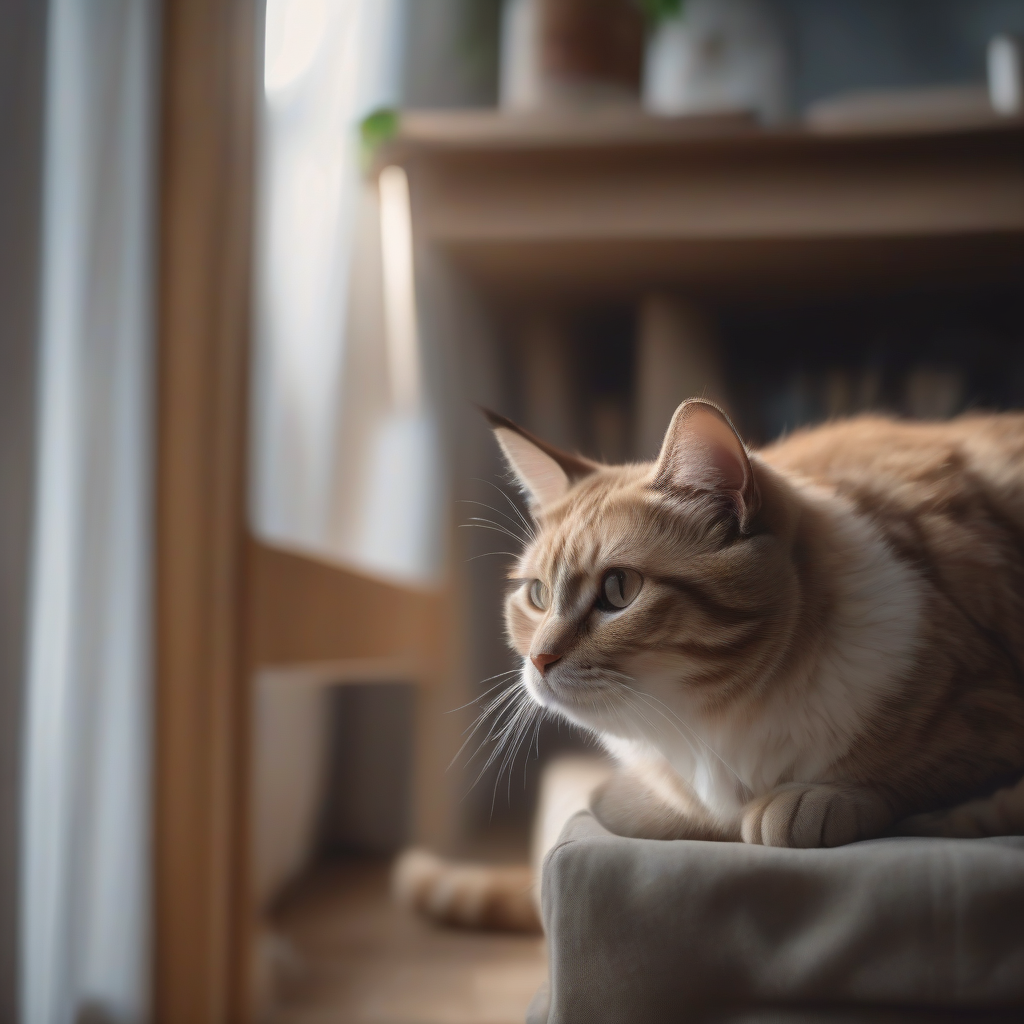
Cats are mysterious yet openly affectionate beings that share our homes. How they perceive the world around us, and especially how they map out their own living spaces, is a fascinating topic that reveals the complexity of their minds. For a cat, a home is not just four walls and a roof; it's a detailed "shadow map" where every corner, every piece of furniture, and even every forgotten toy has its own unique meaning and location. This map directly influences your cat's behavior, sense of security, and even hunting strategies. So, how does your cat's brain create and maintain this incredible spatial memory? Let's delve deep into the neurocognitive secrets of how cats remember hidden spaces and objects at home, illuminated by veterinary science.
A cat's spatial memory is far more than just the ability to go from one point to another. It is a complex cognitive process managed by specific regions of the brain. Scientific studies show that cats create mental maps using environmental cues (visual, olfactory, auditory) and can retain these maps for long periods. This "home map" includes everything from hunting grounds to hiding spots, from the location of the water bowl to their favorite sunbathing nook.
The key to spatial memory in mammals is a brain region called the hippocampus. In cats, the hippocampus is also a critical structure that seeks answers to the "where" question and constantly updates a model of the environment. Neurons in this region show specific firing patterns related to particular locations; these are known as "place cells." When your cat enters a specific room or passes by an object, these place cells activate, bringing that part of the mental map to life. This allows your cat to know where an object or area is, even if it disappears from their sight.
Cats' brains constantly process the location of objects and spaces in their environment, both relative to their own body position (allocentric coding) and relative to environmental reference points (egocentric coding). By integrating these two types of spatial information, cats exhibit an unwavering sense of orientation even in a dynamic environment. For instance, if they bat their favorite toy under the sofa, they not only know where it is but also which path to take to retrieve it.
To understand how your cat creates its "shadow map" of the home and uses this information, let's explore 5 fundamental neurocognitive secrets:
Place cells in a cat's hippocampus and grid cells in the entorhinal cortex provide them with an innate "internal GPS system." Place cells encode where the cat is in a specific area, while grid cells map the environment using a grid system of equilateral triangles. These two systems work together to allow the cat to determine its position, distances, and directions in the environment with extraordinary precision. This is why they always know the secret passage behind the sofa or the resting spot on top of the wardrobe.
Scents play a much more critical role in cats' spatial memory than we might think. Cats leave their own scent in specific areas of the home (by rubbing their paws, cheeks, or by urine marking) to "mark" these areas and integrate these scents into their mental maps. The scent of an area can trigger memories and information associated with that space. Foreign odors or excessive cleaning at home can disrupt your cat's scent map, leading to stress and disorientation. For more information on this, you can refer to our article Your Cat's Brain's 'Hidden Scent Compass'.
Object permanence (the understanding that an object continues to exist even when it's out of sight) is highly developed in cats. Even if a toy is hidden under a blanket, the cat remembers that it's there and can be found again. This ability relies not only on visual memory but also on spatial memory regarding the object's location. This expectation is particularly evident in hunting behaviors or when searching for hidden food sources. To understand how your cat reacts to a change in routine, you can read the article Your Cat's Brain's 'Expectation Code'.
How often a cat experiences an area or object determines how strong that information will be in its memory. Repetitive explorations, using specific routes, going to the same resting spots, or playing with the same toy, strengthen the associated neuronal connections and make spatial memory more durable. This also requires your cat to sometimes show "cognitive flexibility" during the adaptation process to a new environment or a new item. For more information, you can check the article Your Cat's 'Cognitive Flexibility' Code.
Although cats are not inherently social creatures, the presence and movements of other cats or humans in the home can influence their spatial maps. Especially in multi-cat households, each cat establishes its own specific areas and resources. This "resource guarding" behavior is closely linked to the location of important resources like food, water, or litter boxes. If you're curious why your cat guards certain resources, the article Your Cat's 'Secret Treasure Hunt' can shed some light. Factors such as the movements of other cats or the owner hiding items require the cat to constantly update its mental map.
Understanding your cat's spatial memory and how it perceives its environment can help us create a happier and less stressful living space for them:
Providing an enriched environment where your cat can explore, climb, hide, and have high vantage points keeps its mental map active. Toys with different textures, tunnels, and scratching posts allow them to use their spatial abilities.
It is crucial for your cat's mental map to have "hidden" spots where it can seek refuge and feel secure in stressful situations. This could be a high shelf, a closed box, or a secluded corner. These areas serve as a kind of "safe zone" for them.
Hidden treat games, tunnel games, or puzzle toys actively engage your cat's spatial memory and problem-solving abilities. Encouraging them to hide and find toys mimics their natural hunting instincts and provides mental stimulation.
Conclusion:
Your cat's 'shadow map' brain is just one indicator of how it makes sense of the complex world in our homes. Understanding its spatial memory and environmental perceptions allows us to make informed decisions for its well-being. Seeing the world from their perspective strengthens the bond between us and enables us to better meet their mental and emotional needs. Remember, a happy cat is a cat that feels secure in its home and with those who live there.
