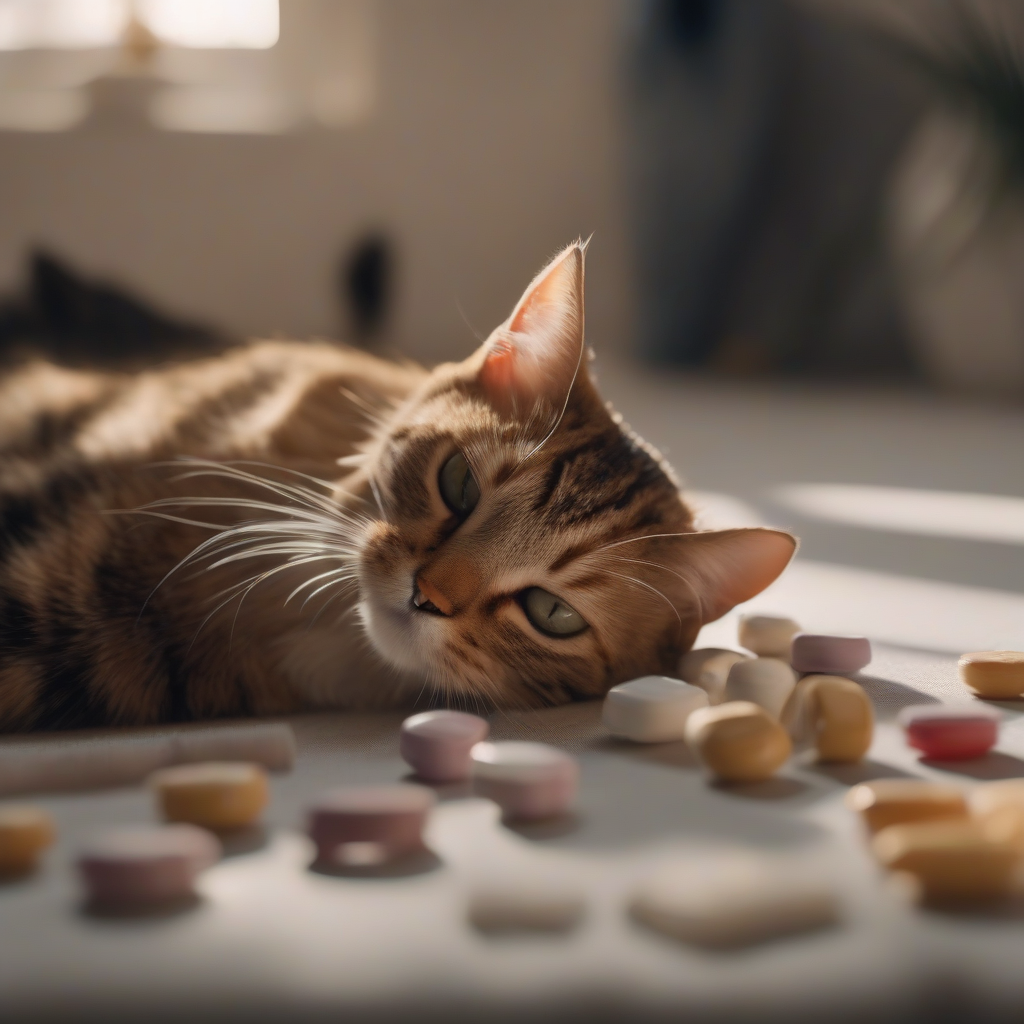
Uncover the neurocognitive mechanisms behind your cat's resistance during medication administration or veterinary care, and learn 5 scientifically proven training secrets to overcome this 'disobedience'. This in-depth guide will help you understand stress factors and strengthen the bond of trust with your cat using scientific methods.


Discover the neurobiological signals of hidden stress your newly adopted cat experiences during adaptation to a new social environment. This article reveals 5 insidious signs of your cat's silent struggle and scientific strategies for peaceful, long-term harmony.

Your dog's anal sacs, located beneath the tail, can be hidden alarm bells often overlooked but profoundly affecting their quality of life. In this article, you will discover the 5 insidious neurobiological effects of anal sac problems on the brain and the lifesaving care secrets you need to know for your furry friend to live a peaceful life.

In this article, you will find comprehensive information on the insidious neurotoxic effects of heavy metal poisoning in aquarium fish, its symptoms, and lifesaving emergency intervention codes. This condition, which can arise from household water sources, improper equipment, or neglect, can severely threaten your fish's quality of life and lifespan.
Administering medication or performing other veterinary interventions, though sometimes essential for your cat's quality of life, can turn into a real nightmare for many cat owners. Your cat's 'disobedience' in swallowing even a tiny pill, often perceived as a power struggle, is in fact a complex reaction rooted in deep neurocognitive mechanisms. In this article, we will scientifically examine why cats are so resistant to external control and share 5 effective neurocognitive training secrets to break this 'resistance.' Our goal is to enhance your cat's well-being and make this process less stressful for you.
Cats, despite being domesticated, possess strong instincts inherited from their predatory ancestors. Loss of control, unexpected touches, and forceful interventions trigger alarm bells in a cat's nervous system. This situation is not merely stubbornness but a part of a survival mechanism.
The amygdala in your cat's brain is one of the main centers responsible for fear and anxiety. A past traumatic experience with medication administration can create a lasting fear memory in this region. When this memory is triggered, the cat may react with a rapid and intense fight-or-flight response when subjected to a similar situation. This response stems from the cat's survival instincts and should not be interpreted as 'disobedience.' Therefore, avoiding negative experiences and creating positive associations is vital. For more in-depth information on this topic, you can refer to our article, Your Cat's Secret Brain Food: 5 Unknown Effects of Omega Fatty Acids on Brain Health and Behavior!.
Cats are autonomous beings who love to have complete control over their living space. Their prefrontal cortex is associated with decision-making and the ability to control their environment. A forced intervention threatens this sense of autonomy, leading to a profound stress reaction. This resistance is a natural feline response, and the foundation of training lies in restoring this sense of autonomy. To understand the neurological secrets behind feline learning processes, you can read our article, Your Cat's 'Secret Play Strategists': 5 Unsolved Neurological Secrets of Training and Behavioral Nuances.
Cats perceive the world through scents and touches. The bitter taste of medication, an unfamiliar smell, or a stressful way of handling can create a negative 'scent/touch map' in the cat's brain. This map serves as an alarm for similar situations in the future, strengthening the cat's avoidance behavior. Therefore, the scent of products used during intervention and the gentleness of the touch are of great importance. Properly understanding your cat's body language is crucial for catching such misinterpreted signals. For more information, see our article Your Cat's 'Invisible Communication Labyrinth': 5 Insidious Signs of Body Language and Scientific Ways to Resolve Misunderstandings!.
Breaking your cat's 'obedience resistance' requires scientific approaches that reprogram the cat's brain, rather than resorting to force. By implementing these secrets, you can build a more harmonious care routine with your cat.
One of the most effective ways to reduce your cat's fear response is to break down the challenging action into very small, manageable steps and use positive reinforcement (rewards) at each step. For example, start by showing the medication box, then open the box, then show the pill. Reward your cat when it remains calm at each step. This 'desensitization' process gradually eliminates the trigger in the cat's amygdala and creates positive associations. This also aligns with the behavioral modeling principles discussed in the article Your Cat's Secret 'Intent Hunter' Ability: The Deep Science of Behavioral Modeling and 5 Critical Steps to Reset Undesirable Habits!.
Cats love control. You can reduce their stress by offering them the illusion of choice. For instance, show the medication box or syringe and give the cat time to approach it. Reward them when they approach voluntarily. If the medication can be hidden in food, you can offer two different food bowls (one with medication, one normal) to give them a choice. This activates the cat's prefrontal cortex, restoring their sense of control and reducing anxiety.
Manipulating scent signals in your cat's environment can significantly impact their stress levels. Synthetic feline pheromone sprays (e.g., Feliway) release scents that make your cat feel secure. Additionally, before administering medication or care, rubbing your hands or the area to be intervened with a blanket your cat loves or their own scent reduces the effect of unfamiliar and threatening odors. This helps the cat's olfactory centers in the brain form secure connections instead of negative associations.
Transforming the medication process into a game can reduce resistance by distracting the cat and activating positive emotions. For example, let them chase a treat toy where you've hidden the medication, or place the medication inside a puzzle toy that offers a mental challenge for the cat. This triggers dopamine release, helping the cat perceive the experience as more enjoyable and less threatening. This principle is, in fact, an extension of the cooperative care steps mentioned in the article Your Cat's 'Fearless Examination Protocol': 5 Scientific Cooperative Care Steps for Stress-Free Vet Visits!.
Cats thrive on routine and predictability. Administering medication at the same time, in the same place, and with the same ritual each day (e.g., play first, then medication, then reward) helps build positive neuronal connections in the cat's brain. This consistency reduces anxiety caused by uncertainty and increases the cat's sense of control by allowing them to predict the next step. This enables your cat to remain calm and adapt to the process more easily.
Your cat's medication nightmare can end with the right neurocognitive approaches. Instead of using force, patience, positive reinforcement, desensitization, and understanding your cat's instinctive needs are the keys to breaking this resistance. By applying these 5 scientific secrets, you will deepen the trust between you and your cat, making their health care processes more peaceful for both of you. Remember, your cat's behaviors are a form of communication; understanding this language and responding appropriately is the foundation of a healthy and happy coexistence.
