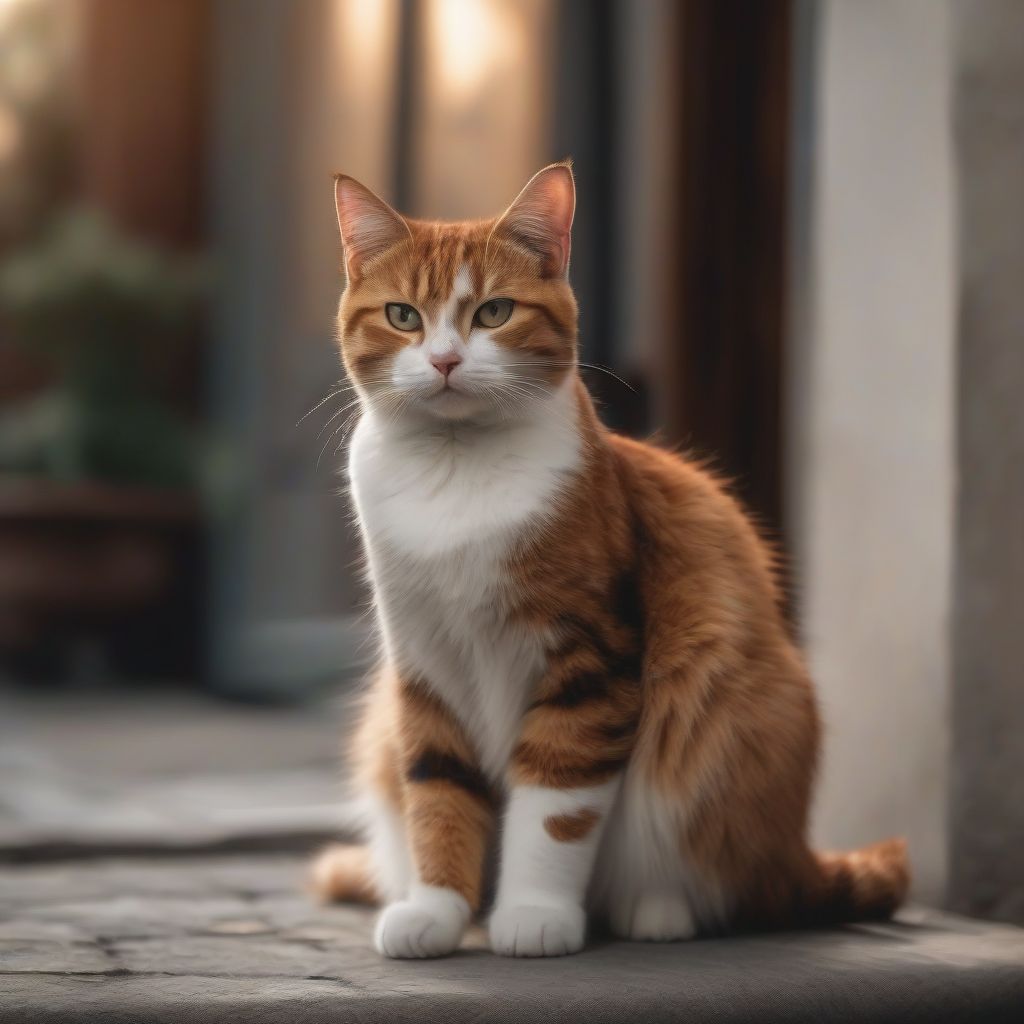
In this article, you will discover your cat's secret 'intent hunter' ability and the deep science of behavioral modeling, learning 5 critical steps to reset undesirable habits.


In this article, we will deeply explore the insidious neurobiological effects of gut microbiome imbalance (dysbiosis) on your rabbit's brain health and provide scientific-based solutions to maintain mental vitality.

In this article, you can find comprehensive information on how pancreatitis in dogs not only affects the digestive system but also insidiously impacts the brain, its neuroinflammatory mechanisms, and lifesaving emergency intervention strategies.

Discover the 5 insidious effects of overfeeding, one of the most stealthy threats to your fish's health, causing neurometabolic destruction in their brains, and learn scientific feeding strategies to prevent this demise. Uncover the silent danger in your aquarium!
While cats are often perceived as independent and hard to understand, they actually possess incredibly complex learning abilities. Understanding their world is possible not only with love and patience but also by utilizing scientific principles. Specifically, this form of learning, known as 'behavioral modeling,' provides us with crucial insights into how your cat perceives and reacts to the world around them. So, what is this secret 'intent hunter' ability of your cat, and how can we use this knowledge to correct their undesirable habits?
Behavioral modeling, in simple terms, is the process of imitating or adopting a behavior after an observation. Just as children learn new skills by watching each other, cats can learn a range of behavioral patterns by observing each other or humans. A cat's 'intent hunter' nature signifies its superior ability to understand not just actions, but also the 'intent' behind those actions. For instance, when you swing a toy mouse in a particular way, a cat can intuitively understand that this movement is a hunting simulation and that a 'reward' (play) will follow.
This ability plays a critical role in your cat's social interactions, its mechanisms for avoiding danger, and even in acquiring new skills. When your cat imitates a behavior, it's not just an external action but is based on its understanding of the action's purpose or outcome. This transforms them from passive observers into active learners.
Undesirable behaviors displayed by cats (such as scratching, aggressive play, or urinating outside the litter box) often have scientifically explainable reasons. These include:
Their behavioral modeling capabilities help us understand the root of these problems and devise solutions.
Modifying your cat's undesirable behaviors requires patience, consistency, and science-based approaches. Here are 5 critical steps to guide you:
Your cat imitates you. If you unconsciously exhibit a behavior (e.g., constantly pushing your cat away to prevent it from playing), you are providing it with a learning opportunity. To eliminate an undesirable behavior, first, review your own actions. To be a positive role model for your cat:
Cats tend to remember positive outcomes. When you model desired behaviors or when your cat exhibits a behavior you want it to perform, reward it. These rewards can include:
This strategy positively affects your cat's brain chemistry, increasing the likelihood of repeating the desired behavior in the future.
The reason your cat exhibits an undesirable behavior might be an environmental stressor or an unmet need. Using behavioral modeling, you can remove the 'invisible barriers' in your cat's environment:
Consistency is at the core of behavioral modeling. Whatever you want your cat to learn, repeat and reinforce that behavior consistently. Different approaches at different times or by different people can confuse your cat and hinder the learning process.
If you want your cat to learn a specific behavior, you can directly guide it. This can be combined with positive reinforcement techniques like 'clicker' training. While waiting for your cat to perform a behavior, you can use a lure to help it achieve that behavior (e.g., pointing to a spot with a laser pointer). Immediately reward it when it performs the behavior.
This method speeds up your cat's learning process and gives it a sense of 'accomplishment.' For example, if you want to teach it to fetch a specific toy, you can first encourage it to show interest in the toy, and then reward it when it retrieves it. This also forms the basis for cooperative care, as discussed in articles like Your Cat's 'Fearless Exam Protocol': 5 Scientific Cooperative Care Steps for Stress-Free Vet Visits!.
Your cat's secret 'intent hunter' ability allows us to form a deeper bond with them and better understand their behavior. By utilizing the scientific principles of behavioral modeling, you can correct your cat's undesirable habits and live a more harmonious life with them. Remember, every cat is an individual, and a patient, consistent, and loving approach will help you resolve even the most complex behavioral issues.
