In this article, you will discover scientific-based training strategies to understand and break your cat's resistance to handling, making vet visits and daily grooming routines easier.


Discover the neurobiological signals of hidden stress your newly adopted cat experiences during adaptation to a new social environment. This article reveals 5 insidious signs of your cat's silent struggle and scientific strategies for peaceful, long-term harmony.

Your dog's anal sacs, located beneath the tail, can be hidden alarm bells often overlooked but profoundly affecting their quality of life. In this article, you will discover the 5 insidious neurobiological effects of anal sac problems on the brain and the lifesaving care secrets you need to know for your furry friend to live a peaceful life.

In this article, you will find comprehensive information on the insidious neurotoxic effects of heavy metal poisoning in aquarium fish, its symptoms, and lifesaving emergency intervention codes. This condition, which can arise from household water sources, improper equipment, or neglect, can severely threaten your fish's quality of life and lifespan.
Cats are known for their independence and unique personalities. However, sometimes this independence can turn into intense resistance against their owners' attempts to cuddle, brush, or most importantly, handle them during vet examinations. This situation can be stressful for your cat and challenging for you. As of March 2026, advancements in veterinary medicine offer new scientific-based approaches to break your cat's resistance to handling and improve their quality of life. This guide provides an in-depth roadmap to increase your cat's handling tolerance and de-stress vet visits and daily grooming routines.
A cat's resistance to handling often stems from deep-seated instinctual or learned behaviors rather than malice. Understanding this resistance is the first step towards developing effective training strategies.
Many cats may develop fear or reluctance towards handling due to negative past experiences (rough handling, forced medication, painful veterinary procedures). These traumatic memories can trigger their defense mechanisms, causing them to perceive every handling attempt as a potential threat. This is more common in rescued cats, and the article The 'Social Victim' Syndrome in Cat Training: Why Some Cats Struggle to Bond With You? (2026 Expert Guide) offers more in-depth information on this topic.
Cats, being natural predators, are also vulnerable prey. The sense of control is a vital part of their survival instincts. Being forcibly held or having their movement restricted can create a feeling of loss of control in cats, leading to panic or aggression. This also reflects their fondness for their own territory, further explored in the article Your Cat's 'Secret Territorial Code': Unnoticed Scent Signature Zones and Stress-Breaking Strategies at Home.
Failing to correctly interpret a cat's signs of stress or discomfort can exacerbate the situation. Subtle cues like tail twitching, flattened ears, or dilated pupils are often overlooked. These signals can indicate that your cat is about to react with more severe behaviors such as biting or scratching.
Sometimes, resistance to handling can stem from an underlying health issue. Cats are masters at hiding their pain. If your cat suddenly starts reacting to touch, it could be a sign of a hidden ailment such as Hidden Joint Pain and Arthritis in Cats: Silent Symptoms of Pain and Care Secrets to Improve Quality of Life at Home (March 2026) or Overlooked Internal Injuries in Cats: Lifesaving First Aid for High Falls and Hidden Shock Symptoms. A veterinary check-up is critical to rule out any physical causes.
Breaking your cat's handling resistance is not just a technical training matter but also a process that strengthens the trust and bond between you and your cat.
Patience is key to this process. Never force your cat. Start with small steps and ensure your cat is comfortable at each stage. Training sessions should be kept short (1-2 minutes) and conducted when your cat is relaxed.
When your cat responds positively to touch (stays calm, shows no reaction), reward them immediately. Their favorite treats, play, or praise are the most effective ways to build a positive association. This technique is explained in detail in the article Breaking Your Cat's 'Stubborn' Behavior: Scientific-Based Positive Reinforcement and Emotional Intelligence Training Secrets.
Conduct training sessions in a calm environment where your cat feels safe. Sudden noises or movements can increase your cat's stress levels. A secure environment helps your cat relax and be open to new experiences.
Here are some practical strategies you can implement to increase your cat's handling tolerance:
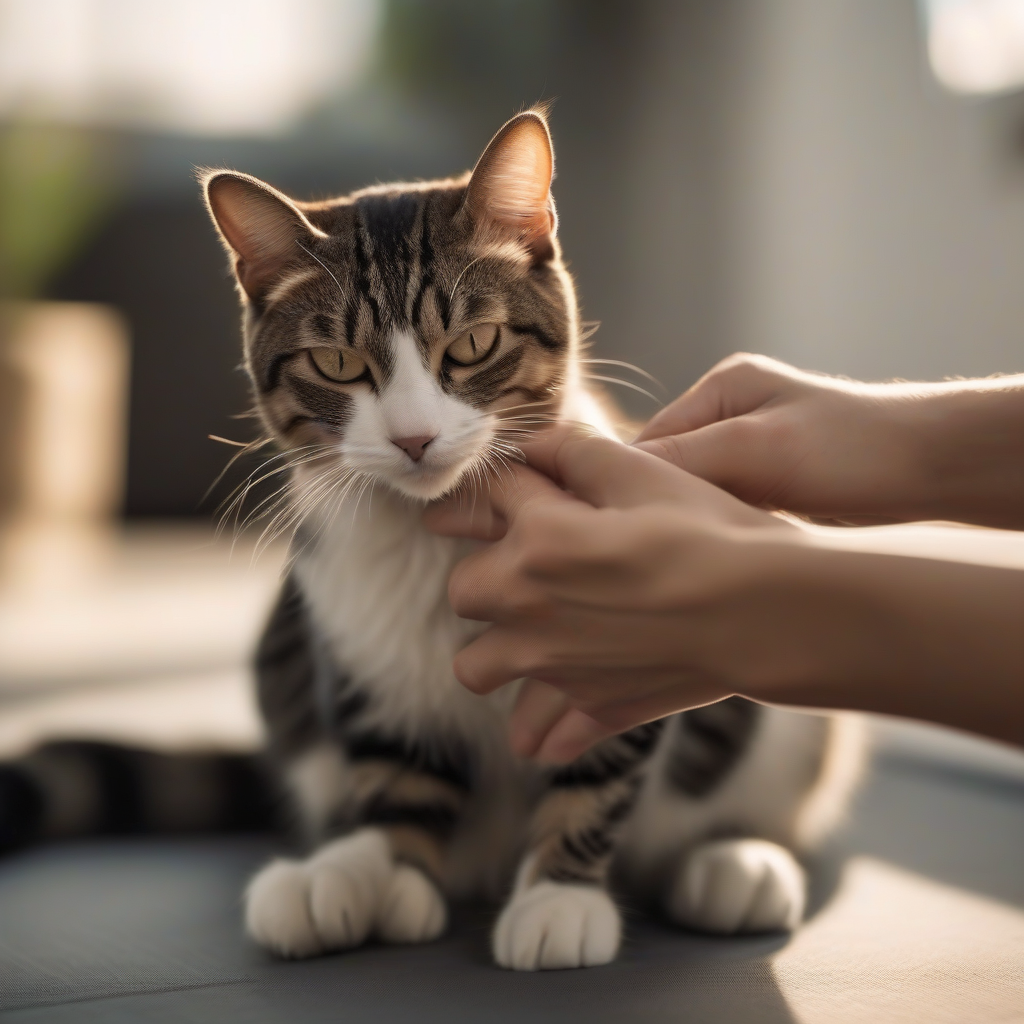
Begin with areas where your cat is least sensitive to touch (under the chin, cheeks, head). Stroke gently and softly. If your cat shows signs of discomfort, stop immediately. The goal is for your cat to see your hand not as a threat, but as a source of gentle caress.
Once your cat is accustomed to being touched in a specific area, gradually increase the duration and gently the intensity of the touch. For example, if you initially stroke for 2 seconds, slowly extend it to 5-10 seconds. Then, gradually move towards paws, abdomen, or tail. Always observe your cat's reactions.
During training, use your cat's favorite toys or treats to distract them. By associating the act of touching with a positive activity (play, food), you help your cat form a positive connection in their mind.
Acclimating to a cat carrier and towel (for wrapping/calming purposes) is vital for vet visits. Leave the carrier open at home, placing a comfortable bed and toys inside. Ensure your cat sees the carrier as a safe haven. To get them used to a towel, gently wrap them in it for a short period during play or petting, and immediately reward them.
In some situations, more advanced techniques may be required.
Clicker training is a powerful tool to encourage desired behaviors in your cat. You can teach your cat specific behaviors such as extending their paw or allowing their ears to be touched by marking and rewarding them with a clicker. Although this technique is explained specifically for hamsters in the article Your Hamster's Hidden Potential: Advanced Bonding and Intelligence Development with Clicker Training Secrets, its principles are applicable to cats as well.
Make vet visits a routine. Go not only when your cat is sick but also for regular check-ups. Visiting the vet clinic only for positive experiences reduces your cat's negative perception of this environment. Create a positive experience by using treats and play in the clinic setting. Some vet clinics even offer 'happy visits' where cats can simply stay in their carrier for a short time, receive a reward, and return home.
Care routines such as nail trimming and brushing are excellent ways to increase your cat's handling tolerance. Keep each session short, continue as long as your cat is comfortable, and always reward them at the end. Initially, you might just trim one nail and reward, then increase the number in subsequent sessions.
If, despite all your efforts, your cat's resistance to handling persists or they exhibit aggressive behavior, it is crucial to seek help from a veterinary behavior specialist. Experts can diagnose the underlying causes of your cat's behavior and create a customized training plan for you. Remember that some behaviors may indicate deep-rooted problems that require a professional approach.
Increasing your cat's tolerance to handling is a process that requires patience, understanding, and the right techniques. This is critical for both your cat's health and well-being, and it will further strengthen the bond between you. In collaboration with your veterinarian and a specialized behavior therapist, you can provide a more peaceful and comfortable life for your furry friend.
