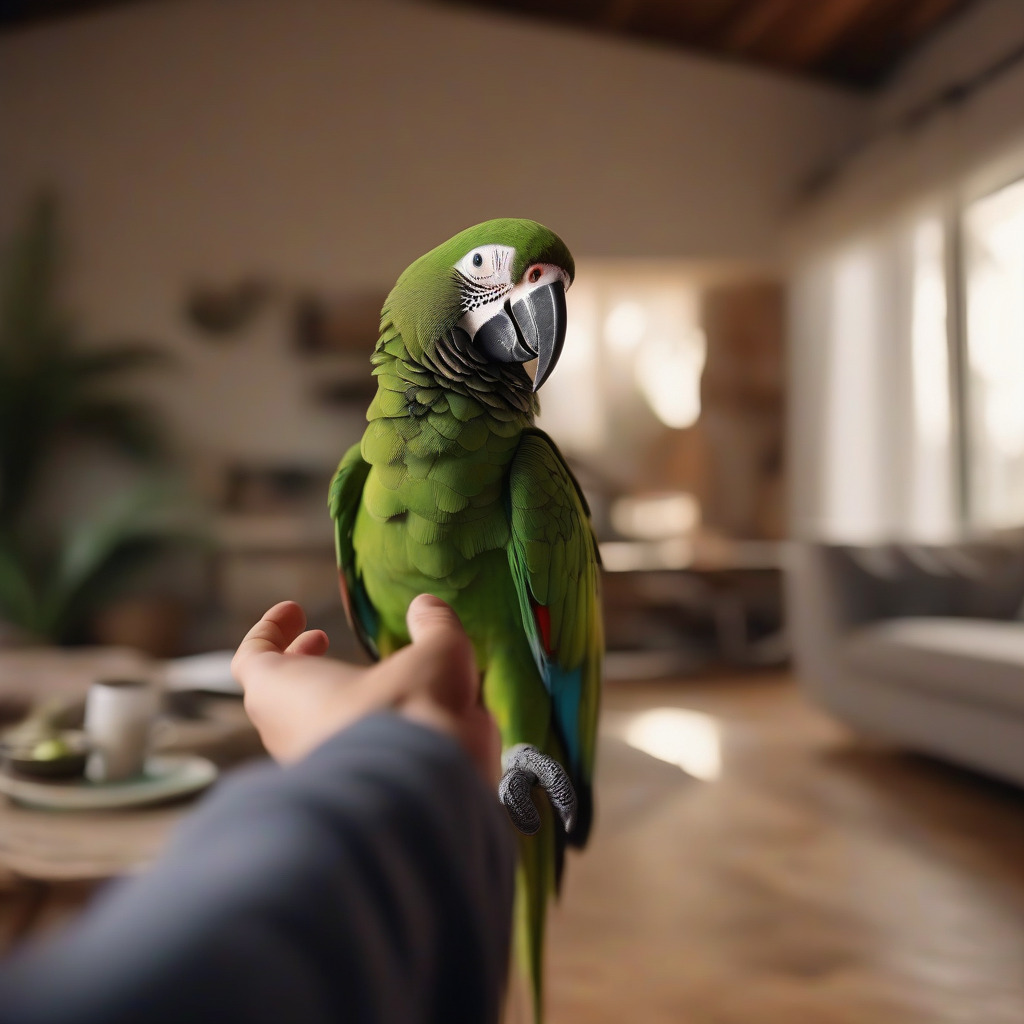
In this article, you will discover the neurocognitive dynamics of your bird's first contact after adoption and 5 scientific strategies to build a lasting bond of trust with it. How do initial interactions lay the foundation for your bird's relationship with you?

In this article, you will find comprehensive information about the insidious neurobiological effects of artificial colorings, preservatives, and flavors found in commercial bird feeds on your bird's brain health and mental vitality. We explore scientific nutritional secrets to combat these hidden dangers, shedding light on a wide spectrum of effects from behavioral changes to cognitive decline.

In this article, you can discover the scientific secrets to understanding your cat's undesirable habits, deciphering the neurocognitive mechanisms in their brain, and establishing lasting new routines.

Discover the types of burns your dog can suffer, the 5 insidious neurophysiological effects these burns create in the brain and body, and lifesaving emergency intervention strategies in this comprehensive guide. We shed light on the dangers behind forgotten household accidents from a scientific perspective.
Adopting a bird marks the beginning of a new adventure, but it also entails a delicate neurocognitive adaptation process. For your new bird, the initial moments of contact lay the groundwork for future trust and successful socialization. These 'first impressions' leave deep imprints on your bird's brain, shaping the dynamics of its relationship with you. Beyond general adaptation processes, the neurobiological reflections of the first touch, the first glance, and the first interactions can determine how quickly and deeply your bird bonds with you.
Providing for your pet's mental and emotional well-being, not just its physical needs, is part of responsible pet ownership. Especially for creatures like birds, who are naturally vigilant, building trust requires time and correct strategies. In this article, we will uncover the neurocognitive secrets behind first contact after adoption and detail 5 scientifically proven strategies to forge a lasting bond with your bird.
Birds are extremely sensitive to their environment due to their predator-prey dynamics. When they enter a new environment or encounter a new being, their brains rapidly perform a threat assessment. This initial evaluation is processed in areas like the amygdala in the limbic system and can trigger the release of stress hormones (like cortisol). Therefore, managing first contact in a way that minimizes stress and maximizes trust plays a vital role in your bird's overall adaptation process.
Research suggests that birds also possess mirror neuron-like systems. These neurons activate when they observe someone else's actions or perform the same actions themselves. Your calm, controlled, and non-threatening behavior can create a 'safe' reflection in your bird's brain. Eye contact, hand movements, and your general body language are meticulously scanned by your bird, and these observations form its initial 'data set' about you. The patience and understanding you show in the first moments help your bird code you as a safe resource rather than a potential threat. This coding is a fundamental step for your bird's neurobiological secrets of new home adaptation.
A new environment, new sounds, and smells are high-stress factors for a bird. Sudden and aggressive approaches during first contact rapidly increase your bird's cortisol levels. High cortisol weakens the immune system, leads to behavioral problems, and can cause long-term health issues, combined with the neurobiological effects of the cage environment. Therefore, allowing your bird to be by itself for the first few days, providing a quiet environment, and minimizing interaction to let it naturally reduce its stress is critically important. Observing from a distance is the best way to understand your bird's behavior and shapes the initial 'trust reflections'.
Building a lasting and healthy bond with your bird requires a systematic and conscious approach. Here are scientific strategies you can implement after initial contact:
In the first few days, place your bird's cage in the calmest corner of your home, away from direct human traffic. Cover the top and three sides of the cage to give it a sense of a 'safe haven'. This helps your bird feel secure and allows it to cope more easily with the neurobiological effect of environmental changes. Give it the opportunity to observe at its own pace and explore the new environment. Avoid forcing anything or making sudden movements. During this time, allow your bird to get acquainted with you and the home environment from a distance.
Birds love routines. Create a predictable routine by approaching the cage at specific times, speaking to it in a soft tone, and slowly changing its food or water dishes. These rituals help your bird code you as a 'safe and predictable' presence. By avoiding sudden movements and loud noises, you create a positive expectation with each interaction. This reduces the perception of threat in your bird's brain and keeps cortisol levels balanced.
Birds are extremely sensitive to subtle changes in your tone of voice and body language. High-pitched or sudden sounds are often perceived as predator signals, while a soft, low, and calm tone is reassuring. Position yourself in a sitting posture or lower than the cage to appear less threatening. When making eye contact, blink slowly; this is a sign of relaxation and trust in bird language. Such behaviors enable your bird to take the first steps towards the neurocognitive secrets to deep bonding with humans.
Reward every positive response your bird exhibits towards you (staying calm, making eye contact, a slight movement). This can be more than just giving a treat; it can also be praising it in a calm voice. This positive reinforcement triggers dopamine release in your bird's brain, associating you with 'pleasure and reward'. These small interactions, initiated from a distance, will gradually grow closer, forming the foundation of great trust. For instance, even calmly reading a book near its cage can be a positive experience for it.
When interacting with your bird, always allow it an 'escape route' or the possibility to retreat. Never force contact or corner it. When putting your hand inside the cage, do so slowly and visibly to your bird. Understand and respect your bird's retreat signals (moving back, fluffing feathers, hissing). Giving it a sense of control reduces its stress and allows it to trust you more in the long run. Remember, trust is built on mutual respect and understanding.
Understanding the neurocognitive nuances of first contact after adoption and implementing these strategies will lay the groundwork for a strong, loving, and lasting bond between you and your bird. With patience, observation, and scientifically based approaches, you can ensure your pet is not just a cage inhabitant but a cherished member of your family.
