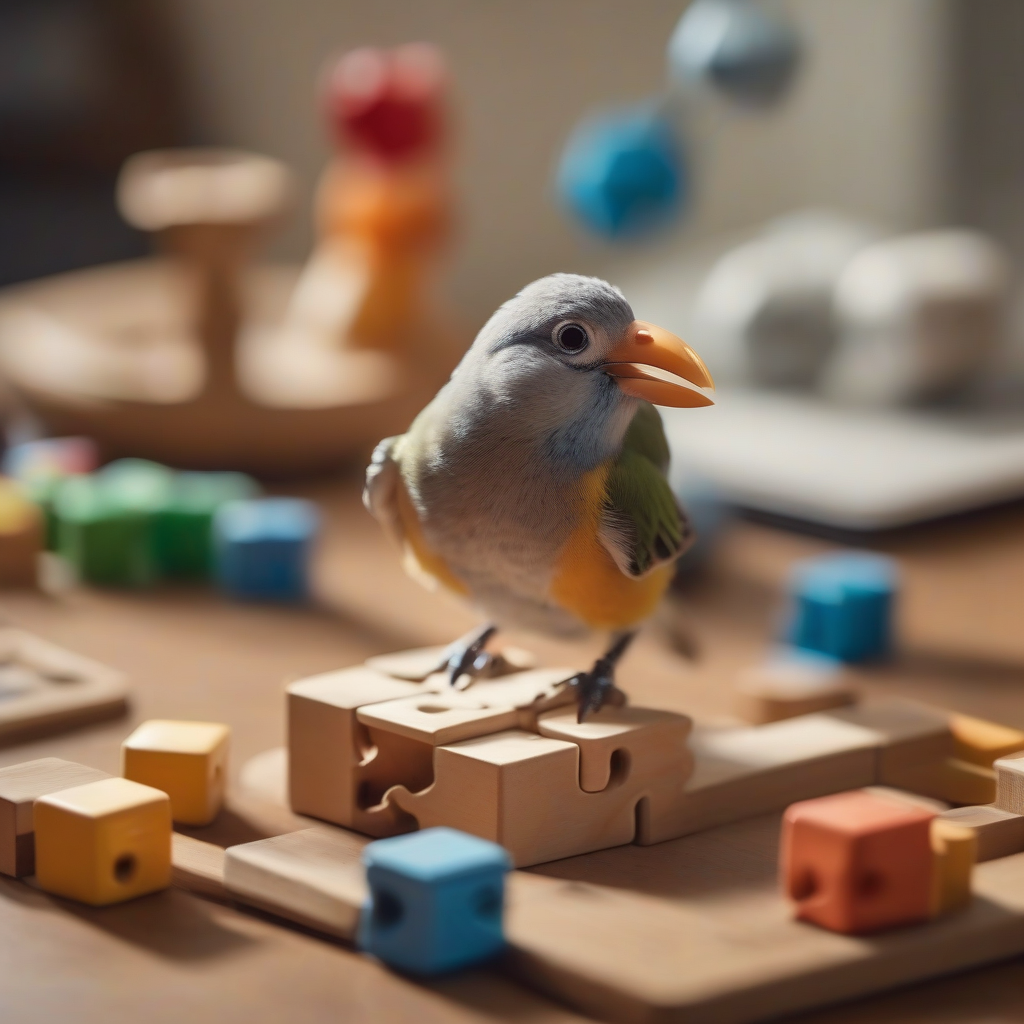
In this article, you will learn 5 effective strategies to unlock your bird's secret intelligence doors and scientifically enhance its problem-solving abilities.


In this article, we will deeply explore the insidious neurobiological effects of gut microbiome imbalance (dysbiosis) on your rabbit's brain health and provide scientific-based solutions to maintain mental vitality.

In this article, you can find comprehensive information on how pancreatitis in dogs not only affects the digestive system but also insidiously impacts the brain, its neuroinflammatory mechanisms, and lifesaving emergency intervention strategies.

Discover the 5 insidious effects of overfeeding, one of the most stealthy threats to your fish's health, causing neurometabolic destruction in their brains, and learn scientific feeding strategies to prevent this demise. Uncover the silent danger in your aquarium!
Birds, with their enchanting songs and vibrant plumage, captivate us with their astonishing cognitive abilities. However, these abilities often remain underutilized without owner awareness and the right training techniques. In this article, we will delve into how you can unlock the 'secret intelligence doors' of your beloved feathered friend and scientifically enhance their problem-solving skills using evidence-based methods.
A bird's problem-solving ability is directly linked to its cognitive flexibility. This refers to its capacity to try different approaches when faced with a situation, learn from past experiences, and devise new solutions. Much like hamsters discussed in the Your Hamster's Secret 'Toy Engineering': 5 Scientific Ways to Develop Problem-Solving Skills! article, birds require mental stimulation with the right cues.
One of the most effective methods for developing problem-solving skills in birds is based on the principle of 'reward-based learning.' In this approach, when a bird exhibits the desired behavior (e.g., solving a puzzle or overcoming an obstacle), it receives positive reinforcement (treats, praise, or affectionate words). This increases the likelihood of the behavior being repeated.
You can create 'problem-solving stations' for your bird with varying difficulty levels. These can include different types of toys with hidden treats, manipulable mechanisms, or simple puzzles. It's important to start with easier ones and gradually increase the difficulty as your bird progresses. This will also positively impact your bird's learning speed, as mentioned in the Your Bird's Invisible Learning Speed: 5 Scientific Secrets Triggering Unexpected Intelligence Moves! article.
Manipulative toys that cater to a bird's natural curiosity and enhance their problem-solving skills are an indispensable part of the training process. These toys require the bird to exert physical and mental effort to achieve a goal.
As a simple example, a container can be designed with a small amount of food inside, which the bird needs to push or turn with its beak to open. While initially easy to open, more complex mechanisms can be introduced over time. Such exercises will also improve your bird's patience and perseverance. Similar to the effort involved in deciphering social codes in fish in the Your Fish's 'Invisible Mind Map': Aquarium Social Codes and Stress-Triggering Unseen Factors article, birds attempt to decode toy mechanisms.
Birds are social creatures and tend to imitate each other during learning processes. If you have multiple birds, one more experienced bird learning a new skill can encourage others to do the same. For single-bird owners, the owner acting as a model or showing educational videos the bird has watched before can also be beneficial.
If your bird has a tendency to mimic certain behaviors, you can integrate this trait into problem-solving training. For instance, you can encourage your bird by playing with a toy in a specific way, allowing it to solve the problem by imitating your actions. This enhances their ability to adapt to new situations, similar to the adaptation process of dogs in the Your Dog's 'Invisible Social Codes' in Their New Home: The Science of First 7 Days of Adaptation and Trust Building! article.
Enriching a bird's living environment is critical for its mental health and problem-solving abilities. This should not be limited to toys but should also include different textures, sounds, and visual stimuli.
Occasionally changing the bird's cage location, adding new branches or plants, encourages them to explore their surroundings and find solutions to new 'problems.' However, these changes must be made cautiously. Just as rabbits in the How to Zero Out Stress with Your Rabbit's New Cage Setup? Scientific Codes Revealed! article exhibit territorial defense, birds also need time to adjust to new arrangements.
As with any training, patience and consistency are the most important elements in developing problem-solving skills in birds. Each bird's learning speed differs, and some may learn more complex tasks faster than others. This process takes time, much like the bonding process mentioned in the Your Hamster's 'Invisible Bonding Stages': Scientific Secrets to Building Trust and Deepening Your Relationship Post-Adoption! article.
Allow your bird to make mistakes. Every mistake is a learning opportunity for it. Never punish or reprimand them. Instead, show them the correct way again and encourage their successes. This approach will foster a more positive attitude towards the training process in your bird.
Developing your bird's cognitive abilities is a way to strengthen your bond with them, as well as providing them with a richer and more fulfilling life. By implementing these scientific strategies, you can unlock the 'secret intelligence doors' of your feathered companion and discover just how brilliant they are.
