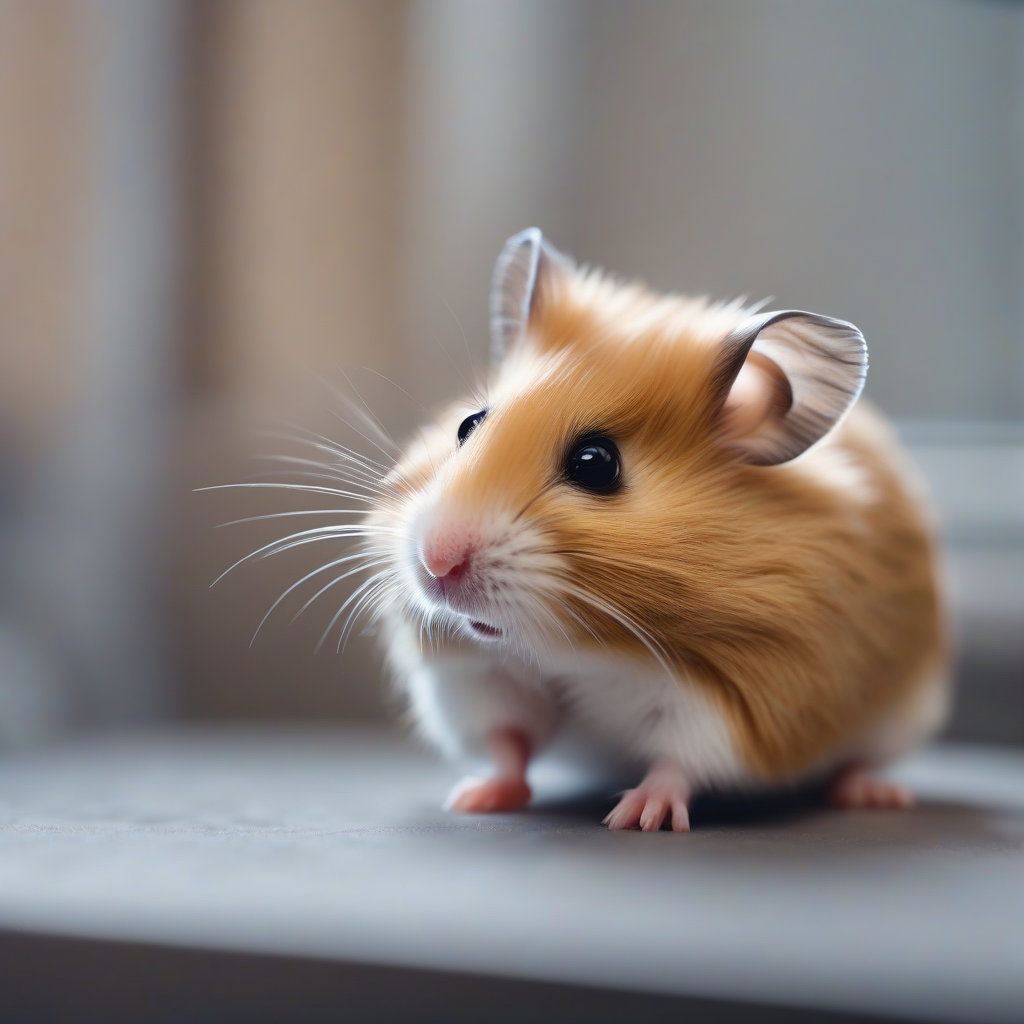
In this article, you'll find comprehensive information on innovative toy designs and training techniques to stimulate your hamster's natural problem-solving abilities.


In this article, we will deeply explore the insidious neurobiological effects of gut microbiome imbalance (dysbiosis) on your rabbit's brain health and provide scientific-based solutions to maintain mental vitality.

In this article, you can find comprehensive information on how pancreatitis in dogs not only affects the digestive system but also insidiously impacts the brain, its neuroinflammatory mechanisms, and lifesaving emergency intervention strategies.

Discover the 5 insidious effects of overfeeding, one of the most stealthy threats to your fish's health, causing neurometabolic destruction in their brains, and learn scientific feeding strategies to prevent this demise. Uncover the silent danger in your aquarium!
As of March 2026, pet ownership trends are increasingly focusing on deeper connections and the mental stimulation of animals. Despite their small size, hamsters possess surprisingly complex cognitive abilities. Stimulating their natural curiosity and problem-solving skills not only provides enjoyable interaction but also enhances their overall well-being. So, how can you 'engineer' toys to maximize your hamster's potential?
In the wild, hamsters employ sophisticated problem-solving strategies to find and store food, and to escape dangers. This evolutionary heritage equips them with the ability to solve complex puzzles and understand their environment. Nurturing these skills in pet hamsters is vital for both their mental and physical health. Lack of mental stimulation can lead to stress, boredom, and undesirable behaviors.
This toy taps into your hamster's natural foraging instincts. It can be constructed from cardboard tubes, toilet paper rolls, or specially designed wooden blocks. Small treats (seeds, a tiny piece of vegetable) are hidden within the tubes, requiring the hamster to explore the tunnel or solve a simple mechanism (e.g., a basic sliding door) to access the food.
This type of toy enhances the hamster's spatial memory, tactile perception, and goal-directed behavior. The effort they exert to reach the food, reinforced by the reward system, accelerates the learning process. This aligns with the principles discussed in the article Your Hamster's 'Secret Food Tunnels': 5 Scientific Ways to Develop Problem-Solving Skills!.
This training method aims to improve your hamster's ability to distinguish between different textures, scents, or colors. Small, safe containers are filled with various materials (e.g., a smooth stone, a piece of fabric, dry leaves). The hamster is asked to select the correct material based on a predetermined rule (e.g., choosing only a specific texture). Correct choices are rewarded.
This exercise stimulates cognitive functions in the cerebral cortex. It requires the hamster to concentrate, process sensory input, and make a decision. This sharpens their ability to notice subtle details in their environment.
Basic mazes, created with safe materials (e.g., cardboard dividers, wooden obstacles), help your hamster develop navigation skills and strategies for avoiding obstacles. A small treat can be placed at the end of the maze.
Mazes stimulate the hippocampus, a brain region critical for learning and memory. The hamster's process of mapping and finding the best path within the maze strengthens these cognitive abilities. This is also indirectly related to the trust-building process mentioned in Your Hamster's 'Invisible Gazes': Scientific Signals Building Trust Beyond Eye Contact and First Contact Protocols in Its New Home!, as successful interactions reinforce trust.
A more complex toy type, dynamic obstacle courses can include various elements requiring the hamster to climb, jump, and balance. Examples include platforms at different heights, small climbing walls, and wobbly bridges.
These activities enhance both the hamster's fine and gross motor skills. They also strengthen their ability to adapt to uncertainty. Encountering new challenges in a safe environment also improves their coping mechanisms for stress.
Hamsters love to explore and manipulate objects with their mouths and paws. Offering objects made from safe, chewable materials in different shapes and weights satisfies their exploratory drive and diversifies their problem-solving approaches.
These actions help the hamster understand cause-and-effect relationships. They learn by experiencing what happens when they push an object or climb onto something. This forms the foundation of their inferential thinking skills.
Investing in your hamster's cognitive development is one of the most effective ways to strengthen your bond and provide them with a fulfilling life. Remember, a smart hamster is a happy hamster!
