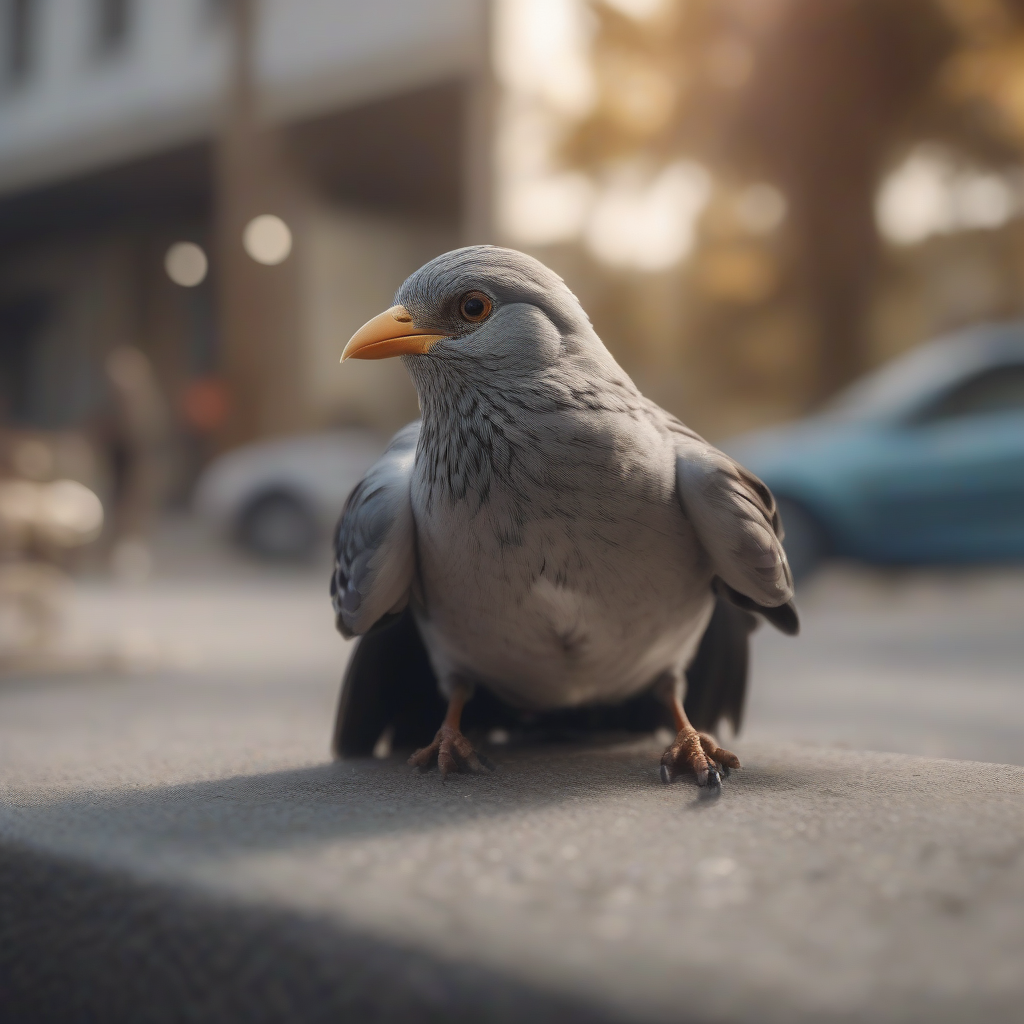
In this article, we will delve into 5 insidious neurovascular signals of 'invisible impact shock' caused by sudden collision trauma in birds and the lifesaving scientific intervention protocols. Gain critical insights for your pet bird's health.


Discover the types of burns your dog can suffer, the 5 insidious neurophysiological effects these burns create in the brain and body, and lifesaving emergency intervention strategies in this comprehensive guide. We shed light on the dangers behind forgotten household accidents from a scientific perspective.

Discover the neurobiological signals of hidden stress your newly adopted cat experiences during adaptation to a new social environment. This article reveals 5 insidious signs of your cat's silent struggle and scientific strategies for peaceful, long-term harmony.

Your dog's anal sacs, located beneath the tail, can be hidden alarm bells often overlooked but profoundly affecting their quality of life. In this article, you will discover the 5 insidious neurobiological effects of anal sac problems on the brain and the lifesaving care secrets you need to know for your furry friend to live a peaceful life.
Our pet birds are graceful, fast-moving, and surprisingly fragile creatures within our homes. While their ability to soar freely is captivating, this very skill makes them extremely vulnerable to unseen obstacles like glass windows, mirrors, or hard walls. A sudden collision can go beyond mere physical injury, often triggering a 'silent impact shock' – an insidious neurovascular response that is hard to discern from the outside. This state of shock can lead to fatal outcomes if not addressed with rapid and accurate intervention. As WikiPet, in this article, we will thoroughly examine 5 insidious neurovascular signals that may emerge after a bird collision and the lifesaving scientific intervention protocols for these critical situations.
Birds' skeletal systems have evolved to be incredibly lightweight for flight, making them remarkably delicate. Their air sacs and light bone structures render them highly susceptible to impacts. High metabolic rates and small body sizes cause them to react very quickly to conditions such as internal bleeding, cerebral edema, or shock. An impact that appears as a minor scrape externally can lead to severe internal organ damage, concussion, or spinal injury. These internal 'invisible' traumas initiate a chain of neurovascular shock that has devastating effects on blood flow, oxygenation, and neurological functions. Therefore, every bird after a collision should be treated as a potential emergency case.
After a sudden collision, even if there is no obvious external wound, paying attention to the following neurovascular signals in your bird is vitally important:
Following an impact, you may observe sudden changes in your bird's consciousness, such as lethargy, unresponsiveness, or extreme restlessness. Pupils of different sizes (anisocoria), lack of response to light, or overly dilated pupils can be serious indicators of brain trauma or increased intracranial pressure. This signifies a direct impact on the central nervous system and a disruption in neurovascular regulation. These signals can resemble the states of unconsciousness described in Your Bird's Hidden 'Anesthesia Traps': 5 Insidious Neurophysiological Signals in Sudden Loss of Consciousness and Lifesaving Scientific Interventions!.
In a bird in shock, abnormalities in respiratory rate and depth may be observed. Symptoms such as shortness of breath, rapid or shallow breathing, open-mouth breathing, or labored breathing can be indicators of oxygen deficiency or lung trauma. A sudden slowing of heart rate (bradycardia) or irregularity (arrhythmia) is a serious indicator of circulatory shock. These conditions are closely related to the acute respiratory issues discussed in Your Bird's 'Hidden Airway Traps': 5-Second Lifesaving Scientific Intervention Codes for Sudden Breathlessness! or Your Bird's 'Silent Scream': 5-Second Critical Lifesaving Interventions for Acute Respiratory Obstruction!.
Color changes in your bird's oral cavity, nostrils, or the mucosa around the cloaca, such as paleness, cyanosis (bluish discoloration), or excessive redness, can be signs of severe internal bleeding or shock. Pale mucous membranes indicate blood loss and anemia, while bluish mucous membranes indicate oxygen deprivation. This condition is directly linked to the hidden internal hemorrhages detailed in Your Bird's 'Invisible Blood Loss': 5 Insidious Neurophysiological Signals of Internal Hemorrhage and Lifesaving Scientific Intervention!.
Trauma and shock can severely affect birds' ability to regulate their body temperature. Hypothermia (a drop in body temperature) or, rarely, hyperthermia (an increase), can be an indicator of circulatory failure, metabolic collapse, or nervous system damage. Your bird ruffling its feathers, shivering, or feeling excessively hot or cold can signal this condition. As mentioned in Your Bird's Secret Thermal Map: 5 Neurobiological Secrets of Body Temperature Control and Optimal Care Strategies!, impaired thermal control requires immediate intervention.
After an impact, your bird's inability to maintain balance, unilateral weakness, difficulty holding its head up, circling, or involuntary movements are clear signs of concussion, inner ear damage, or spinal trauma. These neurological symptoms indicate damage or edema in the brain's motor coordination and balance centers and require immediate veterinary intervention.
When you notice any of the above signals in your bird, time is of critical importance. Here are scientific first aid steps you can take:
Approach your bird calmly, without panicking. Move it to a safe, dark, and quiet place. A small box or a towel-covered carrier helps calm the bird by preventing further stress and provides stabilization in case of a potential spinal injury. Prevent further injury by restricting its movement.
Check if your bird is breathing. If it's not breathing and this is due to a foreign object, you can apply the methods described in Your Bird's 'Silent Scream': 5-Second Critical Lifesaving Interventions for Acute Respiratory Obstruction!. Check the color of its mucous membranes; paleness may indicate internal bleeding or shock. If these symptoms are present, keep your bird warm while transporting it to the veterinarian.
Birds in shock can rapidly develop hypothermia. Try to warm your bird by gently wrapping it in a towel or using a heated rice sock (wrapped in a towel, not directly touching) or a heat lamp (from a distance). Be careful to avoid overheating. The goal is to keep its body temperature stable. This support helps the bird maintain its metabolic functions.
All these first aid steps are designed to increase your bird's chances of survival until it can reach a veterinary professional. They are never a substitute for professional veterinary intervention. Seek an exotic animal veterinarian as soon as possible. The veterinarian will use X-rays, ultrasound, or other advanced diagnostic methods to detect internal bleeding, fractures, or brain damage. In emergencies, the veterinarian will provide shock treatment, pain relief, and supportive care.
Remember, in a bird experiencing sudden collision trauma, time is precious. Being aware of the hidden neurovascular signals and providing rapid, science-based intervention can save your tiny friend's life. Being equipped with this knowledge will directly impact the quality and length of your beloved bird's life.
