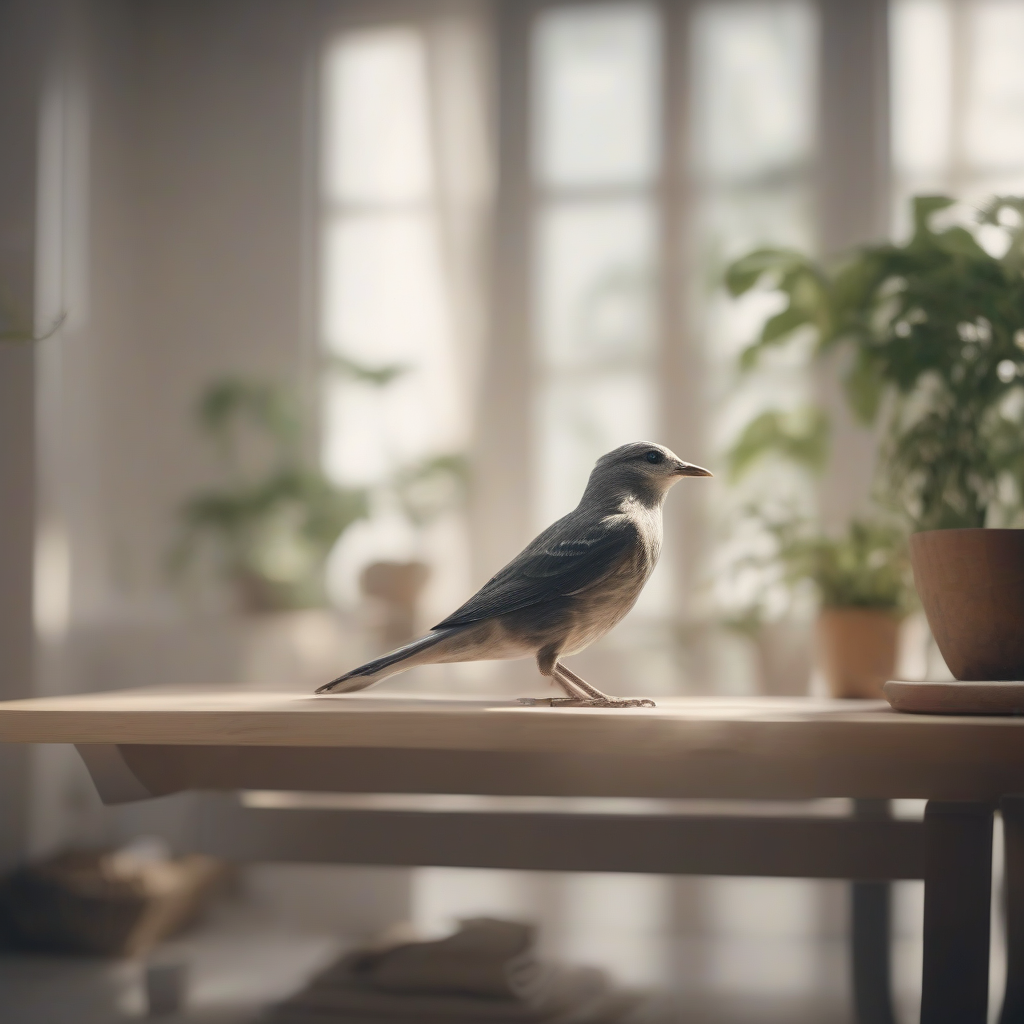
In this article, you will find comprehensive information about indoor air quality issues directly affecting your bird's quality of life, the neurobiological effects of insidious chemical threats, and scientific solutions to protect respiratory health.

While cats possess a surprising ability to adapt to high-rise fall traumas, the insidious neurophysiological effects on their brain carry vital risks. In this article, we reveal 5 critical neurobiological effects your cat may experience after a fall and the lifesaving emergency intervention codes with scientific secrets.

In this article, you will discover how your rabbit copes with unexpected situations and its neurocognitive responses to non-routine events. Learn scientific secrets to enhance mental flexibility and manage stress.
In this article, you will find comprehensive information on the insidious neurophysiological effects of seizures in cats' brains and lifesaving emergency intervention codes during a seizure.
Pet birds, with their delicate respiratory systems and high metabolic rates, are extraordinarily sensitive to the air quality in their environment. Many chemicals considered harmless to humans can lead to severe, even fatal, neurobiological and physiological consequences for our feathered friends. These 'invisible' threats circulating in your home's air profoundly impact not only your bird's lungs but also its brain and overall behavioral well-being. As of May 2026, a 'holistic habitat' approach to pet health is gaining increasing importance, and air quality is a cornerstone of this approach.
As a veterinary content strategist, it is vital to inform bird owners about these insidious dangers and offer science-backed protective strategies. Remember, a healthy respiratory system and a clear mind are key to your bird living a happy and long life.
Birds' respiratory systems are vastly different from those of mammals, making them more vulnerable to airborne toxins. In addition to their lungs, they have up to nine air sacs that ensure unidirectional airflow throughout their bodies. This unique structure evolved to meet the high oxygen demands during flight. However, it also means they efficiently absorb any harmful substances present in the air. Since air sacs occupy a large portion of their body cavities, toxins can quickly spread over a wide area, affecting multiple organs from the lungs to the brain. This sensitivity can lead to critical issues, prompting the question: Is Your Bird's 'Lung Defense' Collapsing?.
Here are some common household chemicals that pose significant risks to birds and their neurobiological effects:
VOCs are gases emitted from cleaning products, paints, varnishes, new furniture, carpets, and even some building materials. When birds inhale these compounds, they can exhibit symptoms like respiratory tract irritation, coughing, and difficulty breathing. More importantly, VOCs are known to have neurotoxic effects on the central nervous system. This can lead to lethargy, loss of coordination, balance issues, and even seizures in your bird, negatively impacting Your Bird's 'Secret Balance Algorithm'. Chronic exposure can also be linked to reduced learning abilities and behavioral changes.
While perfumes, air fresheners, scented candles, and aerosol-based products (hair sprays, deodorants) emit pleasant fragrances, the chemicals they contain can severely irritate birds' respiratory systems and nervous systems. These chemicals can trigger a stress response in birds' brains, leading to the release of stress hormones like cortisol. High stress levels can weaken your bird's immune system, lead to repetitive behaviors, and exacerbate issues like Your Bird's Invisible 'Boredom Labyrinth'. Aerosol particles, in particular, can penetrate small air sacs, causing direct damage.
Cigarette smoke contains nicotine, carbon monoxide, tar, and hundreds of other toxic compounds. For birds, secondhand smoke is far more dangerous than for humans. Carbon monoxide reduces the blood's oxygen-carrying capacity, decreasing the amount of oxygen reaching the brain, and potentially causing neuronal cell damage. Other chemicals like nicotine can directly trigger neuroinflammation, leading to impaired cognitive functions (learning, memory) and behavioral abnormalities in your bird. Long-term exposure increases the risk of chronic respiratory diseases and even tumors.
Mold, thriving in damp and poorly ventilated environments, releases microscopic spores and mycotoxins into the air. When inhaled, these spores can cause allergic reactions, respiratory infections, and pneumonia-like conditions in birds. Mycotoxins not only weaken the body's immune system but also have direct neurotoxic effects. These toxins can cross the bird's brain barrier, disrupting inter-neuronal communication, leading to behavioral changes, lethargy, and coordination problems. Mold triggers environmental stress factors, such as those that can cause Is Your Bird's 'Secret Stress Filter' Crashing?, negatively impacting overall well-being.
The toxic fumes released from overheated PTFE (Polytetrafluorofluoroethylene) coated non-stick pans are one of the most dangerous indoor threats known to birds. These fumes cause acute damage to the bird's respiratory system, rapidly leading to pulmonary edema and hemorrhage. Neurobiologically, these toxins have a direct and severe impact on the central nervous system, causing the bird to quickly lose consciousness and potentially die within minutes. Symptoms typically include sudden respiratory distress, wobbling, lethargy, and falling. This represents a critical form of poisoning requiring immediate and life-saving intervention.
Taking proactive steps to improve air quality in your bird's living space and protect it from invisible threats is vital:
Ensure natural ventilation by regularly opening windows for better airflow. Using a high-quality air purifier with a HEPA filter in the room where your bird's cage is located can effectively remove airborne particles, VOCs, and allergens. However, when choosing an air purifier, absolutely avoid models that emit ozone.
Avoid using chemical-based cleaning products, air fresheners, scented candles, and aerosol sprays in rooms where your bird is present or throughout the house. Instead, opt for natural, bird-safe, and unscented cleaning products. Consider fragrance-free options for your personal care products as well.
Absolutely do not smoke cigarettes, cigars, or e-cigarettes in your bird's environment or inside the house. Also, ensure that fireplace, wood stove, or barbecue smoke does not reach your bird's living area. Your Bird's Hidden 'Windpipe Gates' should always be open for a clean breath.
Maintain optimal humidity levels in your home (typically between 40-60%). High humidity encourages mold growth. Ventilate damp areas like bathrooms and kitchens well, and regularly check for and clean any mold growth.
In the kitchen, use stainless steel, cast iron, or ceramic-coated products instead of non-stick (Teflon, etc., containing PTFE) pans and ovenware. If you have existing Teflon products, minimize risks by keeping your bird away from the kitchen and ensuring the kitchen is well-ventilated.
Have your bird's general health, especially its respiratory system, regularly checked by a veterinarian. Early diagnosis is crucial for treating potential air quality-related issues. Your veterinarian can also guide you on Is Your Bird's 'Secret Stress Filter' Crashing?, considering the neurobiological effects of the cage environment.
Remember, your bird's health is directly linked not only to proper nutrition and adequate enrichment but also to the air it breathes. By keeping your home's air clean, you make an invaluable investment in both your feathered friend's physical and mental well-being.
