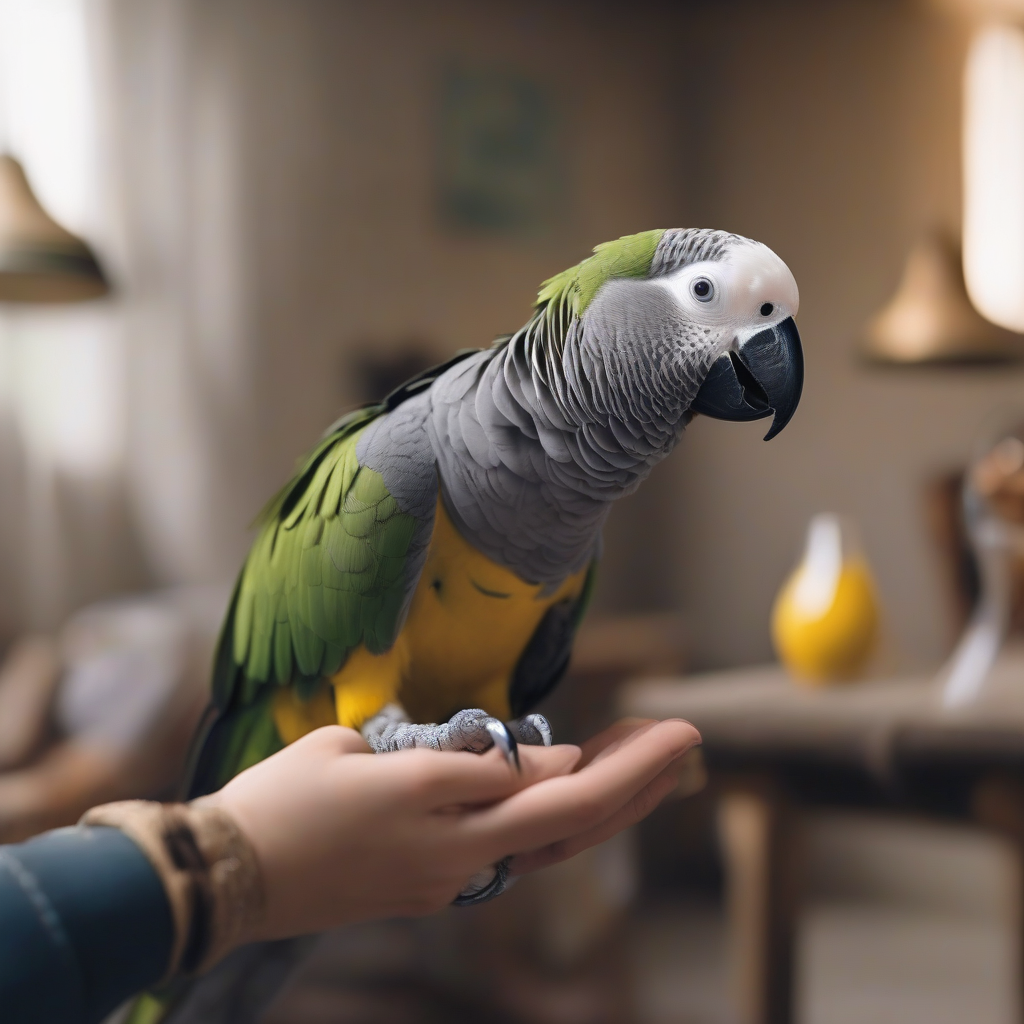
In this article, you will delve into the 'hidden resistance codes' encountered during your bird's training process, understand the neurobiological foundations of their behaviors, and discover how to scientifically rekindle their motivation. Practical and scientific strategies are provided to overcome stalled training processes and build a stronger bond with your bird.


In this article, we will deeply explore the insidious neurobiological effects of gut microbiome imbalance (dysbiosis) on your rabbit's brain health and provide scientific-based solutions to maintain mental vitality.

In this article, you can find comprehensive information on how pancreatitis in dogs not only affects the digestive system but also insidiously impacts the brain, its neuroinflammatory mechanisms, and lifesaving emergency intervention strategies.

Discover the 5 insidious effects of overfeeding, one of the most stealthy threats to your fish's health, causing neurometabolic destruction in their brains, and learn scientific feeding strategies to prevent this demise. Uncover the silent danger in your aquarium!
The intelligence and learning capacity of our pet birds are fascinating. However, many bird owners occasionally hit a wall of unexpected 'resistance' or 'disinterest' during training. This situation is more than just a matter of impatience or incorrect technique; it's deeply connected to the biological and psychological codes within your bird's brain. As of March 2026, bird behavior science offers groundbreaking insights to decode these "hidden resistance codes" and unlock every bird's potential.
Training isn't merely about teaching commands; it's about understanding your bird's world, empathizing with them, and most importantly, discovering their intrinsic motivational drivers. In this article, we'll explore why your bird might seem unwilling to learn at times, the neurobiological mechanisms behind this resistance, and 5 key strategies you can scientifically apply to reignite their motivation.
A bird's resistance to training is often misunderstood. Instead of labeling them as "stubborn" or "lazy," understanding the complex brain processes behind these behaviors offers more effective solutions. The avian brain maintains a delicate balance between survival and learning.
As prey animals, birds are naturally very alert. The amygdala is the primary brain structure that processes fear and threat perception. Any new situation, loud noise, sudden movement, or unfamiliar object can activate the amygdala, triggering a bird's "fight or flight" response. In such cases, brain regions responsible for learning, such as the hippocampus and prefrontal cortex, become suppressed. A stressed bird largely loses its capacity to process or recall new information. Therefore, a safe and predictable training environment is crucial.
Birds, like humans, can experience cognitive fatigue. Continuously repeating the same commands, overly long training sessions, or training in an environment with too many stimuli can deplete dopamine levels in your bird's brain. Dopamine is a neurotransmitter directly linked to motivation, reward, and learning. When dopamine levels drop, a bird's willingness to learn and ability to focus decreases, which can be interpreted as resistance. Short, engaging, and varied training sessions help maintain optimal dopamine levels.
Rekindling your bird's desire to learn isn't limited to external rewards. Intrinsic motivation is the key to sustainable training.
Each bird species has unique behavioral needs. For instance, a parrot species might have a strong need to chew and explore, while a parakeet's social interaction needs might be more dominant. A bird whose needs are not met will be stressed and unmotivated. Providing adequate enrichment in their living space—offering perches, chew toys, opportunities for exploration, and social interaction—improves your bird's overall welfare and makes them more receptive to learning. Our article, Your Bird's 'Invisible Prison': Scientific Secrets of Cage Size and Interior Design on Behavioral Welfare, offers more information on this topic.
Positive reinforcement is based on the principle of increasing the likelihood of a desired behavior by providing a reward immediately after that behavior occurs. This method triggers dopamine release in the bird's brain, establishing a strong connection between learning and reward. However, a scientific approach emphasizes not just giving a reward, but also the importance of timing and the type of reward. Identifying what your bird loves most (a favorite treat, head scratches, playtime) and giving the reward immediately after the behavior maximizes effectiveness. Serotonin is associated with happiness and calmness; a safe and rewarding environment supports serotonin levels, improving the bird's overall learning experience. Trust is the foundation of training, and building a strong bond with your bird accelerates the learning process. For more detailed information on this, you can refer to our article: Your Bird's 'Forgotten Past': Scientific Secrets of Post-Trauma Resocialization in the Brain and 5 Critical Ways to Rebuild Trust!.
Here are 5 critical strategies to overcome your bird's training resistance and scientifically rebuild their motivation:
Breaking down large goals into small, manageable steps reduces the bird's cognitive load and increases the chances of success. For example, instead of the command "step up to my shoulder," start with micro-steps like "step onto my hand." Enthusiastically reward every small success. This makes the learning process more enjoyable for the bird and prevents frustration. Remember, small steps accumulate to create big changes. This gradual approach forms the basis of 'behavioral belief' discussed in Your Bird's 'Hidden Learning Architects': The Neurobiology of Behavioral Belief and 5 Scientific Steps to Reprogram Stubborn Habits!.
The training environment should be calm, quiet, and safe for your bird. Avoid training in noisy, busy, or new places. Conducting training sessions in the same spot and at the same time each day helps establish a routine, preparing the bird mentally. This reduces anxiety and increases focus. A safe environment ensures the bird has an open mind for learning. A secure environment can also positively impact your bird's immune system and intelligence; for more information on this, you can read Your Bird's 'Invisible Microbiome Shield': 5 Subtle Signs of Gut Health and Scientific Nutrition Secrets for Cognitive Development!.
Birds are social animals, and your relationship with them directly influences the success of training. A relationship built on trust and positive interaction increases your bird's willingness to cooperate with you. View training sessions as an opportunity for play and bonding. A loving tone of voice, gentle movements, and patience ensure your bird trusts you. Quality time spent with them, even outside of training sessions, strengthens the bond between you. It should be noted that birds also have a hierarchy within their flocks, and their interactions with you can be influenced by these social dynamics. For more information, please see our article Your Bird's 'Invisible Social Status': Scientific Codes of 'Flock' Hierarchy at Home and 5 Critical Steps for Peaceful Integration!.
Monotony is a motivation killer for birds. Incorporating variety into training sessions, mixing up different commands, introducing new games, and using puzzle toys keeps your bird mentally engaged. Making learning fun is the biggest enemy of resistance. Games encourage learning by mimicking the bird's natural behaviors and prevent boredom.
Birds cannot explicitly say "no," but they give important signals through their body language. Signs such as pupil dilation, ruffled feathers, slight trembling, tail bobbing, or a desire to move away can indicate that your bird is stressed, scared, or tired. Noticing these "silent refusal" signs early and ending the session or taking a break preserves your bird's trust in you and ensures they start the next session more willingly. Rather than forcing them, respecting their boundaries guarantees a more successful long-term training process.
Understanding your bird's "hidden resistance codes" in training and applying these scientific strategies not only teaches desired behaviors but also fosters a deep bond and mutual respect between you and your bird. Remember that each bird is a unique individual; with patience, empathy, and a scientific approach, you can fully unlock your feathered friend's learning potential. Training is a journey, and having your bird as a willing partner on this journey is invaluable. Opening a window into their inner world will make every moment you share together more meaningful.
