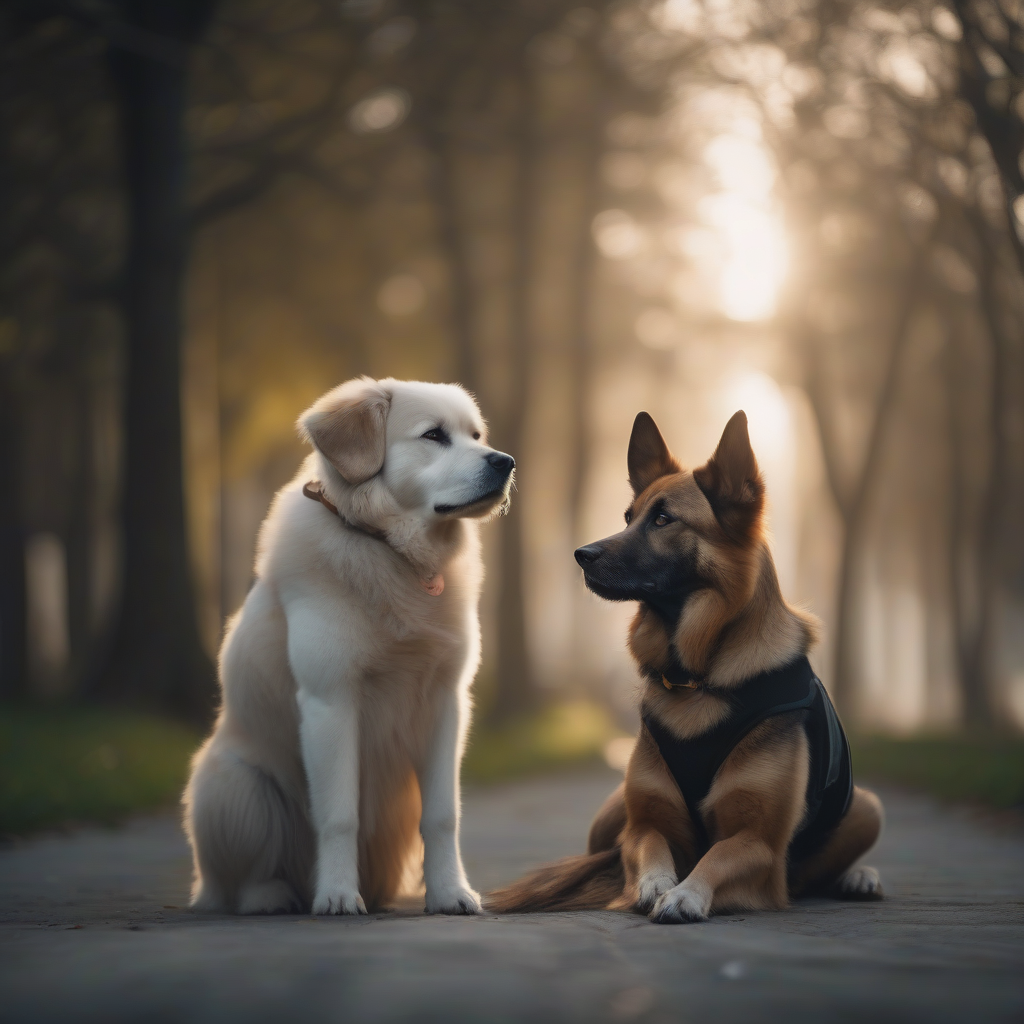
In this article, uncover the hidden neurocognitive secrets behind your dog's ability to understand social cues and how to enhance this skill.


Discover the types of burns your dog can suffer, the 5 insidious neurophysiological effects these burns create in the brain and body, and lifesaving emergency intervention strategies in this comprehensive guide. We shed light on the dangers behind forgotten household accidents from a scientific perspective.

Discover the neurobiological signals of hidden stress your newly adopted cat experiences during adaptation to a new social environment. This article reveals 5 insidious signs of your cat's silent struggle and scientific strategies for peaceful, long-term harmony.

Your dog's anal sacs, located beneath the tail, can be hidden alarm bells often overlooked but profoundly affecting their quality of life. In this article, you will discover the 5 insidious neurobiological effects of anal sac problems on the brain and the lifesaving care secrets you need to know for your furry friend to live a peaceful life.
Dogs are incredibly social beings. Their bond with humans relies on their ability to understand our emotions and intentions. But this understanding process involves much more than simple observation. Have you ever wondered how your dog processes the subtle meanings in gazes, the shift in vocal tone, or a slight body language movement? This is where neurocognitive science comes into play, shedding light on the hidden secrets behind your dog's mastery of 'emotion reading'.
In this article, we will delve into 5 unknown neurocognitive secrets about how your dog perceives social cues. Understanding this information will help you strengthen your communication with your dog, make their training more effective, and improve their overall well-being.
It's often observed that dogs tend to mirror our emotional states. When a person is sad, the dog may also calm down, or when sharing their owner's excitement, they may act enthusiastically. One of the key neurobiological mechanisms behind this phenomenon is the 'mirror neuron' system. Mirror neurons become active not only when we perform an action but also when we see someone else performing the same action. This system in dogs allows them to 'internalize' our emotional states and empathize. This is one of the cornerstones of your dog's understanding of you and makes them more sensitive to social signals in their environment.
Dogs store their experiences in their brains as 'emotional tags.' When they encounter a situation for the first time, the emotional response accompanying that experience is recorded. Later, when they encounter a similar situation, this 'tagged' emotion is automatically triggered. For example, if a dog was once frightened by a loud noise, they might approach a person speaking in a similar tone more cautiously. This shapes their responses to social cues. In training, positive experiences create 'positive tags,' making your dog feel more open and secure towards certain situations or people. This is also critical in preventing negative tagging caused by food changes, as discussed in Your Dog's Hidden Scent Trails: 5 Insidious Neurological Shocks of Food Changes and Scientific Strategies to Strengthen Your Digestive Shield!.
Dogs are adept at establishing connections between visual and auditory cues. A command spoken along with a hand gesture can, over time, become linked to just that hand gesture or just that word. However, at a deeper level, your dog learns the holistic meaning conveyed by the combination of these elements. This 'correlational learning' and 'cognitive binding' ability helps them interpret our intentions more accurately. For instance, a 'sit' command given in a cheerful tone conveys not just an action but also the owner's positive emotion to the dog. Your Dog's 'Secret Understanding Mode': Decode the 5 Neurocognitive Secrets of Vocal Tones and Body Language! highlights the importance of this integration.
Social cues are not always clear. Sometimes a situation is ambiguous, and the dog needs to manage this uncertainty. Dogs' 'cognitive flexibility' allows them to try different response strategies when faced with this ambiguity. If a signal is not fully understood, your dog may use past experiences or environmental clues to figure it out. For example, a dog waiting at a door to be let in might interpret their owner's eye contact or a soft murmur as encouragement. This problem-solving ability allows them to navigate complex social interactions. This, combined with spatial awareness discussed in Your Dog's Mental Map: The Neurological Impact of 'Blind Spots' at Home and Secret Space Security for Calmness, helps them better understand cues in their environment.
Dogs learn not only through direct experience but also by observing other dogs or humans. This 'social learning' process allows them to imitate complex behaviors. For instance, when a dog meets a new dog, they can shape their own behavior by observing the other dog's play invitations or calming signals. This expands their social repertoire and enables them to engage in more harmonious interactions. Using this principle in training, allowing your dog to observe another dog successfully performing a command can be effective. This also plays a role in understanding social dynamics, as discussed in Your Dog's 'Hidden Hierarchy Map': 5 Neurochemical Secrets in the Brain for Accepting a New Dog!.
Your dog's ability to understand social cues is the result of complex neurocognitive processes. From mirror neurons to emotional tagging mechanisms, cognitive flexibility to social learning, each contributes to their understanding of the world with you. By using this knowledge, you can elevate your communication with your dog to a deeper level, make your training processes more efficient, and strengthen the bond between you.
Remember, with patience and understanding, you can help your dog further develop these incredible neurocognitive abilities and live a more harmonious, happy life together. Resources like Your Dog's 'Invisible Care Guide': 5 Deep Neurobiological Secrets and Stress-Reducing Protocols! will also guide you in this process.
